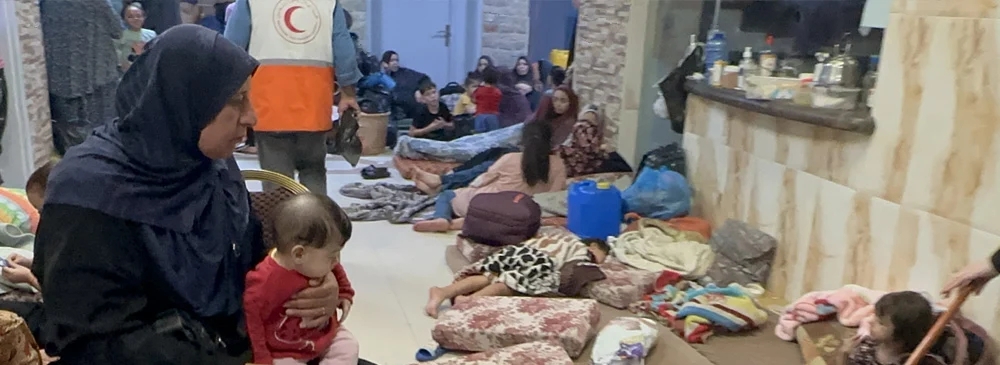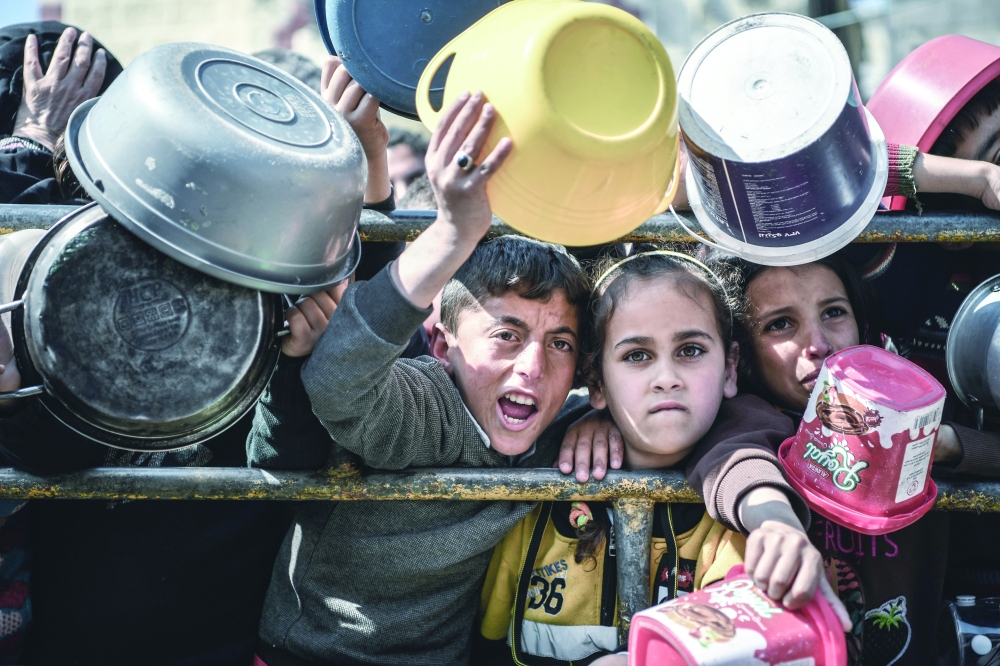





NEW YORK: 31 per cent or 1 in 3 children under 2 years of age in the Northern Gaza Strip suffer from acute malnutrition, a staggering escalation from 15.6 per cent in January.
Malnutrition among children is spreading fast and reaching devastating and unprecedented levels in the Gaza Strip due to the wide-reaching impacts of the war and ongoing restrictions on aid delivery.
At least 23 children in Northern Gaza Strip have reportedly died from malnutrition and dehydration in recent weeks, adding to the mounting toll of children killed in the Strip in this current conflict – about 13,450 reported by the Palestinian Ministry of Health.
Nutrition screenings conducted by Unicef and partners in the north in February found that 4.5 per cent of the children in shelters and health centres suffer from severe wasting, the most life-threatening form of malnutrition, which puts children at highest risk of medical complications and death unless they receive urgent therapeutic feeding and treatment, which is not available.
The prevalence of acute malnutrition among children under 5 years of age in the north has increased from 13 per cent to as high as 25 per cent.
“The speed at which this catastrophic child malnutrition crisis in Gaza has unfolded is shocking, especially when desperately needed assistance has been at the ready just a few miles away,” said Catherine Russell, Unicef Executive Director.
“We have repeatedly attempted to deliver additional aid and we have repeatedly called for the access challenges we have faced for months to be addressed. Instead, the situation for children is getting worse by each passing day. Our efforts in providing life-saving aid are being hampered by unnecessary restrictions, and those are costing children their lives.”
Screenings conducted for the first time in Khan Younis, in the middle area of the Gaza Strip, found 28 per cent of children under 2 years have acute malnutrition, more than 10 per cent of which have severe wasting.
Even in Rafah, the southern enclave with the most access to aid, the results from screenings among children under 2 years doubled from 5 per cent who were acutely malnourished in January to about 10 per cent by the end of February, with severe wasting rising fourfold from 1 per cent to more than 4 per cent over the month.
UN agencies have been warning of the risk of a famine in the Gaza Strip since December. In January, the emergency thresholds for acute malnutrition in children were exceeded. Acute malnutrition among children has continued to rise rapidly and at scale and there is a high risk it will continue to increase across the Gaza Strip, costing more lives, in the absence of more humanitarian assistance and the restoration of essential services.
Unicef has reached children with treatment for acute malnutrition, including the use of Ready to Use Therapeutic Food (RUTF), Ready to Use Infant Formula and preventative micronutrients supplements containing iron and other essential nutrients for pregnant women. More supplies are due to arrive this week, but this is still not enough to address the needs.
“We are doing everything we can to avert a worsening of the humanitarian crisis in Gaza, but it is not enough,” said Russell. “An immediate humanitarian ceasefire continues to provide the only chance to save children’s lives and end their suffering. We also need multiple land border crossings that allow aid to be reliably delivered at scale, including to northern Gaza, along with the security assurances and unimpeded passage needed to distribute that aid, without delays or access impediments.”
Oman Observer is now on the WhatsApp channel. Click here