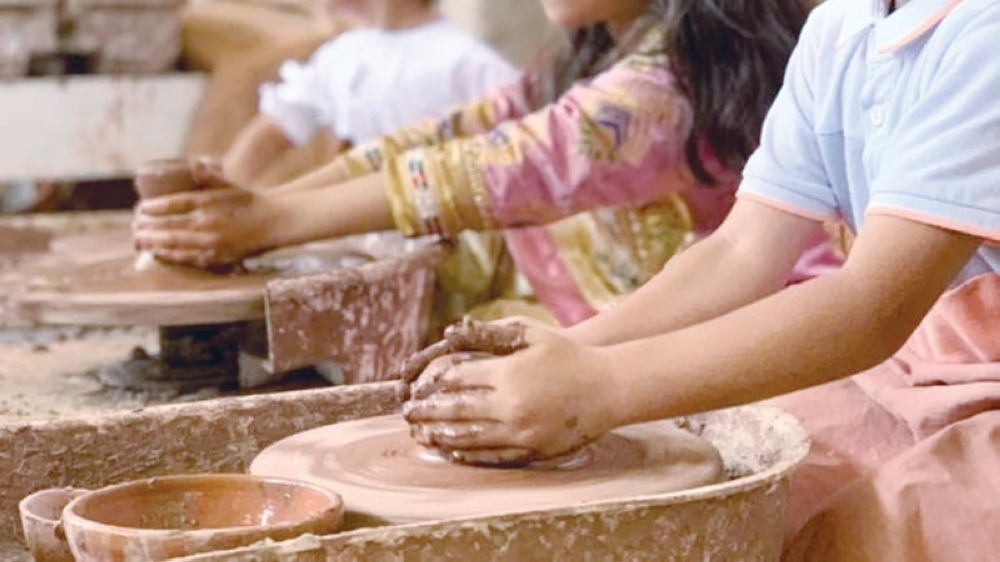





Nestled in the Bahla neighbourhood, where the pottery industry has thrived for generations in the Sultanate of Oman, Saeed bin Abdullah al Adawi and his sons are dedicated to upholding the timeless tradition of pottery making.
Their workshop, which has been a pillar of this craft for over half a century, stands as a testament to the enduring legacy of craftsmanship. After retiring from a career in teaching, Saeed embarked on a new mission – ensuring the survival and evolution of pottery by passing down this ancient art to the younger generation.
To Saeed, pottery making is not just a skill; it is a heritage, a legacy passed down through generations, a gift from his father, a master potter. Learning from his forebear, Saeed now carries the torch of this tradition, steadfastly guarding it against the threat of fading into obscurity.
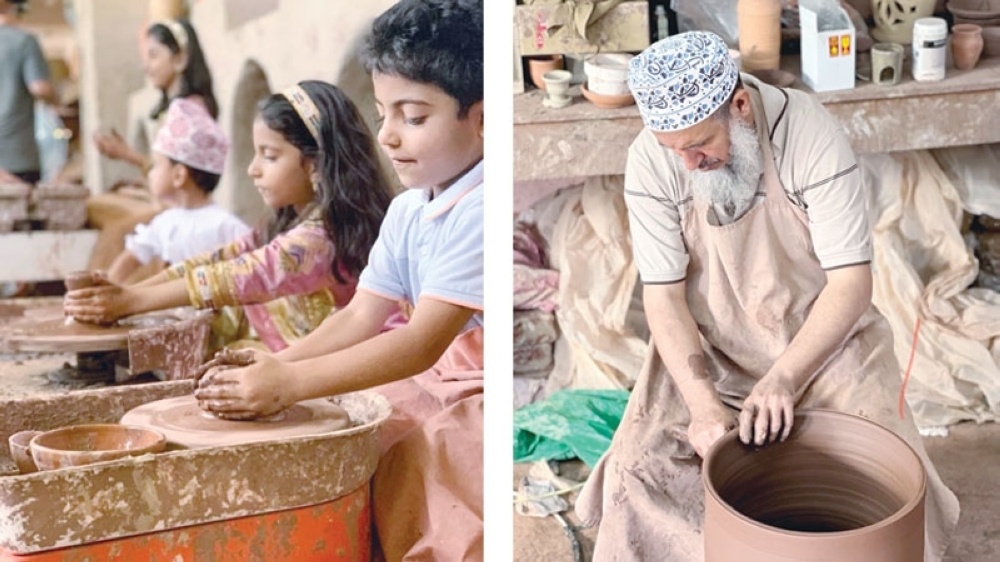
Stepping into their workspace, one is greeted by a collection of dome-shaped clay kilns, remnants of an earlier era when these traditional ovens were the heart of the operation, shaping raw clay into exquisite pottery. However, the relentless march of time has brought modern electric machines into the equation, replacing these kilns. Saeed al Adawi is a strong proponent of embracing contemporary technology in the pottery industry. He emphasises the importance of adopting modern methods to propel the craft forward and keep it in sync with the ever-evolving world of technology. He also underscores a sobering truth – the closure of several of Bahla's six pottery factories can be attributed, at least in part, to the stubbornness of some potters who clung fervently to traditional techniques, resisting the integration of modern technology.
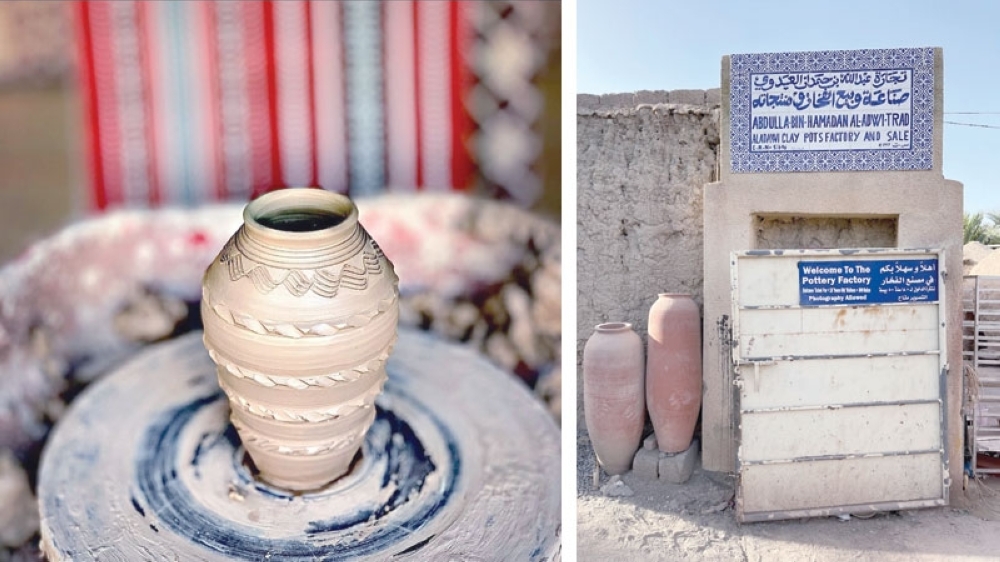
The process of crafting pottery is far from hasty; it's a gradual journey that spans several weeks before the final piece takes shape. It all begins with the meticulous selection of clay, which undergoes a thorough cleaning process, is mixed with water, and carefully prepared in basins. This clay is sourced from various places, including local Omani regions like Bahla, Muscat, Al Hamra, and the Al Wusta governorate, as well as international sources such as Spain and Italy. Al Adawi acknowledges a shift in preference, leaning towards the rich local soil and reducing reliance on imported materials, recognising the excellence of indigenous resources.
The next step in the process involves shaping the clay, which employs various methods and techniques. Beginners often start with the traditional potter's wheel, while those with more experience explore advanced techniques like clay extruders, ropes, slicing, and gypsum moulds. After carefully shaping the desired piece, it is subjected to the searing heat of the kilns, causing the clay to harden. Then, the artist takes over, adorning and colouring the pottery before allowing it to dry gradually.
Working with pliable, wet clay and moulding it with patience and precision is a profoundly therapeutic endeavour. This practice offers a refuge from the hectic pace of modern life, compelling the practitioners to slow down and fully immerse themselves in this captivating craft. In this immersion, the mind finds solace and respite, grounding itself in the present moment. Saeed Al Adawi eloquently encapsulates this sentiment, suggesting that through the act of shaping clay, the artist is, in fact, not only moulding the material but also transforming their very soul. It is a profound act of creation that transcends the tangible, reaching into the realm of personal transformation.
Oman Observer is now on the WhatsApp channel. Click here