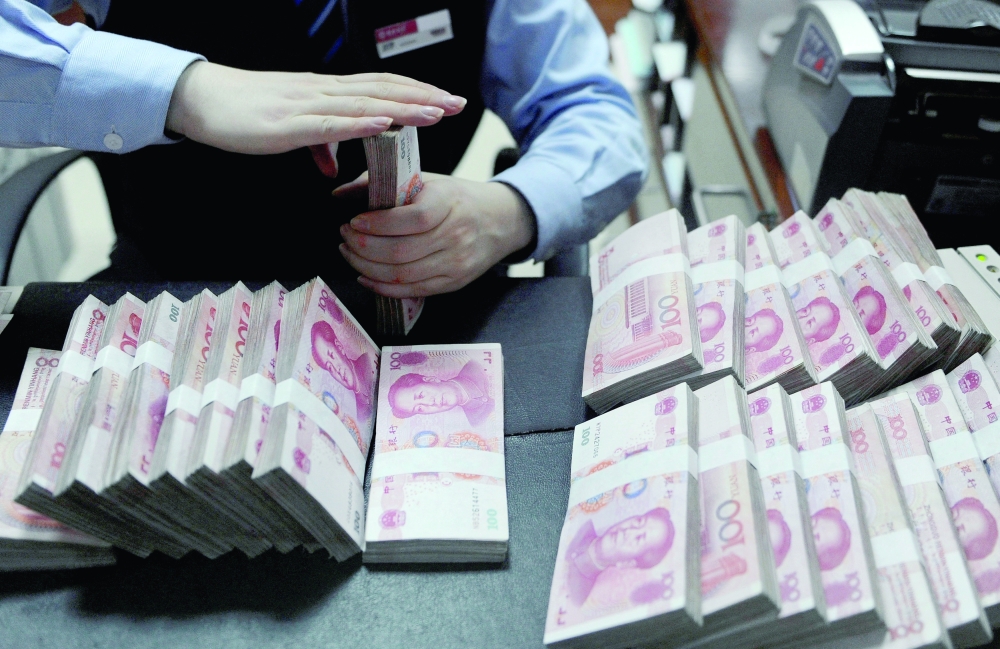





SHANGHAI: China set a stronger-than-expected trading band for its currency on Tuesday and state banks sold dollars against the yuan, market sources said, in the strongest sign yet the authorities are growing increasingly uncomfortable with its quickening slide.
The yuan has fallen about 4% on the dollar in two months as flagging consumer confidence and a soggy property market have sapped momentum from the post-pandemic recovery. It bounced about 0.4% on Tuesday, its best gain in almost two weeks.
State banks were selling dollars to buy yuan in the offshore spot market, according to four people familiar with the trades, and it appeared as the currency neared the psychologically important 7.25 per dollar level, two of the people said.
The banks were also active late on Monday, according to two more traders, when they bid up the yuan sharply into the onshore close, which influences the central bank's official yuan midpoint fixing the next day.
On Tuesday, the People's Bank of China (PBOC) set the middle of the band even firmer than expected, deviating from forecasting models by the most since May.
Analysts said that together the moves showed official unease at the yuan's downward momentum and that they could slow but perhaps not halt a decline, given the dour economic outlook.
"They are sending more signals now they're uncomfortable ... they would like to slow the yuan weakness," said Moh Siong Sim, a currency strategist at Bank of Singapore. "The speed has been too fast for their liking." The yuan ended Monday at a seven-month low of 7.2425 per dollar and was at 7.2105 in Tuesday afternoon trade.
"The 7.25 level remains a key threshold," said one of the market sources, adding that a breach of the level could quickly send the yuan to lows last seen in 2022.
All of the sources spoke on condition of anonymity as they are not authorised to speak about trades publicly. UBS said in a note that its trading desk saw heavy interest among banks in pre-market trades to procure dollars via buy-sell currency swaps, and said there might have been efforts by the authorities to neutralise the impact from their spot intervention.
State banks usually act on behalf of the country's central bank in the foreign exchange market, but they could also be trading for themselves or their clients. — Reuters
Oman Observer is now on the WhatsApp channel. Click here