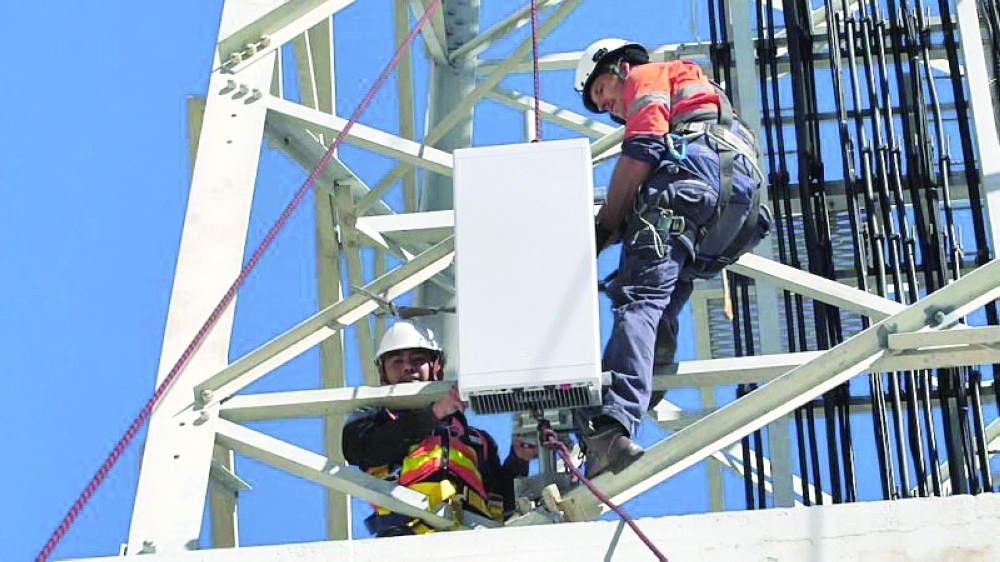





The telecoms industry in the Sultanate of Oman has successfully developed platforms on which digital services can be delivered. Across the country, commercial consumer-based 5G networks already live. The next wave of 5G expansion will allow businesses of all types to reap the benefits of enhanced mobility, flexibility, reliability and security.
As advanced ICT markets, such as the Sultanate of Oman, increase their demand for new use cases powered by enhanced mobile broadband capabilities, Ericsson projects that 5G mobile subscriptions in the GCC, will exceed 62 million by the end of 2026, representing about 73 per cent of total mobile subscriptions. This will make the GCC the region with the second highest 5G penetration at that time.
While connectivity and data traffic have increased following the introduction of 4G and 5G technologies, a common challenge remains. All too often across the industry, the delivery of digital services hasn’t caught up.
It is time for Oman’s telcos to go digital fast and get customer-focused. From enhancing the way they engage with customers to automating operations, telcos need to reach new levels of programmability, access and agility. For telcos who are planning their digital journey, there are five key steps they must take:
1. Transformation must significantly improve the B2B and B2C customer experience. With technologies like Big Data and Artificial Intelligence reaching maturity, telecom operators have a huge opportunity to transform how their customers experience their products and services through the design of richer, easier, immersive and contextualised user experiences. Within this context, managing and providing ‘digital experiences’ across tools, devices and locations have become mandatory for companies to meet and exceed their customers’ expectations.
2. Transformation needs to meaningfully boost a telco’s efficiency and agility. Telcos should aim to completely transform the buying experience, augmenting product information with personalised real-time information that helps customers make the right choices, faster. The new benchmarks are currently set by the Internet players, such as Google, Amazon and Facebook and operators are in catch-up mode.
3. Most operators are focusing on improving the engagement with users in order to engage in a way that people wants to engage. Omni-channel, self-service and personalisation are some of the most important areas today and this is going to evolve going forward. Omni-channel provides the context and the continuity to interactions across multiple digital touchpoints. Interactions cover all aspects of the customer journey: Awareness, Research, Buy, Care, Use, Pay, Trust, Leave and Re-Join. A good omni-channel framework should take into account the channel ergonomics and should have the intelligence to understand and optimise, according to user behaviour.
4. Transformation must enable them to maximise revenue from both traditional and new digital services. Today, there’s an explosion of user-generated data, most of it unstructured. Telcos should aim to exploit this enormous volume of data and turn it into assets to be monetised. It’s important to note that data and insights on their own do not help until action is taken to refine them. It’s here that Data Assets, Digital Marketing and Digital Commerce really come together.
5. Evolved networks will also play a key role in addressing the sustainability challenges our world is facing. Expanded network coverage and traffic growth cannot be accomplished at the expense of higher energy use. Breaking the energy curve will continue to be key. As the backbone of a digital society, networks will enable an industrial carbon emission reduction across sectors.
We at Ericsson foresee that mobile networks will evolve into a new mobile digital infrastructure such as 5G SA, designed to meet the needs of consumers, enterprises and society. These networks will provide limitless, robust and trustworthy connectivity to anyone, anywhere, at any time.
For the Sultanate of Oman, the realisation of future telcos is not limited to technology alone, but encompasses a whole new mobile landscape, where telcos will serve as the backbone of an advanced digital society and meet the future needs of industries.
Oman Observer is now on the WhatsApp channel. Click here