REYKJAVIK: In a first in Europe, women hold more than half of the seats in Iceland's new parliament, final election results showed on Sunday.
Of the 63 seats in the Althing, 33 were won by women, or 52 per cent, according to projections based on the final results.
No other European country has had more than 50 per cent women lawmakers, with Sweden coming closest at 47 per cent, according to data compiled by the World Bank.
Five other countries in the world currently have parliaments where women hold at least half the seats, according to the Inter-Parliamentary Union: Rwanda (61 per cent), Cuba (53 per cent), Nicaragua (51 per cent) and Mexico and the UAE (50 per cent).
Unlike some other countries, Iceland does not have legal quotas on female representation in parliament, though some parties do require a minimum number of candidates be women. Iceland has long been a pioneer in gender equality and women's rights, and has topped the World Economic Forum's ranking of most egalitarian countries for the past 12 years.
It offers the same parental leave to both men and women, and its first law on equal pay for men and women dates back to 1961.
Iceland was the first country to elect a woman as president in 1980, and since 2018 it has had a pioneering gender-equal pay law that puts the onus on employers to prove they are paying the same wages to men and women.
Saturday's election saw the left-right coalition government widen its majority.
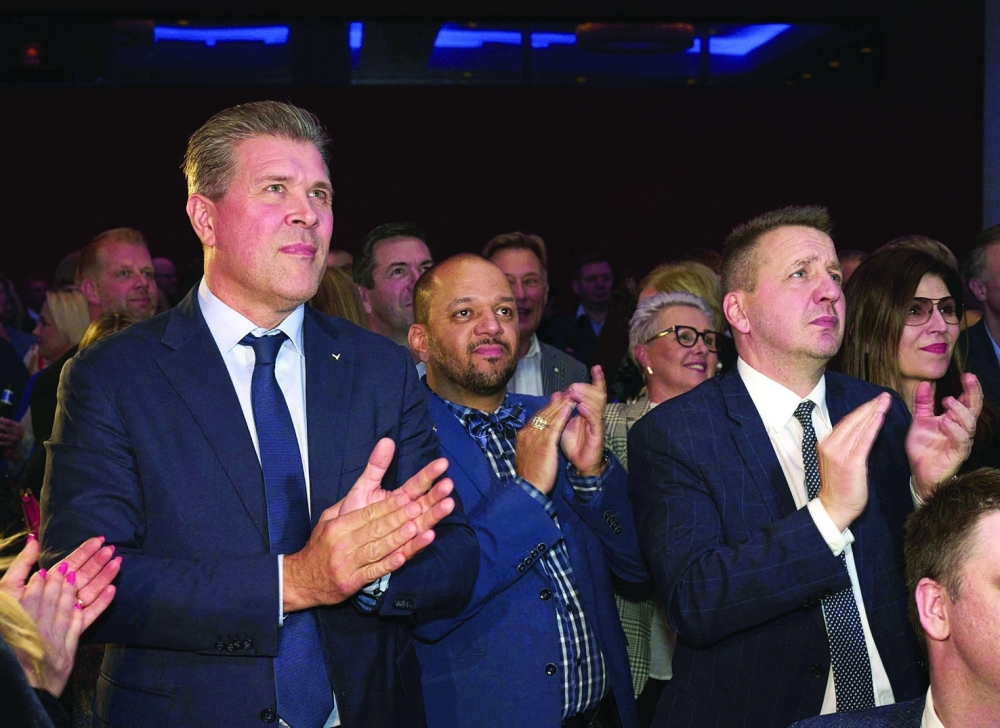
However, Prime Minister Katrin Jakobsdottir's Left Green Movement emerged weakened while her right-wing partners posted strong scores, casting doubt over her future as prime minister.
Meanwhile, Prime Minister Katrin Jakobsdottir's left-right coalition government was poised Sunday to win a clear majority in Iceland's general election, though it remained to be seen whether the three parties would continue to govern together.
The coalition has brought Iceland four years of stability after a decade of political crises, but Jakobsdottir's Left-Green Movement emerged weakened from the election, losing ground to its right-wing partners which both posted strong showings.
Projections based on more than 75 percent of votes counted saw the Left-Green Movement, the conservative Independence Party and the centre-right Progressive Party together winning 37 of 63 seats in parliament, up from the 33 seats they held previously.
The Left-Green Movement was seen taking eight seats, three fewer than in 2017 and casting doubt on Jakobsdottir's future as prime minister.
The largest party looked set to remain the Independence Party, whose leader Bjarni Benediktsson -- the current finance minister and a former prime minister -- is eyeing Jakobsdottir's job.
It won almost a quarter of votes and was seen holding on to its 16 seats.
But the election's big winner appeared to be the centre-right Progressive Party, which was seen gaining five seats, to 13.
Ahead of the election, the coalition vowed to hold talks about its future together if it managed to hold on to its majority.
But after four years of concessions on all sides to keep the peace within the coalition, it is conceivable that the two right-wing parties may want to try to form a government without the Left Greens.
They could theoretically join up with one of several smaller, centre-right parties to obtain a majority. "We will have to see how the governmental parties are doing together and how we are doing," Jakobsdottir said as the first votes were being counted. - AFP
Oman Observer is now on the WhatsApp channel. Click here