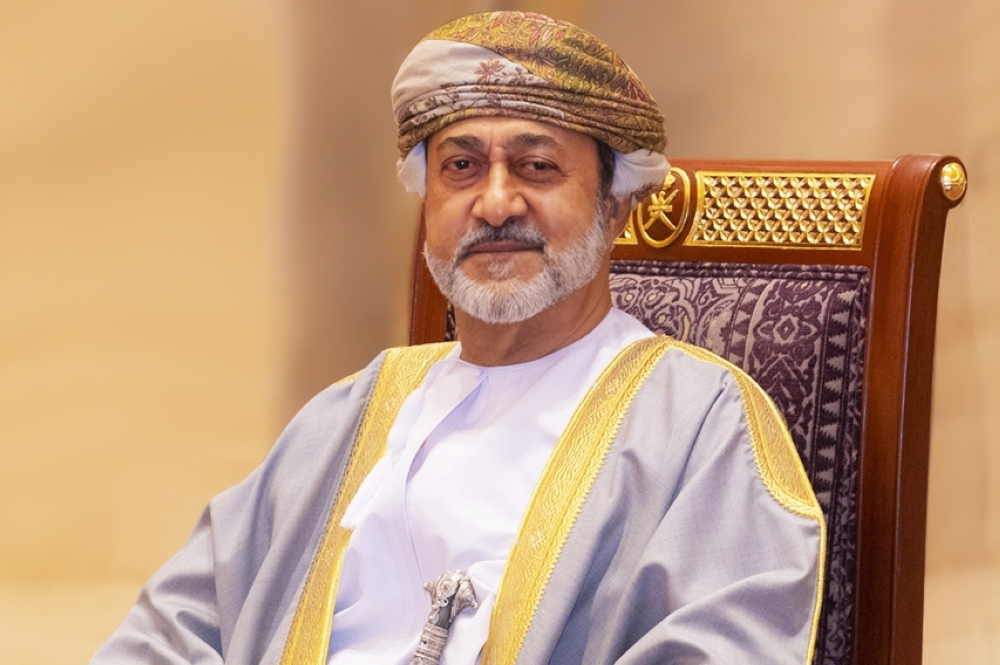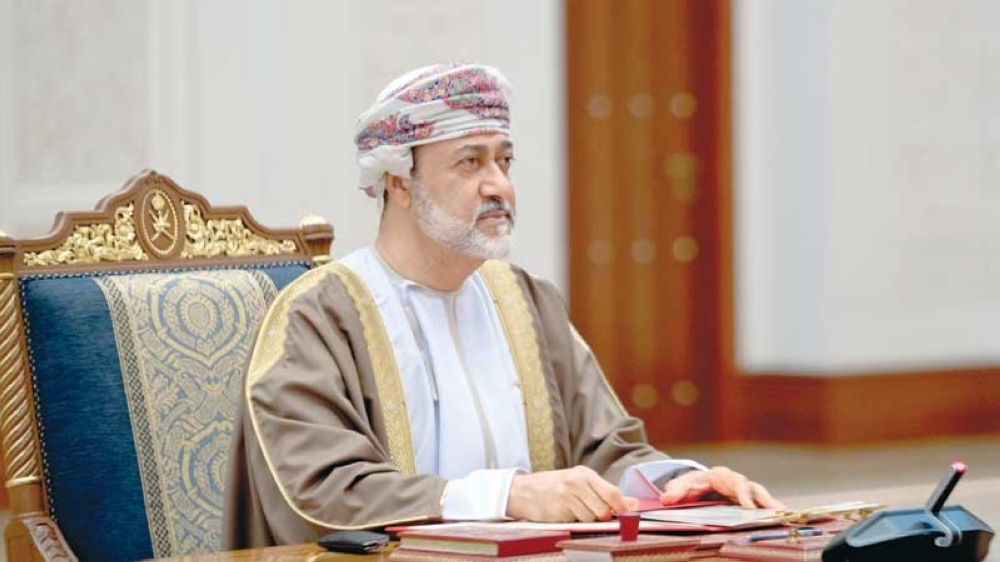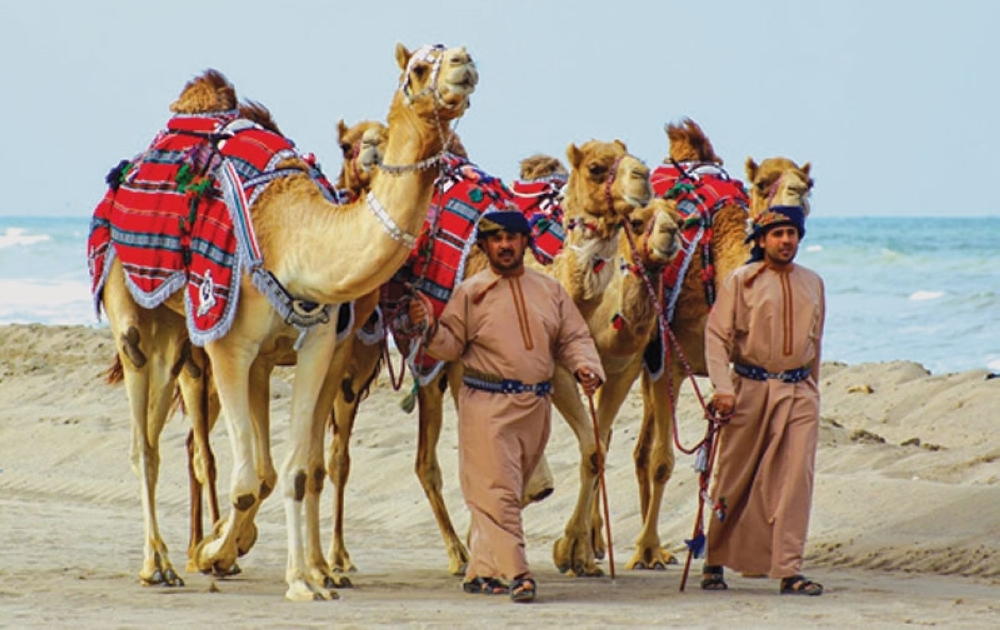
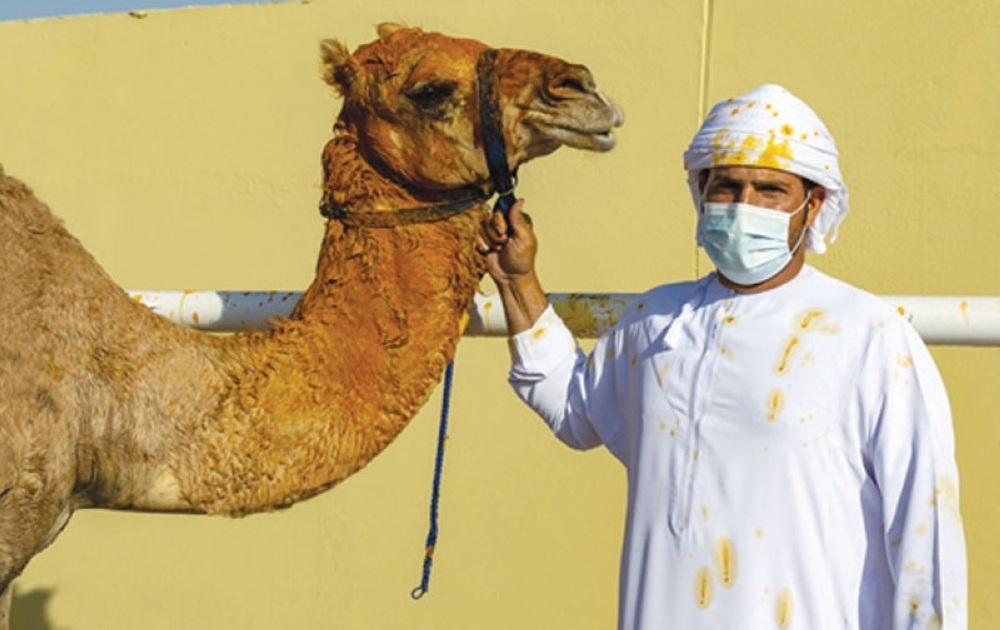
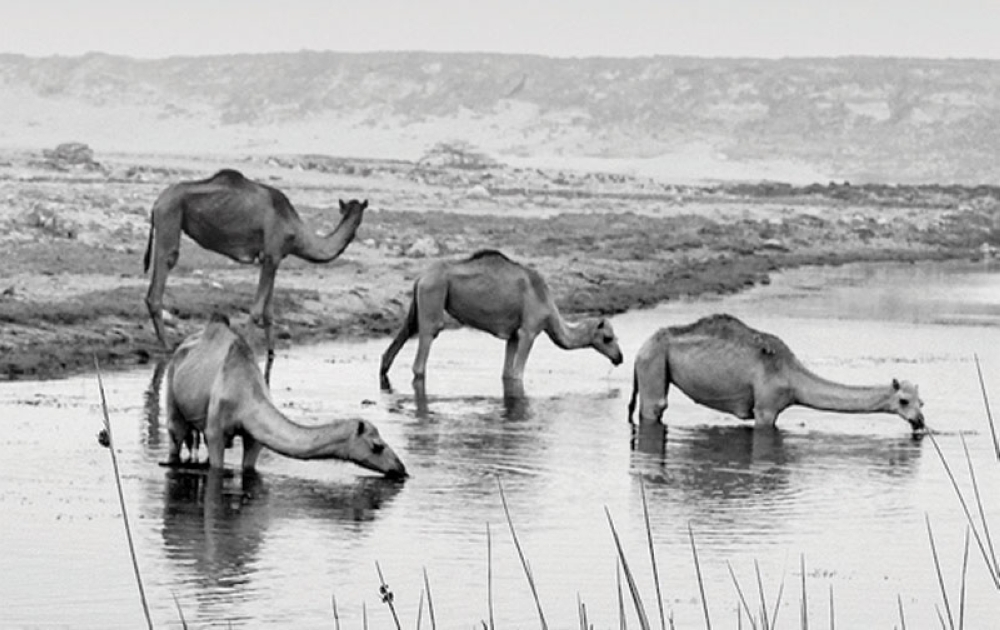





His Highness Sayyid Asaad bin Tarik al Said, Deputy Prime Minister for International Relations and Cooperation Affairs, Personal Representative of His Majesty the Sultan, is a supporter of Oman’s camel racing and breeding industries, and it is not difficult to understand why, when, whether it is racing, tourism-based, or ceremonial, the camel invokes the romance of days gone by, the traditions of a nation, endurance, and reliability beyond compare.
The Sultanate boasts a camel population of almost a quarter of a million, which, considering the national camel population in 1994 was only 98,500, is an exciting indicator of the ‘new’ enthusiasm for the ‘ship of the desert.’ Half of the current population thrives in the temperate climate of the Dhofar Governorate which becomes a showplace for the trusty animal, every Khareef Season, or Autumn Festival. Around camels, camel markets, and such festivals, the words of a prominent tour operator, Alex Bradley, come quickly to mind, that a camel souq is “An ever-changing scenario that unfolds like a Shakespearean play,” which is definitely apt.
Oman is also home to the world’s only camel-mounted military band within the Royal Camel Corps, which is the home also, of the National Camel Breeding Center, under the direction of Professor Babiker Elhaq Musa, of the Diwan of the Royal Court, a noted researcher and camel authority, who has observed in the ‘New Agriculturalist,’ that the iconic animal “has an important place in the 21st century...” and further that there will be significant economic benefits... “If camel owners shift from quantity to quality, from subsistence to supplying the new markets.”
Musa has also touted their ongoing breeding research with frozen embryos and other cutting-edge processes to continue, to develop, “specific desired breeding characteristics.”
And if you are wondering what to look for in a camel, and animal that verges on unco-ordinated in all it does to the uninitiated, Ahmed al Junaibi explained, “With racing camels it is probably a matter of a deep chest identifying a big heart and lungs, correct legs, and proportion, so it moves in a fluid style. And beauty in a camel can be assessed again in proportion offering grace, tall to be elegant, having a long nose with a wide bridge, small, perky ears, and drooping bottom lip.
Contrary to popular belief, camels can be found farther afield than the Middle East and North Africa, with Central and South Asia and Australia having decent chunks of the global population estimated in 2010 at 14 million, 90 per cent of which are the Dromedary (one hump) camels. Regionally, it appears the most sought-after camel breeds are the yellow she‘al, the white widhah, the suffur, which are yellow with dark humps, and the purebred beige sheqah.
The King Abdulaziz Camel Festival, in Saudi Arabia, is month-long celebration of the camel, attracting over 300,000 visitors and spectators, 2000 owners, breeders, buyers, and sellers, and 40,000 camels each year. Apart from the annual camel auctions, at which camels can fetch prices up to 300,000 RO for the prime lots according to auctioneer Fahad Saeed al Diryabi, the main highlight is certainly the Mazayen al-ibl. This Camel Beauty Contest also features dozens of individual competitions and races, with a total competition prize pool across the month of RO 25 million, so, it is no surprise that interest and excitement are high throughout.
Here in the Sultanate, the key camel events of a year are the Muscat Festival, the Royal Equestrian and Camel Festival, and the Al Bashayer Camel Racing Festival, when, across these events, and dozens of national and regional celebrations, the camels is a centrepiece, traditionally, culturally, and very much, physically, towering above the crowds, with their traditionally garbed riders on their precarious wooden saddles, ever-present, and always surrounded, attracting attention. They defy their reputations as mean-spirited, aggressive, spitting harridans, proving tractable and amenable, and particularly affectionate to their masters, that affection, that bond, easy to see.
Oman Observer is now on the WhatsApp channel. Click here