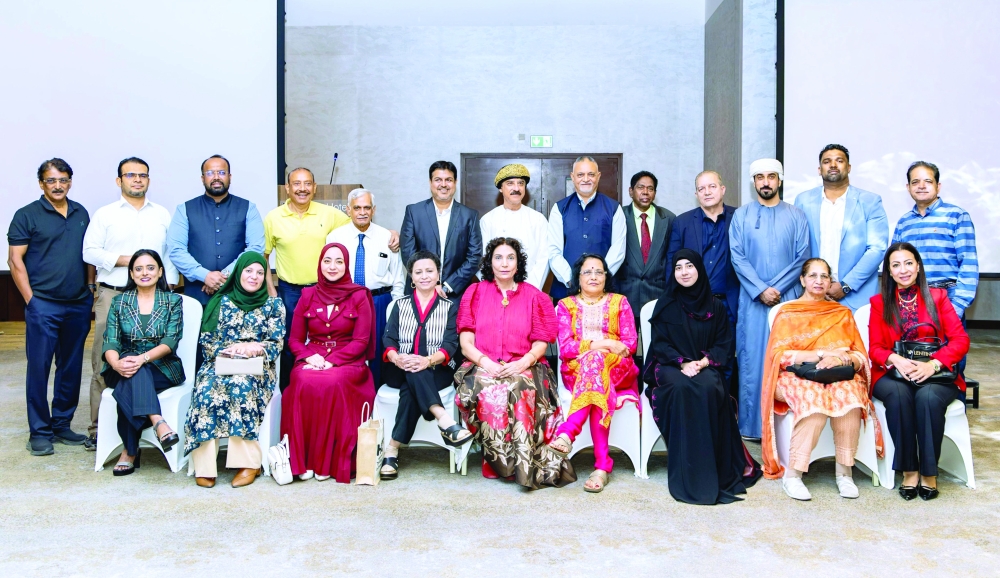


MUSCAT: More than 50 doctors from government and private health establishments in Oman attended an international medical conference in Muscat on robotic breast surgery.
The meeting, held at Intercity Hotel in Al Khuwair, was organised by Muscat Family Physicians Group in association with HCG Cancer Center of Bengaluru, India, and Global Treatment Services.
Dr Jayanti Thumsi, group lead for robotic and advanced breast surgery at HCG in Bengaluru, spoke on the diagnosis, management and prevention of breast disorders. The organisers described the topic as very important because breast cancer is the most common cancer among women in Oman and often occurs at a younger age. Her presentation highlighted that nearly 80 per cent of breast lumps are benign, emphasising the importance of accurate diagnosis and of avoiding unnecessary investigations and surgeries.
She highlighted triple assessment — clinical examination, appropriate imaging and tissue diagnosis — as the cornerstone of accurate breast evaluation, and emphasised the importance of following the Ministry of Health’s 2025 breast cancer screening guidelines, strengthening the early identification of high-risk women and facilitating timely referrals.
The presentation also explored the evolution of breast cancer surgery, highlighting breast conservation, oncoplastic techniques and reconstruction as approaches that can achieve effective cancer clearance while preserving body image and quality of life. Advances in robotic nipple-sparing mastectomy were discussed as an important development in precision breast surgery, offering selected patients the possibility of preserving the skin and nipple while removing breast tissue. Her central message was that modern breast cancer care must go beyond cancer removal to encompass early diagnosis, personalised treatment, preservation and quality of life.
Dr Intezar Mehdi, consultant in paediatric haematology, oncology and blood and bone marrow transplant and head of the department at HCG in Bengaluru, spoke on paediatric bone marrow transplant, now called haematopoietic stem cell transplant. He explained how a transplant replaces diseased bone marrow with healthy stem cells to cure many otherwise fatal diseases in children. The main indications discussed included leukaemias and lymphomas, aplastic anaemia, thalassaemia and sickle cell disease, primary immunodeficiencies, and certain metabolic and genetic disorders. A good number of these cases are seen in Oman, the organisers said.
His talk distinguished autologous transplant, which uses the child’s own stem cells, from allogeneic transplant, which uses cells from a matched sibling, an unrelated donor or a haploidentical parent, and he presented several cases. He concluded that, with an emphasis on early referral, modern supportive care and multidisciplinary teamwork, paediatric bone marrow transplant offers a cure and an improved quality of life for many children.
Those attending included haemato-oncologists, breast cancer specialists, plastic and general surgeons, oncologists, paediatricians, gynaecologists, emergency room specialists, family physicians, homeopaths and Ayurveda specialists. The presentations were followed by an interactive brainstorming session.
In his concluding remarks, Dr Sanjay Dalal, founder of Muscat Family Physicians Group and organiser of the meeting, thanked the visiting team and the doctors who attended. He asked the visiting team to organise robotic breast surgery and bone marrow transplant workshops at HCG and to invite doctors from Oman.
Oman Observer is now on the WhatsApp channel. Click here