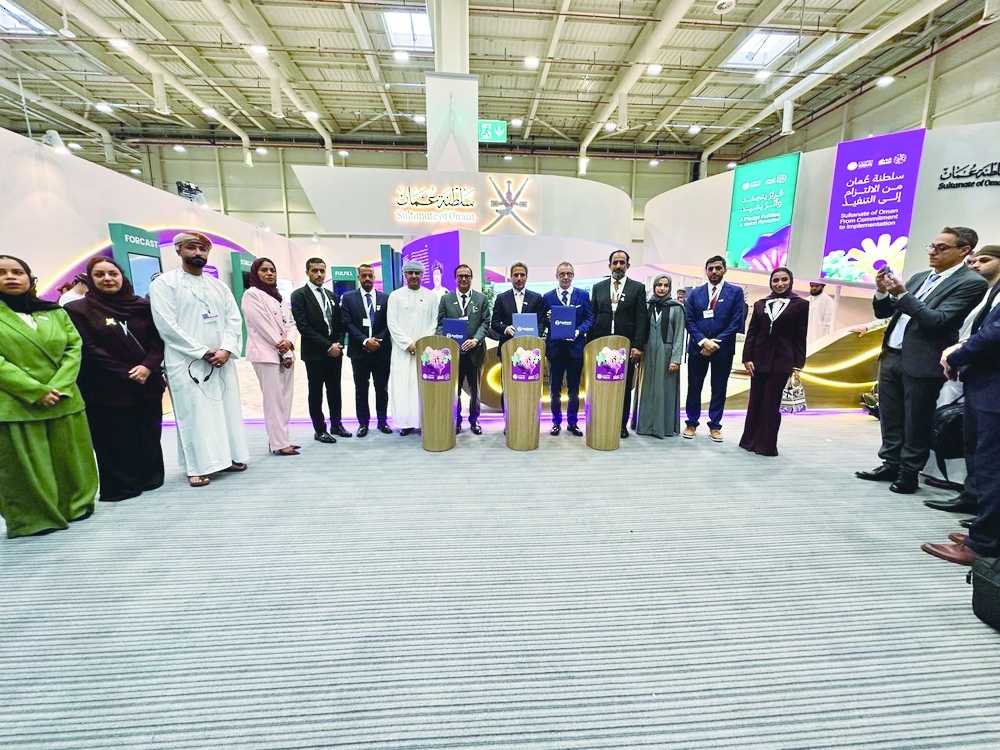


Around 80 per cent of residents are planned to live within walking distance of public transit — with a 55-km metro from Sultan Haitham City to Ruwi as the backbone. -
The Sultanate of Oman is ushering in an era of smart cities to meet its net-zero carbon emissions goal by 2050, addressing the urgent threats posed by global warming and climate change. Green mobility initiatives are a fundamental pillar of this path, aiming to cut transport sector carbon emissions by supporting the adoption of electric and hydrogen vehicles.
The national target is to reduce transport emissions by 3 per cent by 2030 and 35 per cent by 2040. By the end of 2025, Oman had over 2,000 electric vehicles and 160 charging stations, with a target of around 350 stations by 2027. Finding alternatives to fossil-fuelled public transport — among the main contributors to pollution — remains the key focus, underscored by a pilot project featuring a 24-seat hydrogen fuel cell bus running from the third quarter of 2026 through the third quarter of 2027.
Connected Muscat
Major stakeholders, including the Ministry of Transport, Communications and Information Technology (MoTCIT), the Civil Aviation Authority (CAA) and the Ministry of Housing and Urban Planning (MoHUP), are developing integrated strategies to promote smart, green mobility while reducing reliance on private transport. Guiding this transformation, the Greater Muscat Structure Plan (GMSP) offers a roadmap for “Connected Muscat”, an initiative centred on an efficient metro system and intermodal hubs facilitating seamless door-to-door journeys through integrated Bus Rapid Transit (BRT) corridors, last-mile soft mobility and walkable station areas.
The strategy shifts the focus from private vehicles to public transit, maximising land value capture and connectivity. The transit hubs aim to raise the public transport share to 20 per cent by offering 30 per cent of soft mobility routes within a 15-minute drive of neighbourhoods, enabling around 80 per cent of residents to live within walking distance of public transit. Envisioned projects include the Burj Al Sahwa rapid transit hub to reduce traffic congestion, alongside a Light Rail Transit (LRT) system expected to create around 350,000 jobs within its catchment areas.
Transit-Oriented Development (TOD) will connect living, working and recreational spaces to high-quality public transit by building compact, mixed-use, walkable neighbourhoods around stations. TOD hubs in Greater Muscat — including Al Seeb, Burj Al Sahwa, Ghala, Downtown Al Khuwair, Al Qurum and Ruwi — will link busy streets and key destinations with smooth transfers between metro, buses and soft mobility. Concurrently, MoTCIT is leading the transition to a low-emission transport system through EV and hydrogen initiatives, while supporting the aviation sector's efforts to operate aircraft on sustainable fuels.
The 55-km spine
As the backbone of this network, the environmentally friendly Muscat Metro will connect workplaces, schools and the waterfront, running 55 km from Sultan Haitham City to Ruwi via Sultan Qaboos Street across 42 stations.
To further reduce dependence on private vehicles, the government is promoting licensed ride-hailing applications, which allow passengers to book rides, view transparent fares in advance and track drivers in real time — organising the transport market while creating new jobs for drivers within a well-regulated framework.
Taxis in the sky
In the aviation sector, the Advanced Air Mobility (AAM) Sandbox scheduled for December 6-10 marks a pioneering initiative for Oman and the wider region. Operating in a regulatory-friendly environment, international and local operators, manufacturers, technology providers and research institutions will conduct live field trials covering healthcare, security, agriculture and air taxis. Inputs from the sandbox will help enhance regulations and shape certification processes ahead of subsequent workshops with operators and authorities.
Plans involve developing AAM ports, including Muscat, Suhar and Salalah. Muscat International Airport will serve as a primary hub for air taxis, linking Sultan Haitham City and other destinations and using existing road, parking, security, fire and rescue, and charging infrastructure as a gateway between traditional transport, ground mobility and AAM. Operations will run in a separate zone to avoid affecting existing aircraft movements. Drone delivery will be the first service implemented, while air taxi services await dedicated flight corridors and vertiport development. Companies are currently testing prototype four-seater and 18-seater aircraft, and Omani SMEs are showing growing interest in unmanned aircraft for cargo and small shipments.
A railway to the Gulf
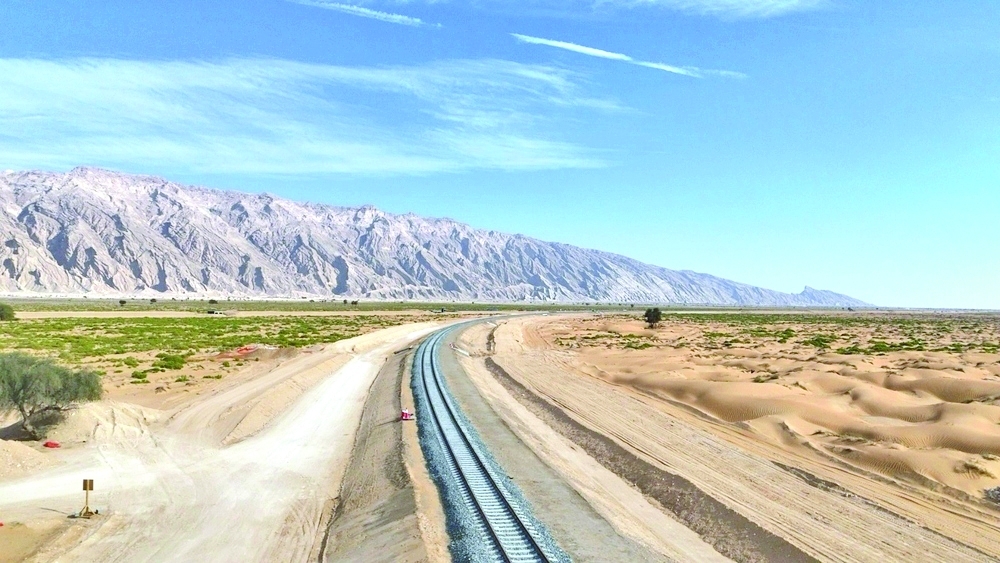
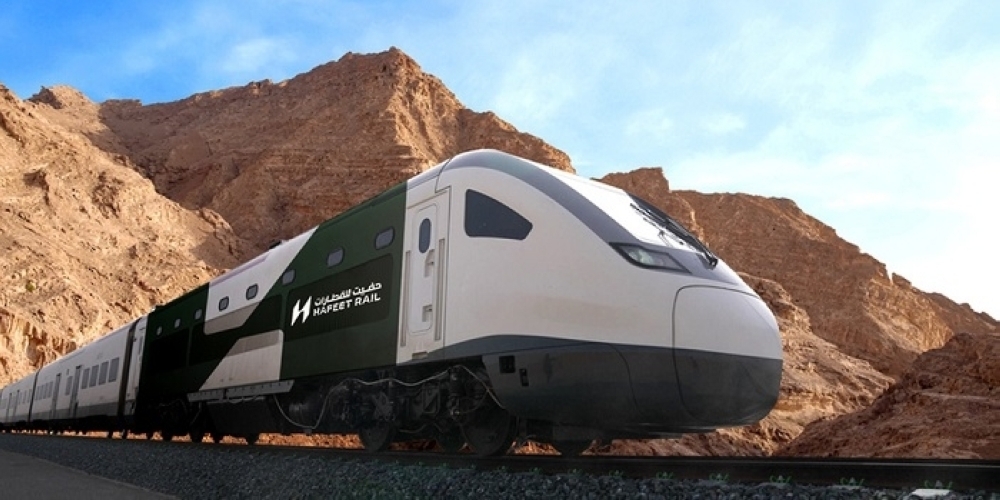
On the regional front, trial operations for the Hafeet Railway connecting Oman and the UAE will begin in the fourth quarter of 2027. Spanning 238 km, the railway will link Abu Dhabi and Suhar, integrating industrial complexes, connecting major ports and serving over 12 passenger stations across both countries.
A single freight train will carry over 15,000 tonnes of cargo — equivalent to 270 standard containers — benefiting sectors such as mining, steel, agriculture, retail, e-commerce and petrochemicals while taking heavy trucks off the highways. Operating at maximum speeds of 120 km per hour for freight and 200 km per hour for passenger services, the train will travel between Suhar and Abu Dhabi in 100 minutes and between Suhar and Al Ain in 47 minutes.
As these ambitious projects move off the drawing board and into implementation, Oman's Vision 2040 for modern, sustainable transport approaches reality.
Oman Observer is now on the WhatsApp channel. Click here