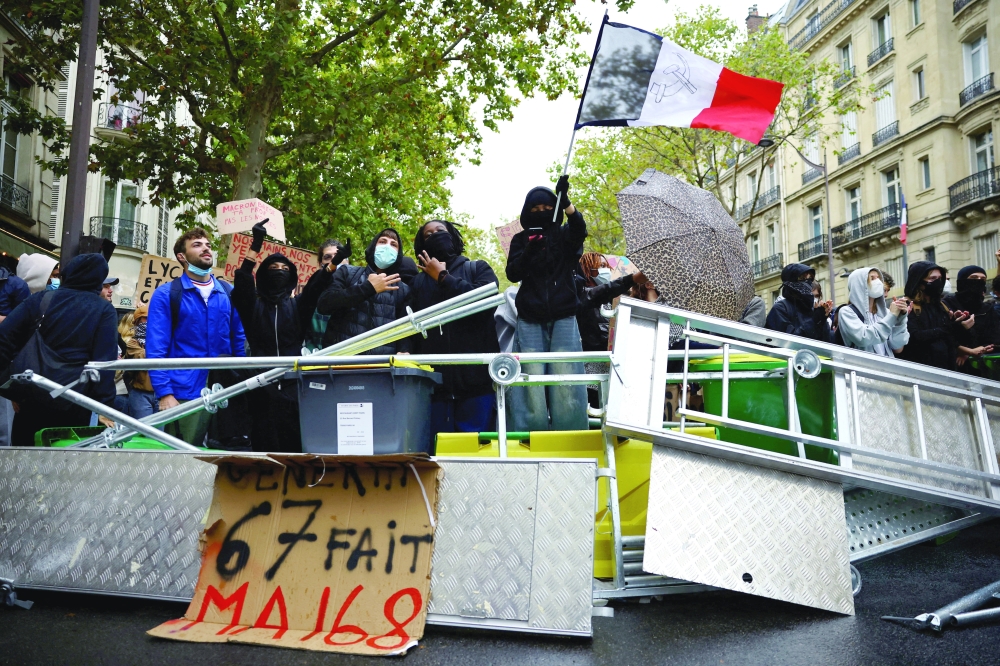
Sébastien Ducros, a French data analyst who supports the widespread student protests in his country, has identified an obvious culprit for the lack of government funds for dilapidated schools.
“A huge portion of the money is going toward retirees, while many other things are being neglected,” said Ducros, 36. “I honestly think — even if it feels strange to say — that people like my parents are in a position where they should and could” surrender some of their pension payments, he added, saying that his parents were about to retire.
But Laurent Grinwald, 72, who retired recently after decades as a postal worker, isn’t eager for his pension to be reduced, particularly to pay for other state-funded services. Especially, he said, as rent and the cost of living have shot up.
“We’ve been working all this time,” Grinwald said, “and now, suddenly, the stance is, ‘Well, no, we’re going to start taking a bit more?’”
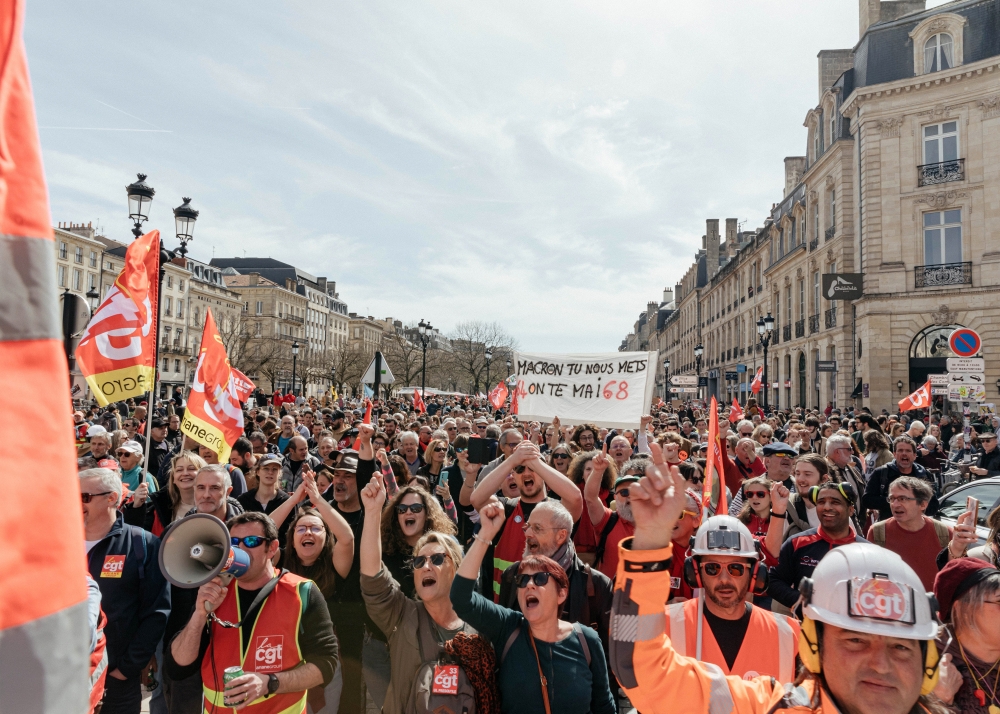
This disagreement embodies a broader question for Europe, one at the heart of the mass anti-government demonstrations that returned to France on Saturday, as well as recent protests driven by frustrated young people in countries including Belgium, Germany, Greece, Italy and Portugal. As Europeans live longer, should the needs of the young be eclipsed by their parents’ and grandparents’ pensions, routinely the largest items in Europe’s national budgets?
“It’s a generational clash,” said Jorge Galindo, the director of EsadeEcPol, an independent think tank in Spain, which has some of the most generous pensions in Europe.
In much of Europe, spending on a growing population of older people has come at the expense of services and subsidies for young workers whose tax contributions help to fund pensions.
Spiralling defence costs, prompted by American pressure and Russian aggression, have also made it harder for governments to balance their books. And high interest rates have driven up the cost of servicing state debt.
All of that, coupled with rising rent and house prices, has compounded a sense of generational injustice among young people. Only 38 per cent of people aged 15 to 30 think that policymakers consider the long-term consequences of their decisions, according to a recent European Union survey. Only a third believe that today’s young people have the same shot at success as young people 30 years ago did, the survey also found.
The enormous financial burden of pensions — they gobble up around 40 per cent of the spending on social protections in the European Union — has not been lost on governments.
Over the past decade, many countries have tried to tinker with pension formulas, trying to cut costs while postponing major political blowback. To many older Europeans, pensions are considered the sacrosanct base of the welfare system.
Often, governments have avoided cutting what each retiree is paid while gradually raising the age at which citizens qualify for those payments — to 67 from 65, for example, or older. Denmark plans to raise it to 70 by 2040.
Even that approach has had a political cost. When President Emmanuel Macron of France tried in 2023 to raise France’s retirement age to 64 from 62, it prompted such furious protests that the government eventually froze the measure. But that gave the country a different problem.
With one of the highest debt levels in Europe, France says it cannot afford to spend more on education — which has prompted the youth anger behind the wave of unrest there.
On Saturday, protest marches took place across France for a fifth consecutive weekend. They were largely peaceful, despite clashes between black-clad agitators and police in cities including Paris and Lyon, where a television crew was attacked, according to Agence France-Presse. The Interior Ministry said the rallies had drawn 106,000 protesters, less than in recent weeks.
Other countries in Europe have tried other ways of softening the generational competition driving the Continent’s protests. Britain plans to save billions by slowing the speed at which its pension payments increase over time, while Spain has enlarged its pool of taxpaying workers.
Spain chose in 2011 to raise its pension age to 67 in most cases. Then the current left-wing government enlarged the pension bill by ensuring that pension payments would grow in line with inflation, protecting recipients from rising prices but putting an enormous strain on the budget. - The New York Times
Oman Observer is now on the WhatsApp channel. Click here