


In Omani folklore, the term Al Mughayyab, meaning “the one who has disappeared”, refers to someone who has died and been buried but is believed to appear again among the living, sometimes in distant places or unfamiliar forms.
This belief reflects humanity’s ancient struggle to understand death. Across civilisations, people have imagined another existence beyond the grave, creating myths and rituals to ease the pain of losing loved ones.
The idea of Al Mughayyab belongs to this long tradition. It offers an imagined explanation for death while expressing the emotional difficulty of accepting permanent separation.
The ancient Arab poet Mutammim bin Nuwayra captured this sorrow when mourning his brother Malik:
My friend reproached the tears I shed,
Beside the graves of those long dead.
“Must every grave renew your pain,
For one who sleeps upon the plain?”
I said, “Each sorrow wakes anew;
In every grave, my brother comes to view.”
The verses show how grief transforms every grave into a reminder of one beloved person.
In Omani popular stories, however, the dead sometimes return in mysterious circumstances. Some accounts describe them as living under the control of sorcerers, unable to speak to those who recognise them.
Such tales once held considerable influence. Over time, religious education, scientific knowledge and changing social attitudes reduced their power as explanations of reality.
Nevertheless, they remain an important part of Oman’s cultural memory. Folklore preserves the fears, hopes and imaginative traditions through which earlier generations understood the world.
Poetry offers another way of engaging with these beliefs. Rather than retelling traditional stories, poets transform them into images that explore human emotions and challenge inherited assumptions.
Omani poet Is’haq al Khanjari, for example, evokes the world of death and sorcery in his collection 'My Anxiety Alone (2009)':
Alone with death and witches near,
I stitch the evening, seam by seam, in fear.
A few words are enough to create an atmosphere of loneliness, mystery and uncertainty.
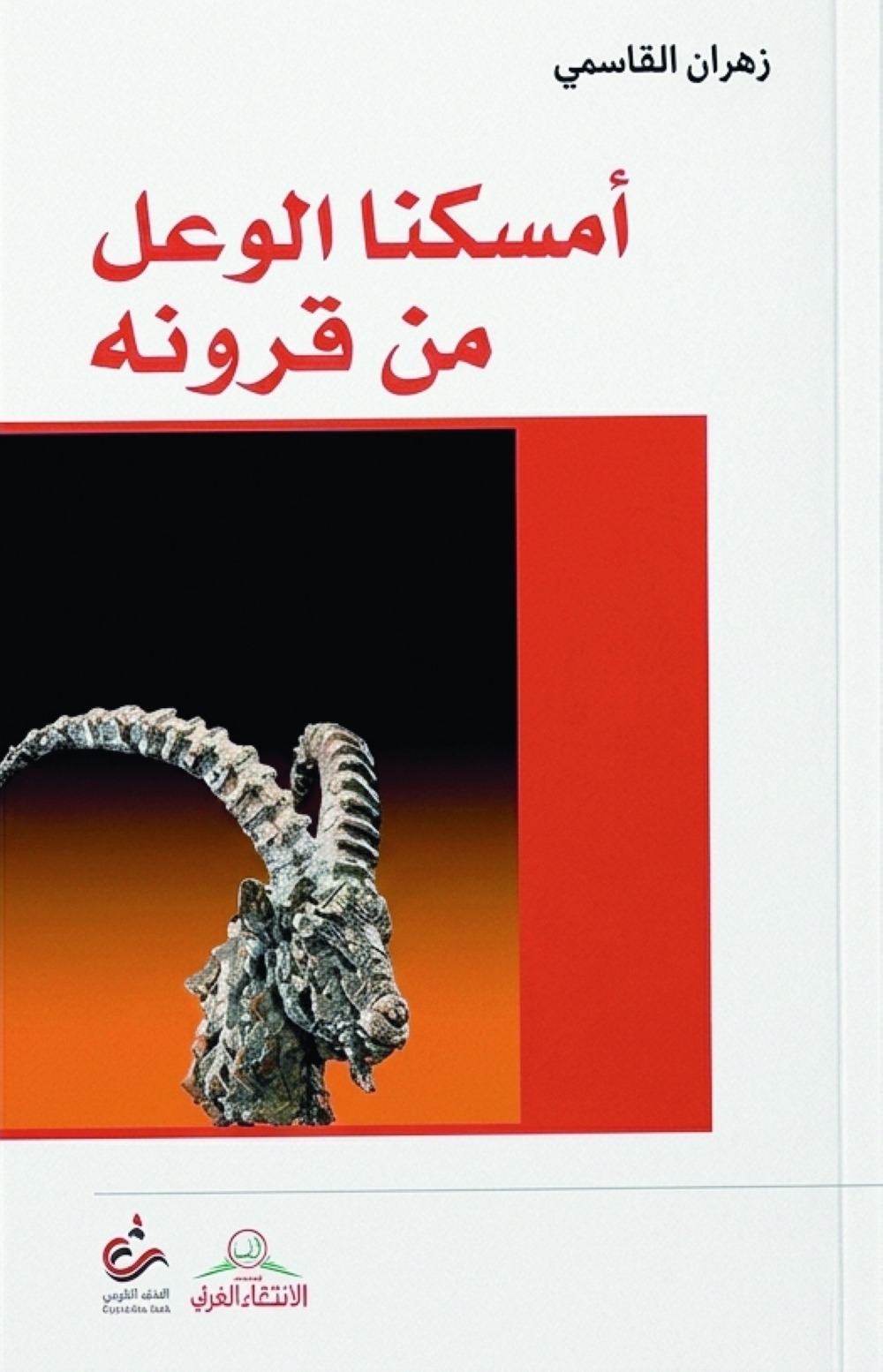
Zahran al Qasmi develops this approach in his poetry collection 'We Grasped the Ibex by Its Horns'. Drawing on his experience of village and mountain life, he brings together landscapes, folklore and the hidden fears of the human mind.
His poetry frequently explores the relationship between people and nature:
We fought the wind and driving rain,
We cried at spirits in the plain,
We howled beside the wolves at night,
And seized the ibex in our might.
Within this imaginative world, Al Qasmi revisits the figure of Al Mughayyab, turning a familiar folk belief into a reflection on death, memory and freedom.
He begins with an unsettling image:
Your curly hair falls loosely down.
The description brings together contrasting qualities: tightly curled hair and its flowing movement. This tension creates an unfamiliar figure whose identity remains uncertain.
The poet then deepens the mystery:
Leprous fingers comb your hair,
Seeking a charm upon your brow,
Searching the stars for answers there.
The references to charms and stars recall ancient attempts to understand the unknown through magic and superstition.
Another image places the mysterious figure inside a cave:
You long to find your way outside,
Beyond the cave where shadows hide,
A cave sealed shut a hundred years.
The cave becomes a symbol of confinement. Its darkness suggests the fears and inherited beliefs that restrict human understanding.
Al Qasmi also introduces disturbing images of violence and disappearance:
When they opened up your tale,
Their worlds had nothing left of you.
They devoured all who stood beside you,
Then vanished from view.
These lines recall the frightening stories once associated with sorcerers and the supposedly returning dead. Yet their deeper significance lies in the power of such beliefs to shape collective consciousness.
The poem gradually moves towards a call for liberation:
O absent one,
Pull the thorn out of your tongue.
Break these rusted chains,
Or drag them behind you
Until they become part of you.
The thorn suggests enforced silence, while the chains represent the burden of inherited fears.
Although the poet addresses Al Mughayyab, his words can also be understood as an appeal to society itself: to question beliefs that restrict thought and prevent intellectual freedom.
The poem reaches its strongest expression of this idea in its closing invitation:
Step into the light
Your eyes have long been denied.
And if you wish,
Burn your final charm,
Let the cave collapse.
Through these images, Al Qasmi transforms a traditional supernatural figure into a symbol of humanity’s journey from fear towards knowledge.
The belief in Al Mughayyab may have lost much of its former authority, but its stories remain culturally significant. They remind us that even in an age of scientific and technological progress, ancient fears continue to leave traces in human imagination.
Poetry gives these memories new life, allowing us to understand the past while questioning the ideas it has passed down to us.
Adapted and translated by Badr al Dhafari
This is an adapted translation of the original Arabic article published in the print edition of the cultural supplement of the Oman newspaper on October 29, 2026.
Oman Observer is now on the WhatsApp channel. Click here