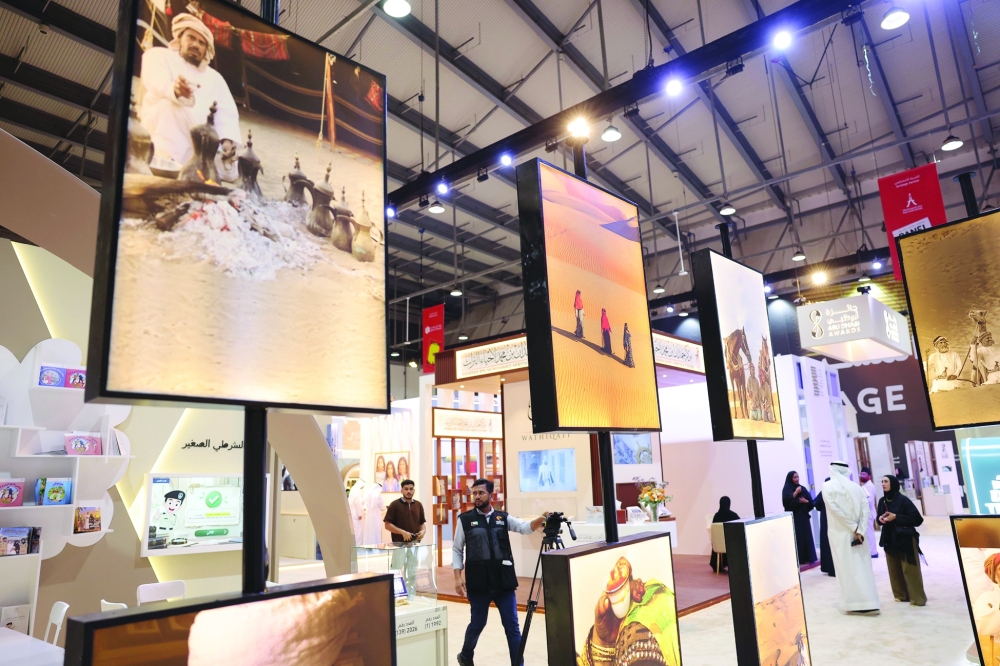


From the movements and music of Al Bar’ah to the craftsmanship behind the Omani khanjar, traditions passed between generations are introducing visitors to Oman’s living heritage at the 45th Sharjah International Book Fair.
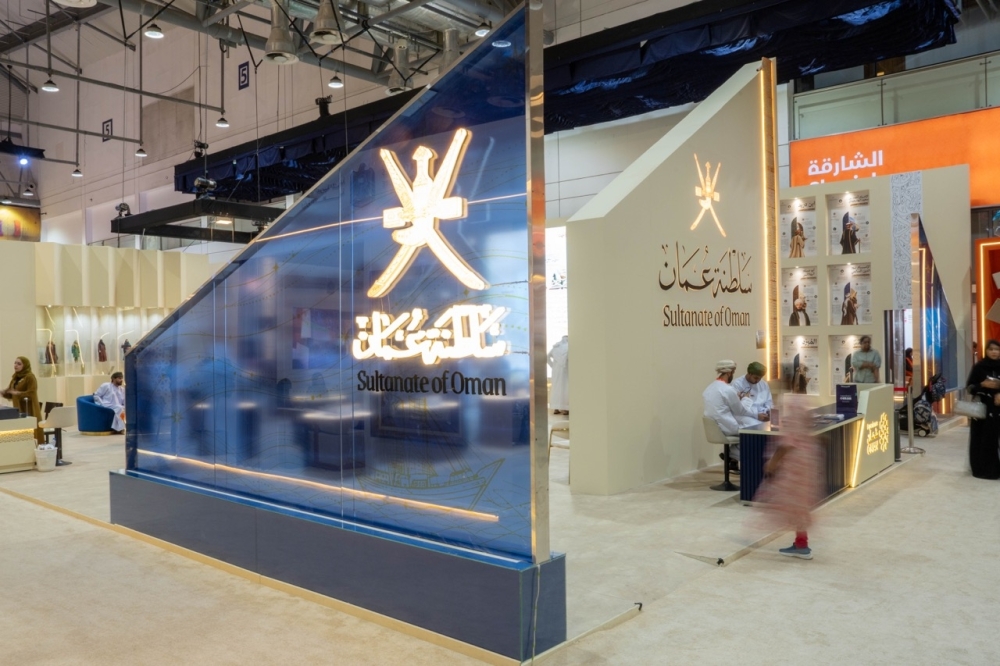
The Sultanate of Oman’s Guest of Honour pavilion features a display of selected cultural practices recognised by Unesco, alongside figures whose contributions to science, literature and historical scholarship remain part of the country’s intellectual legacy.
Salman bin Ali al Ajmi, Head of the Civilisational Research and Studies Section at the Ministry of Culture, Sports and Youth, said the traditions presented were not simply remnants of the past. They remain part of Omani society, sustained through continued practice and transmission between generations.
He explained that the display represents only a selection of Oman’s diverse heritage, with each element carrying its own historical roots and connection to national identity.
Among the examples is Al Bar’ah, the music and dance tradition associated with Dhofar, which combines poetry, music and movement and was inscribed on Unesco’s Representative List of the Intangible Cultural Heritage of Humanity in 2010.
Horse and camel Ardhah, inscribed in 2018, highlights the skills and customs associated with the animals. The khanjar’s craft skills and social practices, recognised in 2022, reflect both its significance as a symbol of Omani identity and the knowledge passed down by its makers.
Al Ajmi said presenting these traditions at cultural events such as the Sharjah book fair helps younger generations understand their heritage while introducing international audiences to Oman’s cultural history. Such participation also supports cultural and heritage tourism.
A separate part of the display turns to Omani scholars and writers commemorated through Unesco’s anniversaries programme.
They include Ibn al Dhahabi, the physician and linguist recognised in 2015, whose encyclopaedic work Kitab al-Ma brought together medicine, pharmacy and language.
Also recognised that year was the scholar and reformer Noor al Din al Salmi, whose writings include Tuhfat al-A‘yan bi-Sirat Ahl Oman and Jawhar al-Nizam.
The historian and writer Ibn Ruzayq, commemorated in 2023 on the 150th anniversary of his death, is highlighted for his contribution to documenting the history of the Al Busaidi state.
The display also features Al Mubarrad, the linguist and grammarian whose inclusion in the anniversaries programme was approved in 2025 to mark 1,200 years since his birth. A prominent figure in the Basran grammatical tradition, his best-known works include Al-Kamil and Al-Muqtadab.
Al Ajmi said the ministry runs an annual project documenting Omani figures who contributed to intellectual, literary, scientific and cultural life. Through a specialised symposium and a publication in a series devoted to readings in scholars’ thought, the project introduces new generations to their lives, writings and influence.
The wider display also includes Imam Nasir bin Murshid al Yarubi, founder of the Yaruba state, and Imam Ahmed bin Said al Busaidi, founder of the Al Busaidi state, alongside the encyclopaedic scholar Abu al Mundhir al Awtabi al Suhari and the linguist and writer Ibn Duraid.
Together, the traditions and biographies offer complementary views of Oman’s cultural memory: knowledge preserved in books and historical accounts, and skills and practices kept alive in everyday community life.
Oman Observer is now on the WhatsApp channel. Click here