

How sailors navigated open seas and how physicians explained the human body come into focus in the handwritten pages on display at Oman’s Guest of Honour pavilion at the 45th Sharjah International Book Fair.
From drawings of sailing vessels to anatomical illustrations accompanied by verse, the manuscripts reveal how knowledge was recorded, explained and passed between generations. Displayed in illuminated glass cases, they bring together maritime experience, medical scholarship, historical writings and accounts of journeys abroad.
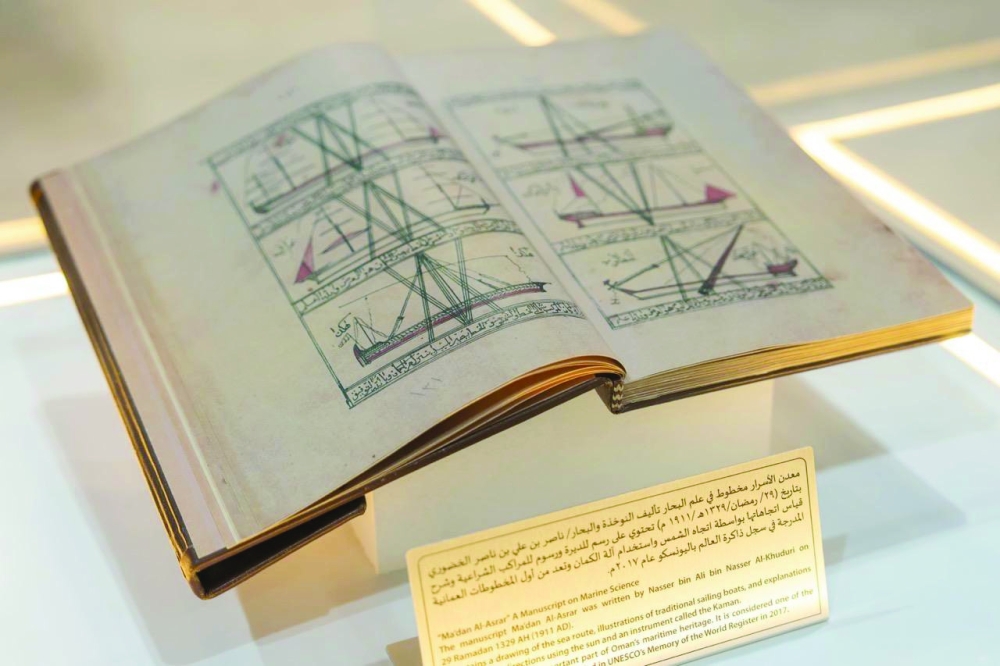
Among the highlights is Ma’dan Al-Asrar, the maritime work by Omani captain Nasser bin Ali bin Nasser al Khuduri, inscribed on Unesco’s Memory of the World Register in 2017 under the title Maden Al Asrar Fi Elm Al Behar.
Its illustrations depict traditional vessels with their masts, rigging and sails, alongside sea routes. The work explores navigational methods used by sailors before satellite technology, including observations of the sun and the use of traditional instruments.
Unesco describes the work as a marine guide covering the compass and its components, latitude and longitude, distance tables and celestial bodies. It also records ports, some of which subsequently changed or were abandoned.
Al Khuduri combined experience at sea with theoretical study, producing a record of navigational knowledge and the coastal places connected by maritime travel.
The medical manuscripts present a different approach to understanding the world. A work by Rashid bin Amira bin Thani al Rustaqi, an Omani physician who lived between the 10th and 11th centuries AH, combines anatomical illustrations with Arabic annotations and poetry.
Verses describing parts of the human body appear alongside drawings, showing how medical subjects could be communicated through both visual explanation and literary form. The pages offer an insight into the recording and teaching of medical knowledge before modern imaging technology.
The exhibition reaches further back through Majmoa Alsyar wa Aljawabat, dated 531 AH, corresponding to 1136–1137 CE. Described by the exhibition as the oldest Omani manuscript discovered to date, it contains a collection of historical accounts and scholarly responses.
Its densely written pages connect visitors with an intellectual tradition extending back nearly nine centuries, adding historical depth to the more recent maritime and travel works.
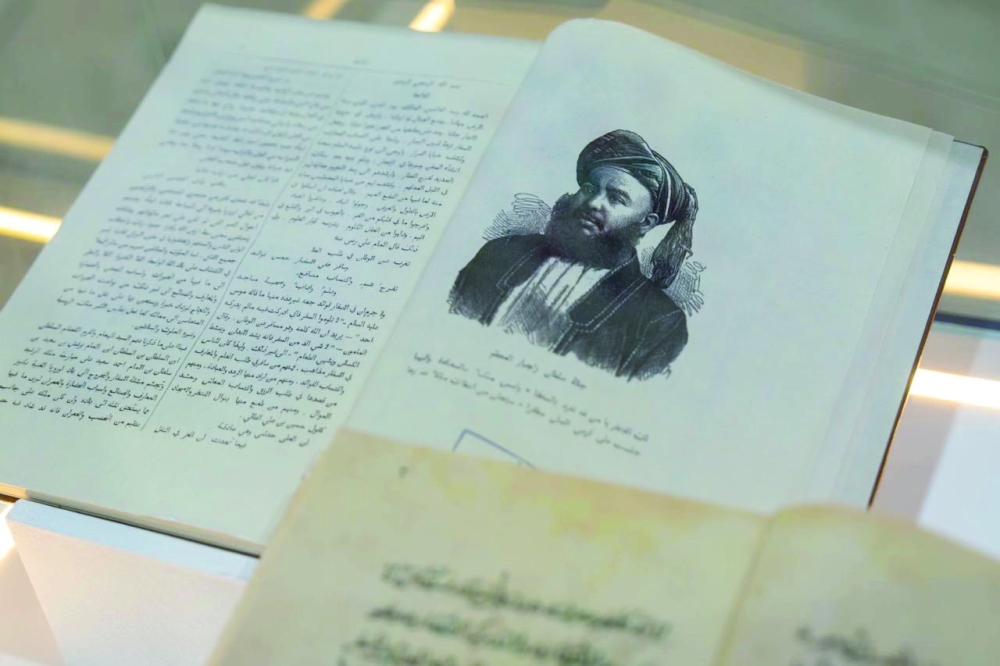
Travel writing is represented by Tanzih Al-Absar, documenting Sultan Barghash bin Said’s journey from Zanzibar to Britain in 1875. The voyage lasted four months and 18 days.
The account records places visited and observations made along the way, offering a written record of encounters abroad and another perspective on the movement of people and knowledge.
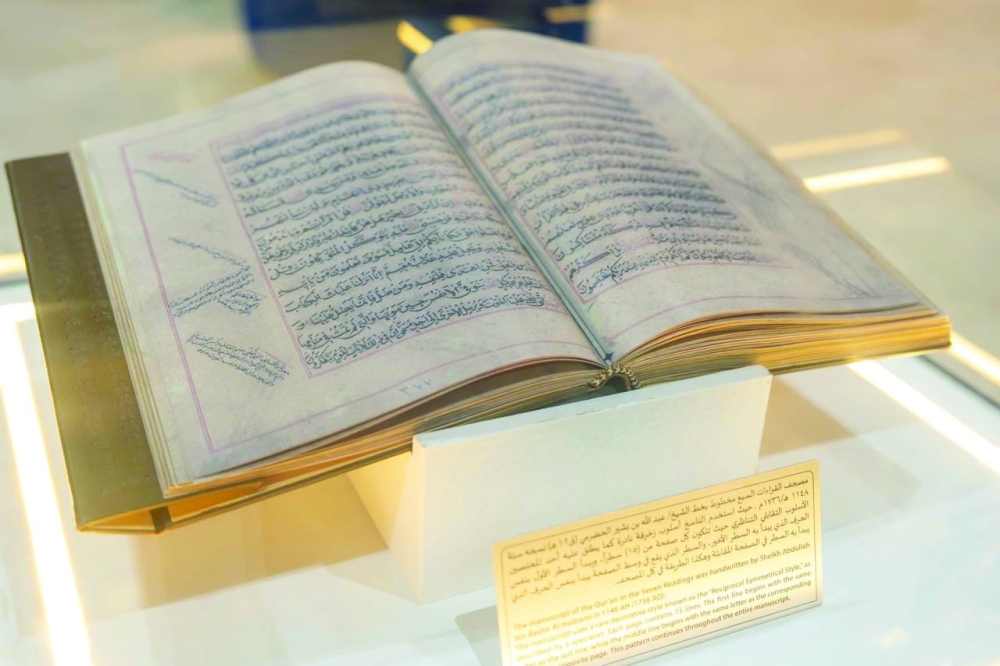
A handwritten Quran dated to 1736 also draws attention to the arrangement of text on the page. According to the exhibition description, the opening and final lines of each page begin with the same letter, a distinctive feature of its composition.
The display is drawing visitors of different nationalities to explore Oman’s manuscript heritage. Together, the works offer a close look at the drawings, writings and historical records preserved by generations of Omani scholars, revealing how they documented their world and passed their knowledge on.
Oman Observer is now on the WhatsApp channel. Click here