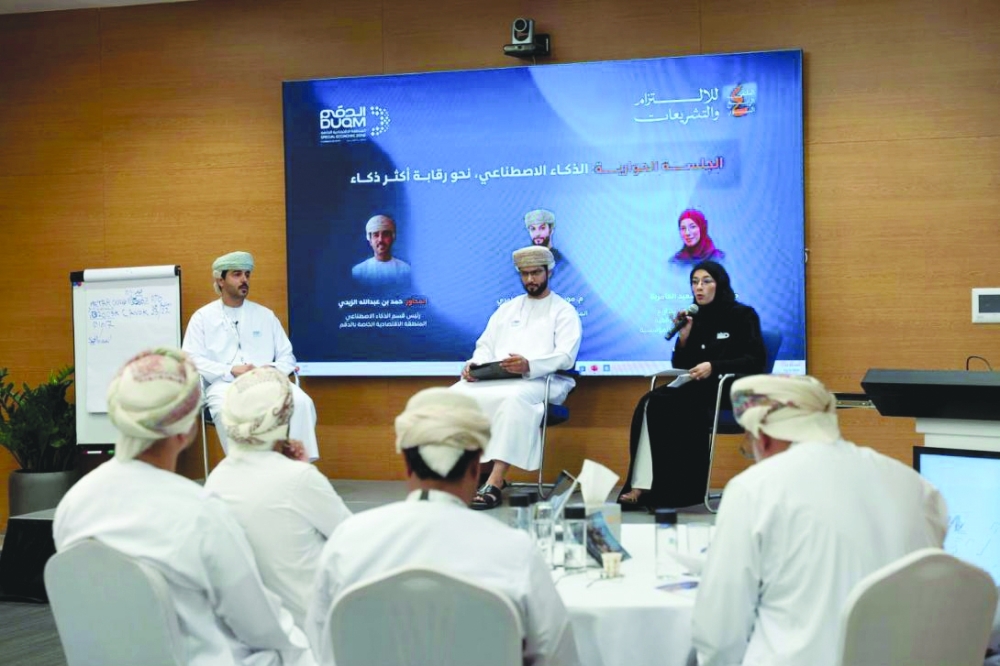


AL DUQM: Regulators and businesses meeting in Duqm examined how artificial intelligence could improve inspections and environmental monitoring across the Sultanate of Oman’s economic zones, free zones and industrial cities, as part of efforts to strengthen compliance and improve services for investors.
The fourth Annual Compliance and Legislation Forum, hosted by the Special Economic Zone at Duqm (SEZAD) from November 2 to 4, brought together private-sector representatives and officials from zones and industrial cities overseen by the Public Authority for Special Economic Zones and Free Zones (OPAZ).
Mansour bin Nasser al Barashdi, director of compliance and environmental affairs at SEZAD, said closer coordination among the zones could improve regulatory oversight and investor services. He said compliance with environmental and regulatory requirements could also reduce project risks and improve operating efficiency while protecting natural resources.
A panel on AI discussed using the technology to analyse environmental data, identify emerging risks and guide inspections. Participants also examined how it could improve the accuracy of information used by regulators. Other sessions reviewed how zones could streamline compliance procedures and how companies were applying health, safety and environmental standards at their sites.
Dr Khalid bin Ahmed al Najjar, an environmental expert at SEZAD, said project developers should account for Duqm’s climatic conditions when planning facilities. His paper examined how local climate factors could shape urban and investment planning and how projects could prepare for environmental challenges.
Mohammed bin Khalfan Imbusaidi, environmental affairs lead at SOHAR Port and Freezone, said greener industrial zones could attract investment by helping companies use energy and raw materials more efficiently. He highlighted opportunities for neighbouring factories to use one another’s by-products and adopt cleaner technologies. He said the shift would require coordination between government and industry and could support the Sultanate of Oman’s goal of reaching net-zero carbon emissions by 2050.
The programme included visits to the Port of Duqm and Asyad Drydock, where delegates were briefed on industrial and logistics projects. A final report will set out recommendations on inspections, environmental compliance and cooperation among zone authorities and businesses, with the aim of informing future policies and procedures under Oman Vision 2040.
Oman Observer is now on the WhatsApp channel. Click here