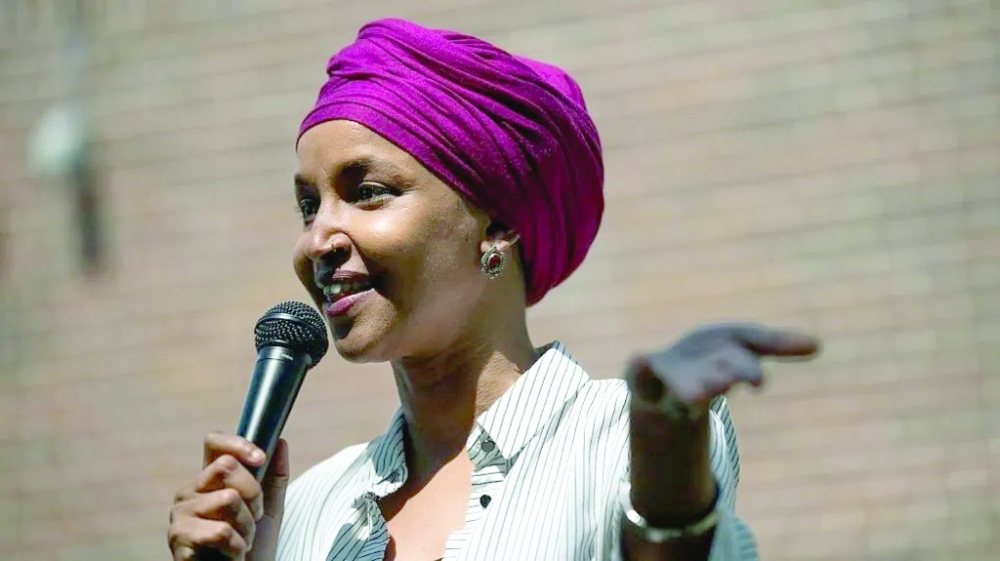


Democratic Congresswoman Ilhan Omar has returned to the headlines in the United States following a reported raid on her home as part of an investigation into her immigration and citizenship records.
According to reports cited in the controversy, investigators are examining whether Omar, who was born in Somalia and has represented a Minnesota congressional district since 2019, or members of her family provided false information when entering the US as refugees in the 1990s or during the naturalisation process.
A source cited by Reuters reportedly suggested that the ultimate objective was to revoke her citizenship and deport her.
At first glance, the matter might appear to be a legal investigation. President Donald Trump has denied involvement in the reported raid, yet he has continued to attack Omar personally, questioning her character and disparaging her country of birth.
This contradiction has prompted Omar to accuse the Trump administration of using law enforcement agencies to intimidate political opponents. She maintains that Trump has targeted her for years through accusations and smear campaigns intended to silence her.
The timing is particularly significant. With congressional midterm elections scheduled for November 3, reopening questions about the citizenship of a prominent political opponent inevitably raises concerns about the relationship between legal authority and political power.
Omar is among Trump's most outspoken critics and has become an important symbol for many immigrants and religious and ethnic minorities. Any action against her is therefore bound to carry political implications, regardless of the legal arguments presented.
This brings us to an uncomfortable question: how different is the US from countries it frequently criticises for using state institutions against political opponents?
What impression does it create when citizens suspect that law enforcement agencies are being employed to settle political scores? And what message does this send to immigrants who came to the West believing it offered freedom, justice and protection under the law?
The controversy has also revived longstanding allegations concerning Omar's family relationships. The New York Post has reported claims involving DNA evidence and passport records in connection with allegations that she married her brother to assist his immigration status.
Omar has repeatedly denied these allegations, which should not be treated as established facts.
The wider danger lies in the implications for immigration and citizenship. The United States was built through successive waves of migration. Any suggestion that naturalised citizens might face politically motivated efforts to revoke their citizenship could unsettle millions who regard their legal status as secure.
Equally troubling is the tendency to extend accusations against one individual to an entire ethnic or religious community. Even if wrongdoing were established in an individual case, collective blame would remain unjustifiable.
Trump's repeated criticism of Omar's Somali background and Muslim identity, alongside his attacks on Minnesota's Somali community, has intensified concerns that political disagreement is becoming entangled with questions of race, religion and national belonging.
But who is the woman who has occupied so much of Trump's attention?
Omar arrived in the US with her family in 1995, aged twelve, after fleeing Somalia's civil war and spending years in a refugee camp in Kenya. She became an American citizen in 2000. Her journey from refugee to member of Congress has made her a prominent figure in American politics, while also exposing her to sustained hostility.
Her story reflects a broader experience shared by many Arab and Muslim migrants in Western countries.
How many people have left their homelands seeking security, dignity and opportunity, only to encounter different forms of hardship, loneliness and alienation? Some discover that the life they imagined abroad comes with unexpected social and cultural challenges. They find themselves unable to return home, yet never entirely comfortable in their adopted countries.
Migration can also transform people's relationships with their origins. Some become deeply critical of the countries they left, while others gradually distance themselves from their religious and cultural traditions. A smaller group eventually considers returning.
I recall meeting a Palestinian businessman in Zanzibar who had emigrated to Germany. He told me he was seriously considering relocating his business to Oman and had already begun the necessary procedures. When I asked why, he explained that he was concerned about preserving his children's religious upbringing and cultural identity.
Of course, Western countries have provided immigrants with opportunities that were unavailable in their homelands. That reality cannot be dismissed. Yet it is equally important to examine the international political circumstances that have contributed to instability and displacement in countries such as Somalia.
Ilhan Omar's case therefore extends beyond one congresswoman or one legal controversy. It raises fundamental questions about citizenship, political freedom, the treatment of immigrants and the credibility of Western claims to uphold equality before the law.
A democracy's commitment to justice is tested most seriously when those in power confront their fiercest critics. The independence of the law must remain beyond political rivalry, and citizenship should never become an instrument of intimidation.
The original version of this article was published in the print edition of Oman Arabic newspaper on October 26. Translated by Badr al Dhafari
Oman Observer is now on the WhatsApp channel. Click here