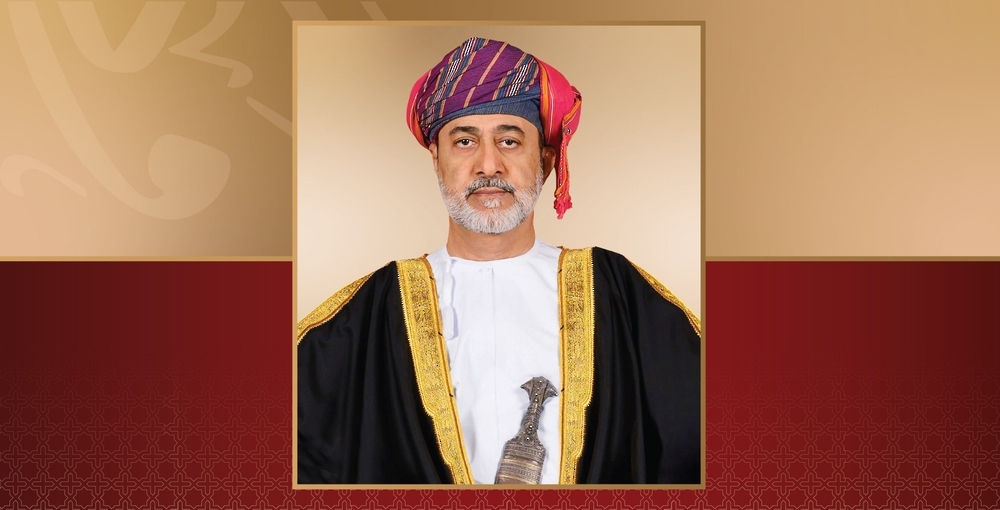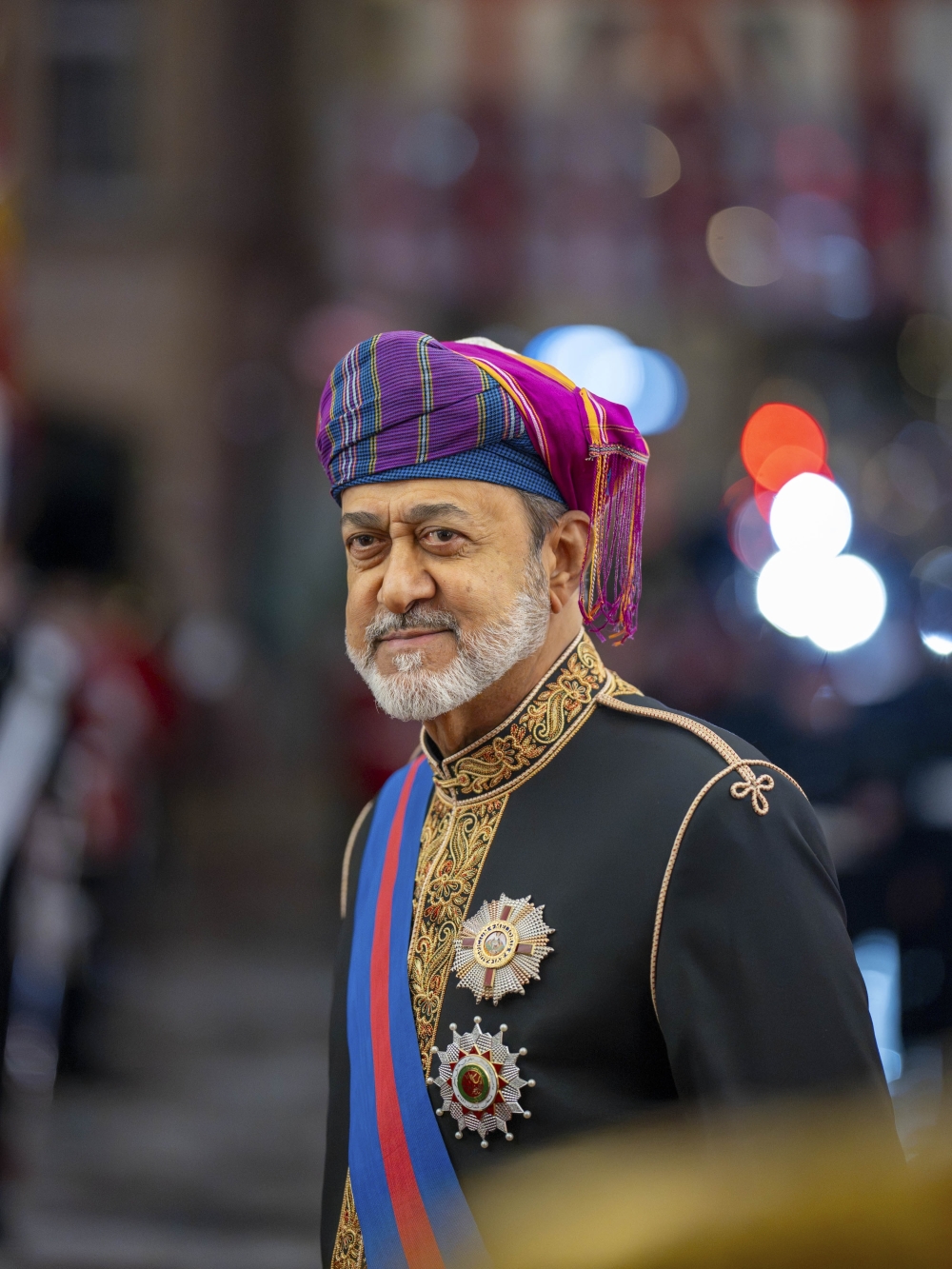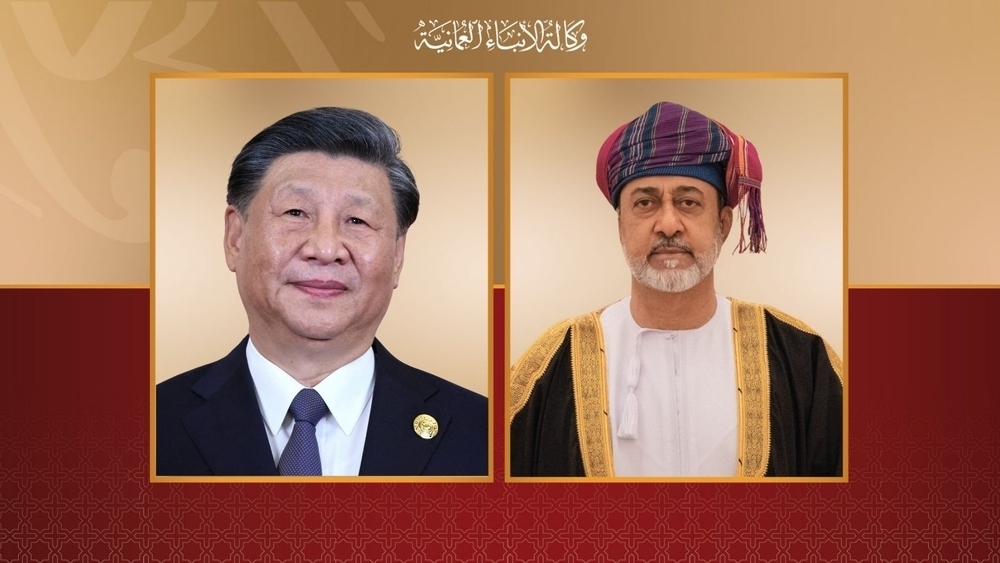


The state visit of His Majesty Sultan Haitham bin Tarik to the People's Republic of China marks a landmark in Omani Chinese relations. It also attests to the depth of the historical and civilizational bonds between the two countries, which have spanned more than a millennium through maritime trade routes.
Those routes helped forge bridges of communication and exchange between the two peoples.
The visit carries a particular importance in light of the steady evolution of bilateral ties and the wider horizon it holds for deepening the strategic partnership. It opens the way for closer cooperation across political, economic, investment, cultural and scientific fields.
Economically, the visit creates new scope for expanding cooperation and drawing further Chinese investment into Oman. It also allows both sides to capitalize on the Sultanate of Oman’s competitive advantages and strategic location, together with its special economic zones, modern infrastructure and prospects in industry, renewable energy, green hydrogen, technology and logistics.
History of 1,200 years between two countries
Relations between the two friendly countries are founded upon a historical depth of some 1,200 years, according to Chinese records. Omanis played a pivotal role in navigation and maritime trade along the Silk Road, and official sources trace the relationship to the arrival of the Omani merchant Abu Ubaydah Abdullah bin Al-Qasim at Canton — present-day Guangzhou — from Sohar around 750. They also record the voyages of the Chinese navigator Zheng He to Oman in the fifteenth century, which attest to the enduring civilizational and maritime contact between the two peoples.
Formal diplomatic relations were established on 25 May 1978 and have since been marked by stability, understanding and mutual respect. Cooperation has expanded steadily across diplomatic, economic, trade, investment, cultural, scientific and technical domains.
On the 40th anniversary of these ties in 2018, the relationship was elevated to a strategic partnership, and a memorandum of understanding on cooperation within the Belt and Road Initiative was signed. Cooperation accordingly widened to cover energy, infrastructure, investment, finance, science and technology, logistical connectivity and cultural exchange.
Relations are managed through periodic strategic consultations between the two foreign ministries, held alternately in Muscat and Beijing. The 14th round took place in Beijing on 21 April 2025, chaired by Sheikh Khalifa bin Ali Al Harthy, Undersecretary of the Foreign Ministry for Political Affairs, and his Chinese counterpart HE Liu Bin. This pattern reflects Oman's approach of diversifying its partnerships and broadening its strategic options, while sustaining a balanced foreign policy and open relations with international powers.
Oman-China Joint Committee
Meanwhile, Oman-China Joint Committee is the principal official mechanism for coordinating and following up economic, trade, investment and industrial cooperation between the two countries. Its institutional origins trace back to the Trade Agreement signed in Beijing on 14 October 1980 and ratified by Royal Decree No. 4/81.
The Committee held its 10th session in Beijing on December 29, 2025, chaired on the Omani side by the Undersecretary for Commerce and Industry at the Ministry of Commerce, Industry and Investment Promotion, and on the Chinese side by the Assistant Minister at the Chinese Ministry of Commerce.
The session concentrated on increasing Chinese investment in Oman, particularly in industry, in support of economic diversification. It also agreed to form a joint working team to prepare an executive roadmap for the Committee's work and examined a proposal to establish an integrated industrial complex for renewable energy supply chains as a flagship project.
Further items addressed cooperation in digital and cross-border e-commerce through smart warehouses and distribution centres in the special economic and free zones of Duqm, Sohar and Salalah. The session also backed the conclusion of negotiations on a free trade agreement between China and the Gulf Cooperation Council states, and provided for memoranda of understanding to link industrial production chains and deepen investment interlinkage.
Oman-China Friendship Association
Oman-China Friendship Association, inaugurated on October 31, 2010, provides a platform for communication between institutions and individuals in the two countries. It promotes cultural, economic, scientific and sporting cooperation and people-to-people exchange, complementing the work of the China-Oman Friendship Society, whose establishment was announced in China in 2007.
The Association's board of directors in Muscat is chaired by Dr. Khalid bin Salim Al Saidi, with Lujaina Mohsen Haider Darwish Al Zaabi as Honorary President. It strengthens informal partnership through events such as Oman-China Friendship Forums, including the third edition held in Salalah in July 2025 under the theme "Chinese Modernization and Oman Vision 2040". It also organizes meetings with Omani students in China and other cultural seminars and events.
Anwar bin Ahmed Muqabil, the Sultanate of Oman's Ambassador to the People's Republic of China, told Oman News Agency (ONA) that the Royal visit represents an important milestone in Omani-Chinese relations. He noted that His Majesty’s visit is the first by an Omani Sultan to the People's Republic of China and constitutes a new historical starting point in the course of relations between the two countries.
Anwar bin Ahmed Muqabil, the Sultanate of Oman's Ambassador to the People's Republic of China, told Oman News Agency (ONA) that the Royal visit represents an important milestone in Omani-Chinese relations. He noted that His Majesty’s visit is the first by an Omani Sultan to the People's Republic of China and constitutes a new historical starting point in the course of relations between the two countries.
The Ambassador added that the visit reflects the shared political will to elevate the strategic partnership to broader horizons. He noted that Omani-Chinese relations are founded on a historical legacy extending back more than a thousand years along the Maritime Silk Road.
He explained that modern diplomatic relations have developed continuously since formal ties were established in 1978, culminating in the announcement of a strategic partnership in 2018.
The Ambassador noted that the current trajectory is marked by growing economic and investment cooperation. Trade between the two countries exceeded USD 25 billion in 2025, and China stands as the largest market for Omani exports.
On the key files of interest to both countries, the Ambassador explained that cooperation priorities include conventional and renewable energy, industrial investment and supply chains, special economic zones and ports. They also extend to the digital economy, advanced technology, artificial intelligence and communications, alongside trade, logistics, food security and manufacturing.
He added that the sessions of Oman-China Joint Committee have focused on deepening cooperation in advanced industry, renewable energy and technology, and on linking industrial production chains in support of the objectives of Oman Vision 2040.
On attracting further Chinese investment, the Ambassador affirmed that the Sultanate of Oman possesses strong assets that make it an attractive destination. Foremost among these are its strategic location on global trade routes, its modern infrastructure and its specialized economic zones.
He noted that the Special Economic Zone of Duqm is a prominent model of economic partnership between the two countries, hosting the China-Oman Industrial City with a number of industrial and logistics projects. Omani authorities concerned continue to promote investment opportunities in green industries, technology, chemicals and energy.
The Ambassador noted that the volume of bilateral trade reflects investor confidence and opens the way for increased Chinese investment in manufacturing, renewable energy, green hydrogen and logistics.
On the political and diplomatic significance of these relations, the Ambassador said that political ties are founded on the principles of mutual respect and non-interference in internal affairs, and on a partnership founded on common interests.
He added that Oman's balanced role in fostering dialogue and consensus has earned it considerable international standing, while China represents an internationally influential political and economic power. Bilateral relations accordingly help build bridges of understanding between the Arab region and Asia and enhance cooperation within international and multilateral frameworks.
The Ambassador affirmed that the current phase witnesses clear convergence between Oman Vision 2040 and the Belt and Road Initiative, which gives the relationship a long-term strategic dimension.
On sustaining coordination on regional and international issues, he explained that Oman and China have a positive record in supporting dialogue, the peaceful resolution of disputes and respect for international law.
He noted the potential to strengthen this coordination by intensifying regular political consultations and supporting international initiatives aimed at settling disputes by peaceful means. Cooperation could also extend to energy security, the safety of maritime corridors and global challenges such as climate change, food security and supply chains. He affirmed that Oman's diplomatic standing and China's growing international role constitute a suitable basis for enhancing regional and international security and stability through dialogue and constructive cooperation.
On educational, cultural and academic cooperation, the Ambassador stated that this cooperation has developed markedly in recent years, building on the historical ties between the two peoples.
He explained that the most prominent future opportunities lie in increasing scholarships for Omani students at Chinese universities and strengthening researcher and faculty exchange programmes. They also include joint research projects in technology, artificial intelligence and renewable energy, expanded Chinese language programmes in Oman and Arabic language programmes in China, and closer cultural and tourism exchange.
The Ambassador noted that China is among the world's largest investors in research and technology, which offers wide opportunities for Omani academic institutions to benefit from Chinese expertise.
He affirmed that Omani-Chinese relations carry a clear message: partnerships founded on mutual respect and common interests are capable of delivering development, stability and prosperity for peoples.
He explained that the two countries' aspirations for the future lie in doubling mutual investment and expanding the partnership in the digital economy and artificial intelligence. They also encompass renewable energy and green hydrogen projects, closer cooperation in ports and logistics, and support for cultural, scientific and people-to-people exchange.
The Ambassador noted that bilateral trade exceeding $25 billion in 2025, together with China's continued position as the largest market for Omani exports, reflects the scale of opportunities available to both countries in the years ahead.
He concluded by affirming that the Omani-Chinese relationship is not merely a commercial one but a growing strategic partnership. It brings together two ancient civilizations and two visions aspiring to a more prosperous and sustainable future.
Oman Observer is now on the WhatsApp channel. Click here