

Researchers have categorised people who spend a significant part of their childhood in a culture different from their parents' culture and have named them Third Culture Kids, or TCKs. In the 1950s, sociologist Ruth Hill Useem developed the term after studying American expatriate families in India. TCKs often grow up influenced by their parents' heritage culture, the culture of their host country, and a shared “third culture” formed among expatriates and other internationally mobile people. Later, two researchers, David C. Pollock and Ruth E. Van Reken, expanded the concept in their book Third Culture Kids: Growing Up Among Worlds, first published in 1999. The book describes TCKs as people who build relationships to all cultures, while not having full ownership in any. This experience can foster flexibility, cultural awareness, and comfort navigating different social worlds, although it can also involve challenges such as repeated loss, rootlessness, or uncertainty about belonging. Some TCKs therefore become effective “bridge builders” between cultures, but the experience does not produce the same outcome for everyone. For Maryam Moreed, that description could double as a personal biography. Now, as she begins sharing that experience with an online audience, her story offers a close-up look at how one young woman is putting the Third Culture Kid pattern into words.
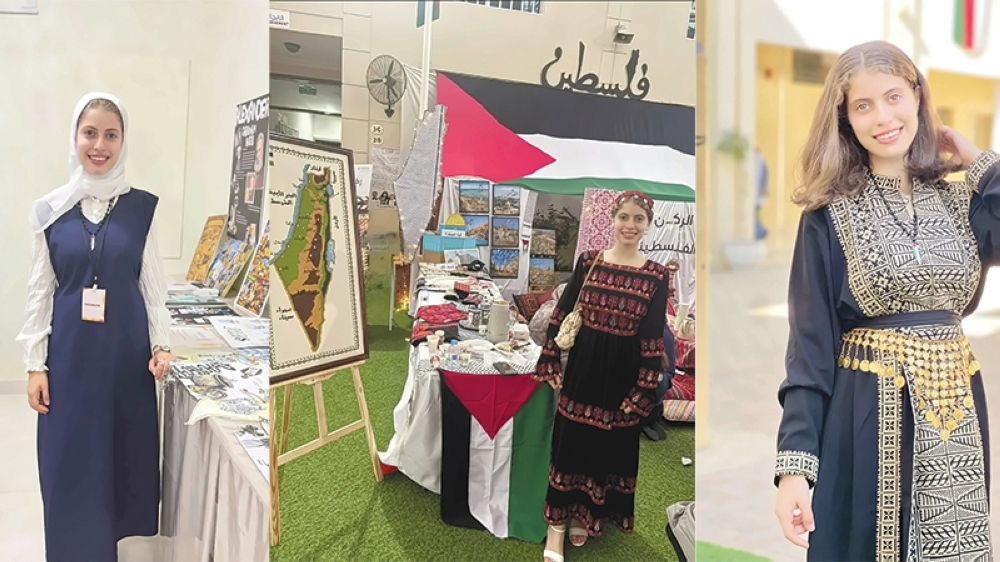
Palestinian by origin, Maryam has spent most of her life growing up in Oman, with both cultures shaping her identity and worldview.
“I can’t separate Palestine from Oman,” she says. “The two of them exist in my personality, one way or another.”
For years, living between two cultures simply felt like normal life. As she grew older, however, Maryam began to recognise how both had influenced her. Rather than competing identities, they became complementary parts of who she is.
“I don’t think one has to erase the other. If anything, the most beautiful part of my experience has been learning that I can carry both with me.”
Growing up in Oman left a lasting impression on Maryam, shaping how she communicates with people and understands different personalities. She believes the country’s calm atmosphere and strong sense of community gradually became part of her character.
Many of her clearest childhood memories are rooted in Oman, from school days and ordinary afternoons to the places she visited and people she met. What once seemed unremarkable has since become central to her understanding of herself.
“I don’t think I realised how much it shaped me until I got a little older,” she reflects. “You can live in a certain community for years, take in the way people talk and think, and consider it all normal, and then one day you discover that a lot of your own personality actually came from the environment around you.”
Yet her Palestinian roots have remained equally important. Palestine represents more than her country of origin; it connects her to her family, history, traditions and upbringing.
“Palestine represents my origin and my roots,” Maryam says. “It’s where I belong, in terms of family, culture, and history. Even though I haven’t lived there for a while, it’s still an essential part of me; through my family, the stories I grew up hearing, our customs, the way we speak, everything I was raised on.”
Although she has not lived in Palestine for some time, she continues to carry a sense of belonging to it, alongside the deep connection she has developed with Oman throughout her childhood and teenage years.
Growing up between these cultural perspectives has taught Maryam to appreciate differences in traditions, communication and personal experiences. This awareness eventually encouraged her to share her story more openly.
Recently, she began filming short videos about her experience and posting them on her public account, offering a wider audience a glimpse into life between cultures.
“I love the idea that someone sitting in a completely ordinary place can film a short video, share one simple idea, and have it reach someone in a place entirely different from their own,” she says. “The idea that one person’s voice can reach thousands, or even millions, of people. That means something huge to me.”
For many Third Culture Kids, navigating different cultural worlds can create opportunities to connect people and perspectives. Maryam’s decision to share her experience reflects this possibility, turning a personal journey of identity and belonging into a conversation that reaches beyond her immediate surroundings.
Through a phone camera and her own words, she is learning to articulate what it means to belong to two places at once, without having to choose between them.
Oman Observer is now on the WhatsApp channel. Click here