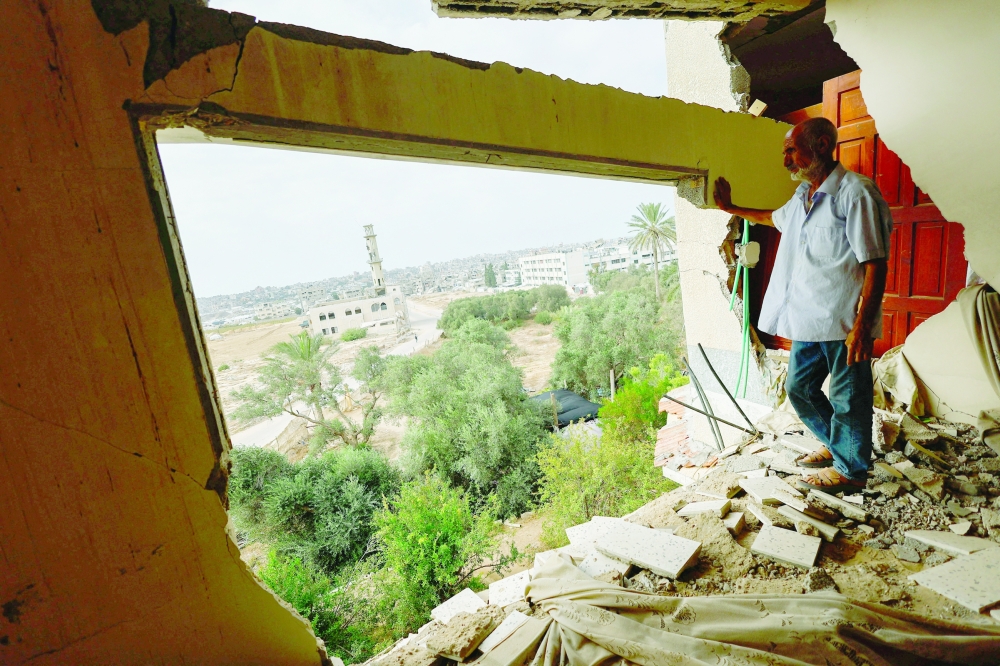


GAZA: Before the war, olives were the jewels of Gaza agriculture, pressed into enough rich oil to serve as a staple for the local diet, and a small surplus for export to Israel. The shady groves abutting Gaza's concrete cities were a sanctuary for families in one of the world's most densely populated territories.
Today, nearly half of the orchard lies beyond the "yellow line" guarded by Israeli troops who bar Palestinians from even entering two-thirds of the Gaza Strip. The other half of the grove, though still accessible, has mostly been bulldozed. Gaza's agriculture authorities estimate that of 2 million olive trees, barely 150,000 are still standing. They anticipate a harvest of about 5,000 tonnes of olives instead of the usual 40,000, producing only 700 tonnes of oil instead of 5,000.
Bushels of olives and drums of freshly pressed oil would normally be stacked high in Gaza's markets this time of year. Nowadays there is barely any at all, and what does make it to market sells at around triple the pre-war price, nearly $500 a drum, well beyond what Gazan families can afford. — Reuters
Oman Observer is now on the WhatsApp channel. Click here