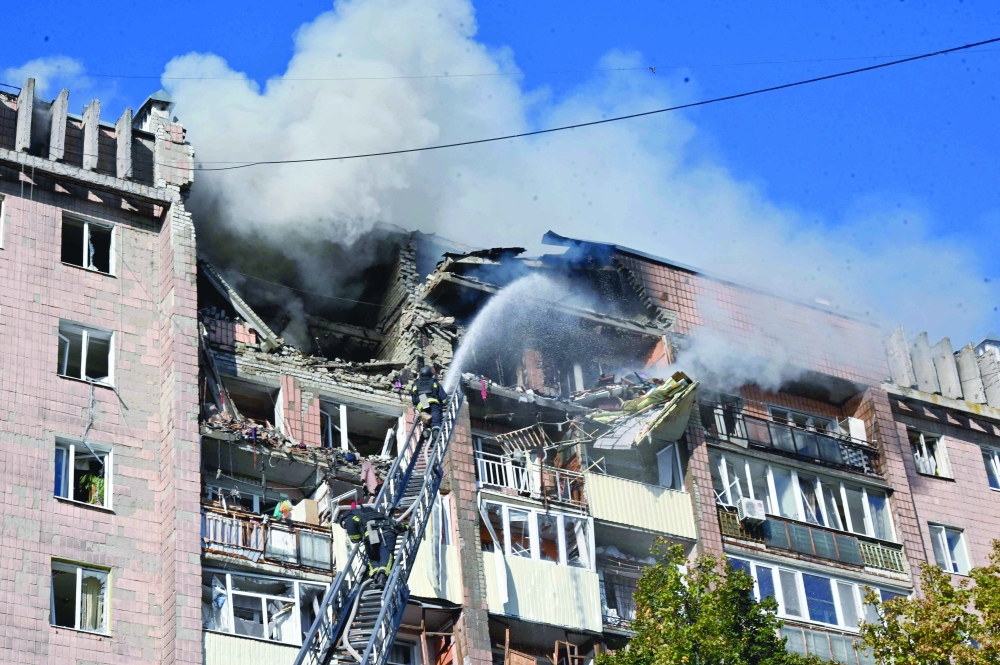





WARSAW: Ukraine's President Volodymyr Zelensky said on Monday his country would respond if Russia did not agree to the "energy ceasefire" announced by US President Donald Trump. The Kremlin refused to say if an energy target truce was in place. Ukraine said that Russia struck its power plants and gas facilities after Trump posted on social media that a deal had been reached. "If Russia does not agree to an energy ceasefire, we will respond," Zelensky told the Warsaw Security Forum via videolink on Monday.
With gas prices surging ahead of US midterm elections, Trump has turned to major oil producer Russia as a possible source of relief, unilaterally announcing the halt on strikes after easing sanctions on Moscow to enable diesel exports. "We are waiting for the details of the conversation between the Americans and the Russians, and we are waiting to see what specific steps the Americans are ready to take," Zelensky said.
Zelensky added that any ceasefire must apply on the ground and not just on social media. "An energy ceasefire and other steps to reduce escalation and guarantee security are truly needed here in reality, not just on Truth Social," Zelensky said.
The Kremlin on Monday refused to say if it had agreed to an energy ceasefire. "Contacts are continuing. As soon as we have anything to say on this matter, we will be sure to let you know," Kremlin spokesman Dmitry Peskov told reporters. Moscow also rejected Kyiv's call for a separate 60-day complete ceasefire to enable it to hold elections, following Trump's surprise weekend remarks over the weekend urging Ukraine to stage a nationwide presidential vote. "We don't want a ceasefire, we want long-term peace," Peskov said. "I do not think he deserves a respite," Foreign Minister Sergei Lavrov added. Russia's President Vladimir Putin has repeatedly said Moscow intends to seize the rest of east Ukraine by force and has rejected face-to-face talks with Zelensky.
Meanwhile, Nato's top military commander said on Monday the alliance would "block, blunt, and break" any attack on its members, in a warning to Russia as fears grow over the threat from Moscow. "If someone is foolish enough to attack us, we will fight. We will stop the attack and deny them the ability to achieve their objectives, whatever those may be," US General Alexus Grynkewich, Nato's Supreme Allied Commander Europe, said in a speech in Warsaw. "We will, in short, ensure any attack against any ally proves utterly futile."
Grynkewich elaborated what he called his "theory of victory" to defeat an armed attack on the alliance as worries surge over what Western officials call a "hybrid" campaign of sabotage and interference by Moscow. "Let me make one point very clear: I do not assess that conflict is imminent or inevitable. It isn't," Grynkewich said. Worries have grown in recent months that the Kremlin is stepping up actions in Europe after high-profile incidents including the discovery of an explosive-laden drone at a German airport.
Grynkewich said that Nato allies needed to quickly attribute blame to Russia once they have proof and should let Moscow know clearly it cannot push too far. "It's important that allies continue to consult, think about how we might respond, and make sure that we message clearly and concisely to the Russians where our red lines are," he said. Grynkewich said that if there is a larger attack, Nato would act decisively to halt its foes and then destroy their ability to keep fighting if needed. "My theory of victory is simple: we will block the initial attack. If the attack persists, we will blunt it and prevent enemy advance," he said. "And if required, we will break the enemy's forces and the operational warfighting system that is arrayed against us."
The strong message from Nato's top commander comes at a time of potential vulnerability for Europe. The uptick in Russian activity comes as allies are bracing for possible cuts to US forces in Europe as the US administration reviews its deployments on the continent. The results of the process are expected to be announced towards the end of the year. — AFP
Oman Observer is now on the WhatsApp channel. Click here