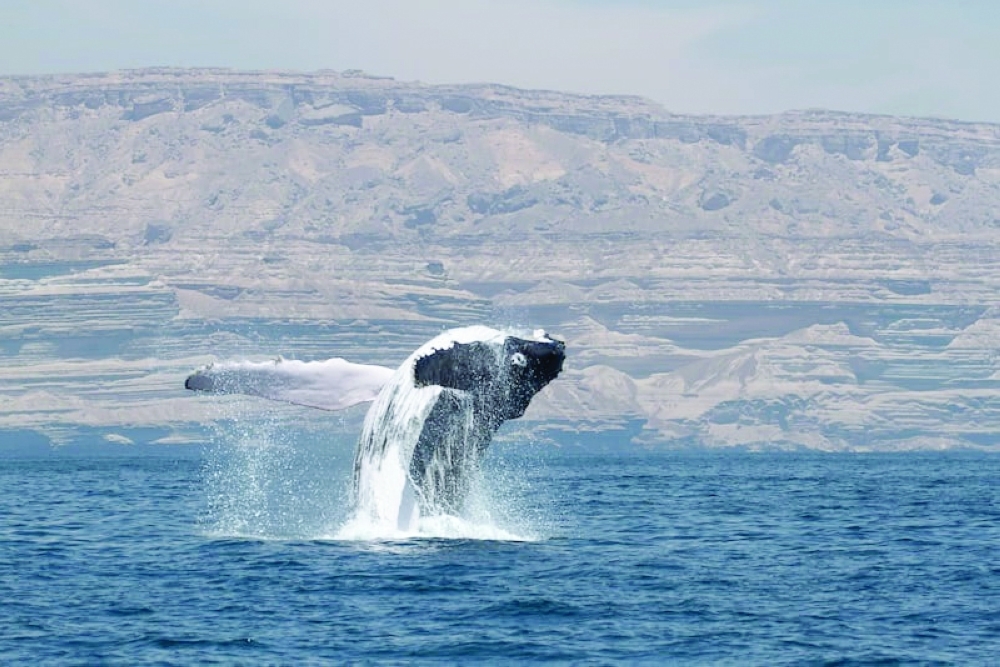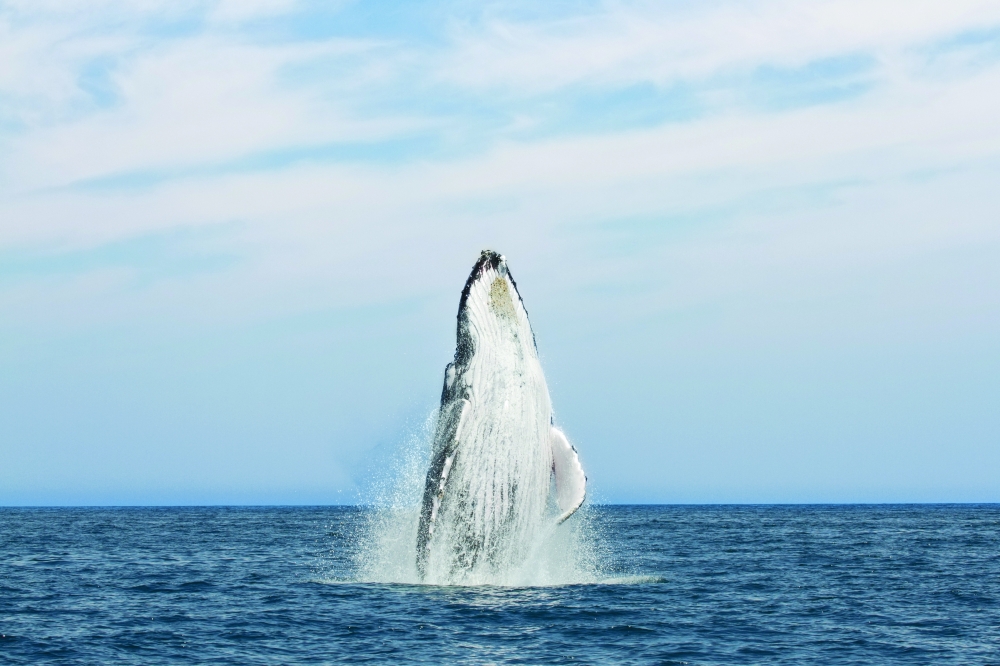





Arabian Sea humpback whale, mostly found off the coast of Oman, represents a distinct evolutionary lineage, supporting its potential recognition as a fourth subspecies of humpback whale, according to a new genetic research study, marking a significant milestone in more than 25 years of whale research in Oman.
The study led by the Wildlife Conservation Society in close collaboration with the Environment Society of Oman (ESO), the Environment Authority of Oman and other key local and international partners, and published in Frontiers in Marine Science, suggests that Arabian Sea humpback whales are genetically distinct from the three currently recognised humpback whale subspecies and have followed an independent evolutionary trajectory for tens of thousands of years.
The study compared genetic samples from Arabian Sea humpback whales with populations from across the world’s oceans. Researchers analysed mitochondrial DNA from 2,285 humpback whales sampled across the species’ relevant and global range. And the results revealed high levels of genetic differentiation between the Arabian Sea population and the three currently recognised humpback whale subspecies of the North Atlantic, North Pacific, and Southern Hemisphere, indicating very limited gene flow between them.
“Arabian Sea humpback whales have long been an enigma to the scientific community. Their ecology is unlike that of any other known humpback whale population, and this new genetic work represents an important milestone in understanding how that uniqueness developed. The results clearly indicate the Arabian humpback whales have followed their own evolutionary trajectory for tens of thousands of years and support their recognition as a distinct subspecies,” said Lead author Dr Rita Amaral, who coordinated the genetic analysis working with WCS.
The findings add to earlier evidence that Arabian Sea humpback whales are unique among studied humpback whale populations. The genetic analyses estimated that Arabian Sea whale lineages diverged tens of thousands of years ago, with different groups showing estimated divergence times ranging from about 43,000 to 113,000 years ago.
Suaad al Harthi, Executive Director of the Environment Society of Oman and a co-author of the study, said: “These findings are built on more than 25 years of dedicated research in Oman. What began with small-boat surveys to photograph individual whales and collect tiny tissue samples has developed into a much broader programme using satellite tracking, acoustic monitoring, health assessments and other techniques. It is enormously rewarding to see samples collected during those early years now contributing to findings of such international scientific importance.”
The study emphasizes that the population’s isolation also makes it especially vulnerable. Arabian Sea humpback whales face threats from entanglement in fishing gear, vessel strikes, underwater noise and pollution, as well as natural stressors such as disease. Climate-driven changes to monsoons and ocean upwelling may also affect the availability of sardines and other prey. The paper notes that the population is small, with no evidence of an increase over the past two decades, and warns that they are at risk of extirpation without concerted efforts to manage known threats.
“The growing body of research on Arabian Sea humpback whales has given Oman an increasingly clear understanding of both the importance of this population and the pressures it faces. This evidence is now helping us move from scientific understanding towards practical conservation action, including regional cooperation through the International Whaling Commission and Oman’s work to explore greater protection for important marine habitats through international mechanisms such as the International Maritime Organisation’s special protection provided by Particularly Sensitive Sea Areas, Aida al Jabri from the Environment Authority of Oman.
Dr Howard C Rosenbaum, Executive Director of the WCS New York Bight Programme and a Senior Conservationist with the WCS Global Conservation Programme said, “Our collaborative efforts through the years, and especially with this most recent publication, further highlights how Arabian Sea humpback whales are genetically distinct from other humpback whales around the world. Generating robust science about its unique evolutionary history, isolated nature, and small population size strengthens the case for protecting these humpback whales throughout their range.”
Oman Observer is now on the WhatsApp channel. Click here