




Off the coast of Oman lives one of the world’s greatest marine mysteries.
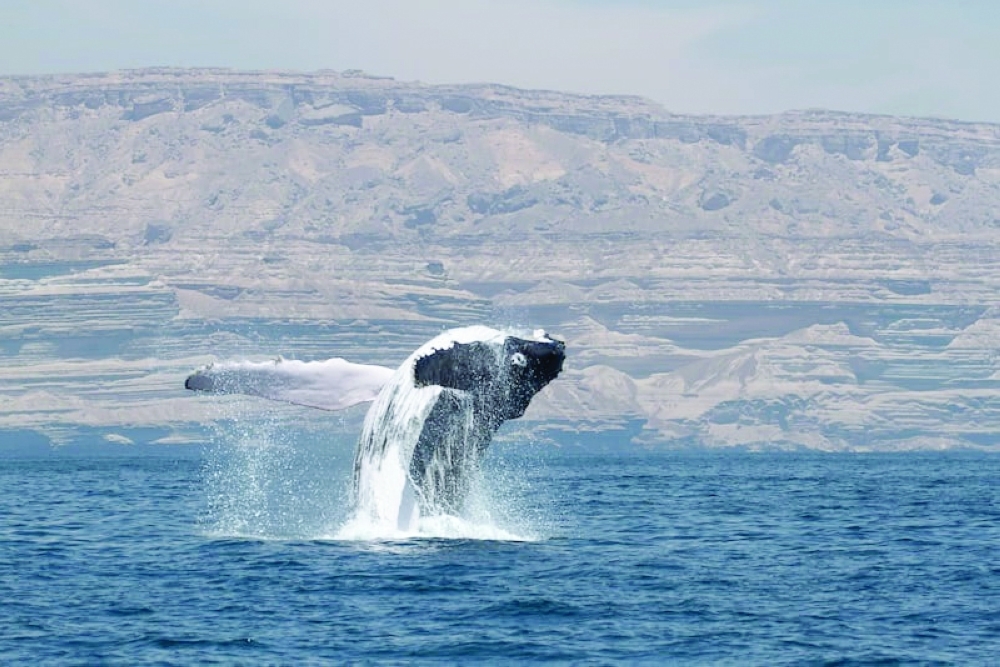
Unlike humpback whales found elsewhere on Earth, which are known for their epic seasonal migrations spanning thousands of kilometres, Oman’s Arabian Sea humpback whales have chosen a different way of life. They stay home.
A new international study led by researchers from the University of Exeter and published in Frontiers in Marine Science has shed new light on this extraordinary population, revealing both their remarkable resilience and new surprises about their movements.
Found primarily along Oman’s coastline, this critically endangered population consists of just over 80 individuals and is considered one of the most isolated whale populations in the world. Unlike every other humpback whale population, these whales do not undertake predictable long-distance migrations between feeding and breeding grounds.
For scientists, this has long been a biological puzzle.
The Arabian Sea’s unique oceanographic conditions help explain the phenomenon. Seasonal monsoon-driven upwellings create nutrient-rich waters that provide abundant food throughout the year, eliminating the need for whales to travel elsewhere in search of prey. Oman effectively offers everything they need in one place; food, warm waters for calving and suitable habitats for breeding.
Yet the new study has revealed that home is not always where every whale remains.
Using 14 satellite tags attached to individual whales over several years, researchers documented the first-ever long-distance journey by an Arabian Sea humpback whale. A female named Luban travelled more than 7,000 kilometres across the Arabian Sea to India’s west coast before returning to Oman after spending about a month near Goa.
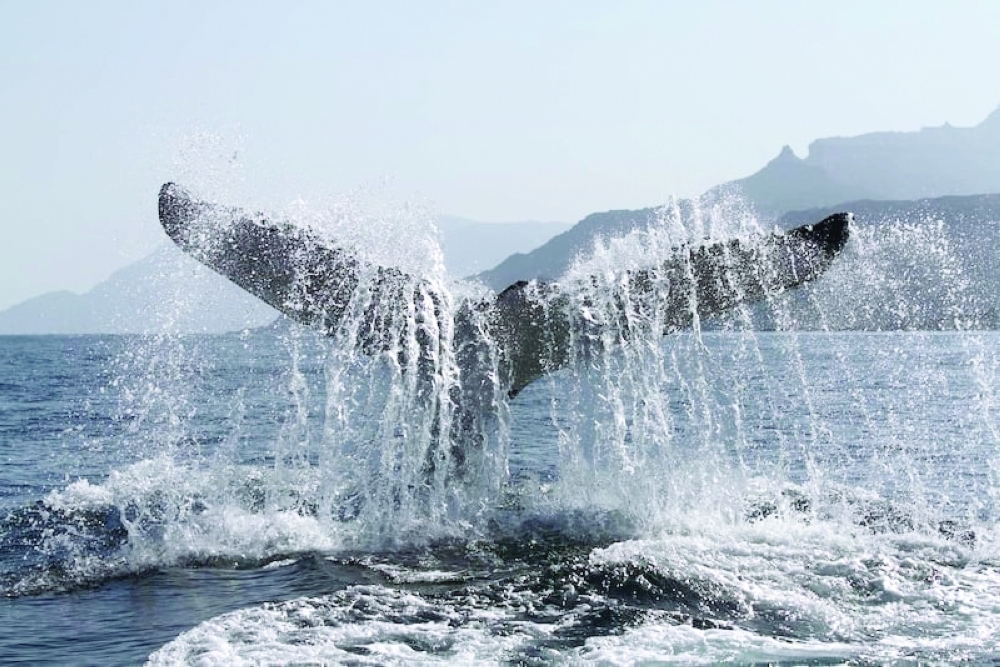
The discovery challenges long-held assumptions about the population’s complete isolation and raises new questions about how these animals adapt to changing environmental conditions.
Scientists believe the journey may have been linked to feeding opportunities, breeding behaviour or broader ecological changes that are yet to be fully understood.
The findings also arrive at an important moment for marine conservation in Oman.
These whales face numerous pressures, including ship strikes, entanglement in fishing gear and increasing underwater noise pollution. Researchers have also highlighted concerns about growing military activity linked to regional conflicts occurring near the northern boundaries of their range.
For Oman, protecting this population extends beyond biodiversity conservation. The Arabian Sea humpback whale has become one of the country’s most important marine conservation symbols, reflecting decades of research undertaken in partnership with local organisations such as the Environment Society of Oman.
There is also a deeper story unfolding beneath the surface.
Scientists estimate these whales have been genetically isolated for around 70,000 years, evolving separately from other humpback populations around the globe. Their continued survival offers researchers a rare opportunity to understand how species adapt over thousands of years to unique environmental conditions.
At a time when climate change is reshaping marine ecosystems worldwide, Oman finds itself as the guardian of a species unlike any other.
Perhaps that is what makes these whales so extraordinary. In a world defined by movement, they chose to stay. And in doing so, they have become one of the ocean’s rarest stories — one that Oman now carries the responsibility of protecting for generations to come.
Oman Observer is now on the WhatsApp channel. Click here