




MUSCAT, OCT 7
Oman can turn its expanding renewable-energy base into a competitive advantage in artificial intelligence by more closely coordinating clean power development with data-centre, digital and investment policies, according to a sustainability expert at the Oman Net Zero Centre.
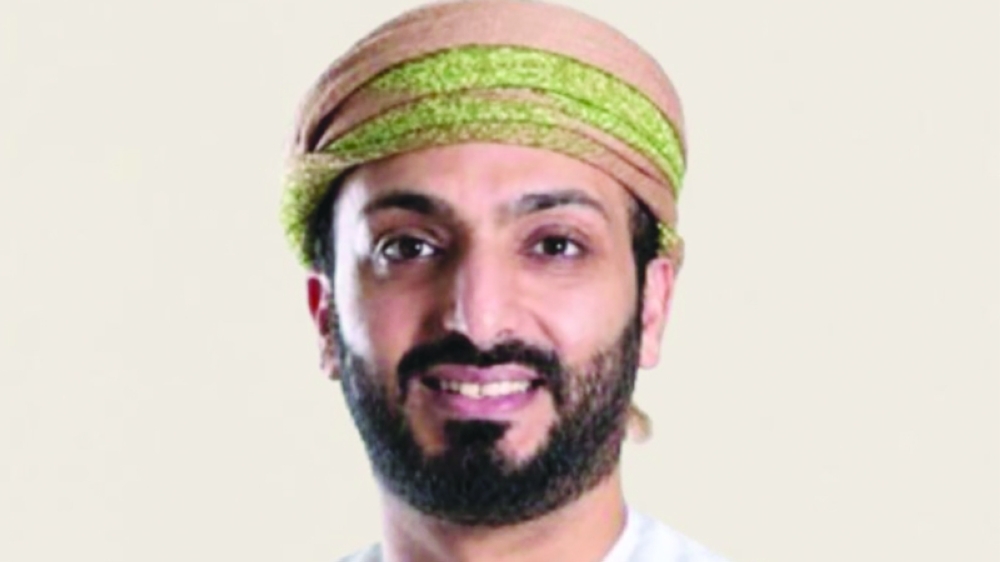
Dr Nasser al Rizeiqi said the Sultanate has already assembled many of the ingredients required for a distinctive AI ecosystem, but the next phase should focus on connecting these initiatives rather than pursuing them independently.
Writing in Majan Rua’a, a publication of The Majan Council, Al Rizeiqi argued that Oman has an opportunity to build national AI and data infrastructure “on the back of its energy transition rather than in spite of it”.
“What this moment calls for is not caution but coordination,” he wrote, noting that government, telecommunications, special economic zone and clean-energy entities are already advancing complementary elements of the same national ambition.
Oman’s emerging ecosystem includes the Oman Digital Triangle of interconnected data-centre hubs, the AI Special Economic Zone, Otech’s sovereign cloud and AI initiatives and O-Green’s renewable-energy platform.
O-Green is particularly significant to the power-compute equation. Its Continuous Renewable Energy Project across Duqm and Mahout combines 2.7 GW of solar, wind and battery storage to provide 770 MW of firm, dispatchable electricity. O-Green is also targeting 200 MW of AI-ready data-centre capacity by 2028.
Al Rizeiqi said Oman's abundant solar and wind resources give it a credible answer to an increasingly important question for hyperscale data-centre investors: whether facilities can be supplied sustainably and at predictable costs over the long term.
Drawing lessons from Ireland, Singapore, Finland and Sweden, he advocated a policy framework that links data-centre expansion explicitly to power availability and sustainability.
One option would be for the Ministry of Transport, Communications and Information Technology, OPAZ and the Ministry of Energy and Minerals to require large data-centre projects to demonstrate a contracted power-supply plan before receiving approval. Such an approach could also give the Oman Net Zero Centre a formal role in data-centre planning from the design stage.
Future data-centre capacity could additionally be linked to measurable efficiency standards covering power and water use, liquid cooling and renewable-energy sourcing. Renewable developers and data-centre operators could meanwhile be encouraged to conclude long-term power purchase agreements, providing revenue certainty for generators while securing reliable clean electricity for computing facilities.
Al Rizeiqi stressed that infrastructure alone would not capture the full economic opportunity. Continued investment in Omani AI talent, startups and specialist companies will be necessary to ensure the new capacity generates domestic value rather than merely hosting overseas computing workloads.
“Oman now has all five of the pieces” required to progress, he said, pointing to its digital-economy ministry, special-zone authority, national telecom operator, renewable-energy platform and international investor base.
“The work ahead is simply to connect them,” Al Rizeiqi concluded, arguing that deliberate institutional coordination could transform those individual strengths into a competitive and sustainable national AI ecosystem.
Oman Observer is now on the WhatsApp channel. Click here