The Oman Botanic Garden is doing more than preserving the country’s native plants. It is proposing a new model for how nations can tell their stories and inviting the international cultural world to pay attention.
People often arrive in Oman expecting one colour.
From the aircraft window, the country can appear to be a vast composition of brown: bare mountains, gravel plains, dry wadis and desert stretching towards a horizon softened by dust. For anyone passing through quickly, it is easy to believe that the landscape has already revealed everything.
Then the road begins to climb.
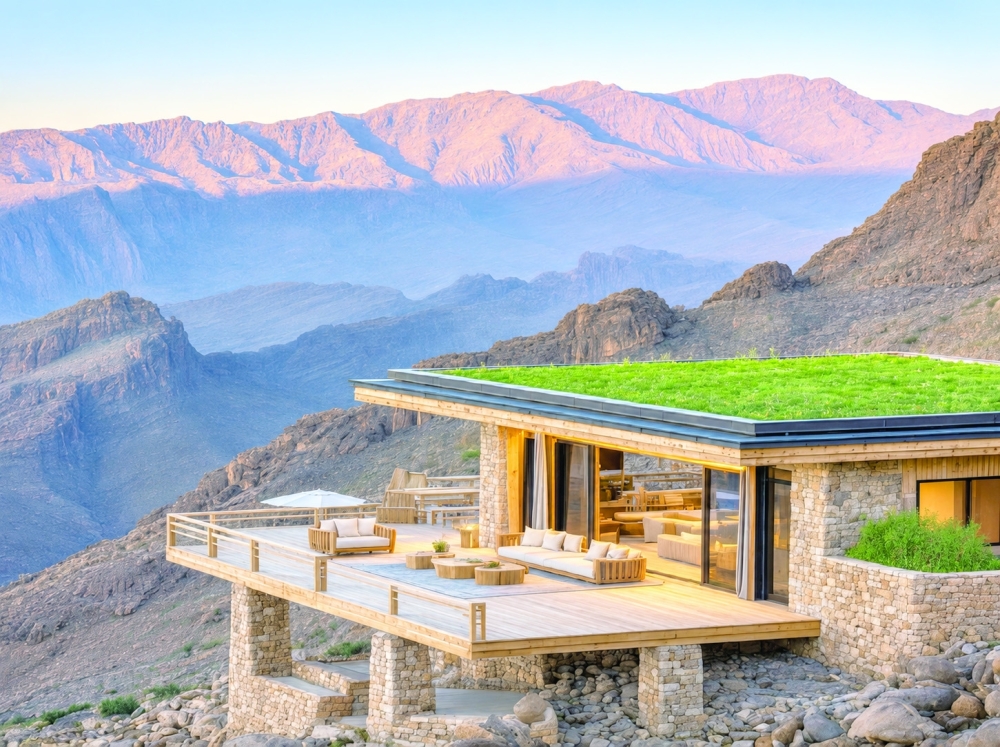
The heat loosens its grip on the slopes of Al Jabal Al Akhdhar. Juniper trees appear at altitude. Acacias hold their ground in places where rain is scarce. In the south, the khareef pushes mist over the Dhofar mountains and turns their hillsides green. Along the coast, plants survive salt, wind and punishing temperatures. In villages, other species reappear as medicine, food, building material, animal feed, fragrance or memory.
Oman does not have one landscape. It has many worlds occupying the same country.
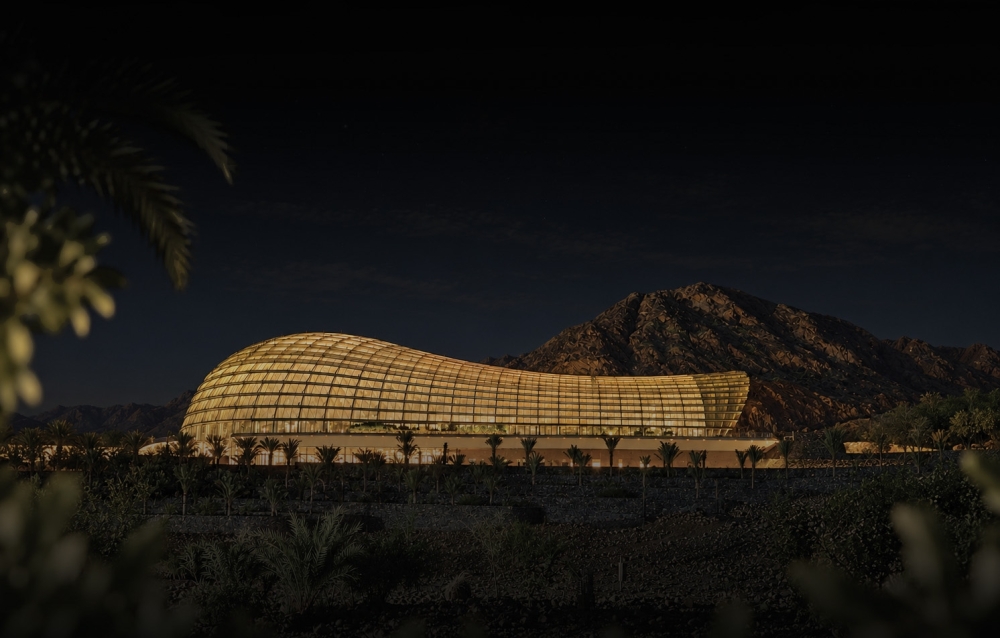
This is the Oman that the Oman Botanic Garden is preparing to reveal, not as a collection of plants arranged for admiration, but as a living portrait of the Sultanate of Oman.
Spread across approximately 420 hectares near Muscat, the project is designed to recreate the country’s natural habitats and conserve its native flora. Its ambition is markedly different from the encyclopaedic model followed by many historic botanical gardens, where plants from around the world are brought together in one place. Here, the subject is one country in extraordinary depth.

That distinction gives the garden significance far beyond its physical scale.
For generations, Oman’s international presence has travelled through ships, ports, frankincense, silver, manuscripts and human relationships. The Oman Botanic Garden introduces another expression of that influence. It suggests that a country’s ecology can be a form of cultural diplomacy and that plants can tell stories about national identity just as powerfully as objects inside museum cases.
It also reverses a familiar journey. Omani artefacts can be found in institutions such as the British Museum and Louvre Abu Dhabi. With this project, international cultural specialists have instead travelled to Oman, worked alongside its scientists and local experts, and encountered an approach that could help reshape how botanical and environmental institutions elsewhere are conceived.
Among them is Museum Studio, the international cultural engineering group whose portfolio includes work with the British Museum, the Victoria and Albert Museum, Louvre Abu Dhabi and natural-history institutions across Europe, North America and Asia.
Commissioned to manufacture and install the garden’s interpretive experiences, Museum Studio worked on its audiovisual material, films, signage and digital elements. The objective was not merely to tell visitors the names of plants, but to help them understand why those plants exist, how people have lived with them and what may be lost if their habitats disappear.
Delphine de Canecaude, CEO of Chargeurs Museum Studio, believes the project could become an international reference not because of spectacle or visitor numbers, but because it brings science, conservation, cultural knowledge and storytelling into one experience.
In conversation with the Oman Daily Observer, she discusses what the cultural world can learn from Oman, why technology should never become the main attraction and how a garden can carry the identity of an entire country.
The interview has been edited and condensed for clarity.
What made the Oman Botanic Garden stand out among the major natural-history institutions with which Museum Studio has worked?
The Oman Botanic Garden holds a special place among them. More than a botanical garden, it is a celebration of Oman’s native flora and the landscapes that have shaped the country’s identity for generations.
What makes it particularly meaningful is its ambition. The garden brings together conservation, scientific research, education, sustainability and visitor engagement within a single destination. It offers a model for how cultural and environmental institutions can deepen public understanding of the living world while contributing to its preservation.
At Museum Studio, we are drawn to projects where storytelling can transform how people see and understand a place. Here, we had the opportunity to reveal a lesser-known side of Oman, allowing residents and international visitors to discover the richness of its natural heritage.
Many visitors may arrive knowing very little about Oman’s plant life. How do you turn information into genuine curiosity?
We believe emotion is what transforms information into a lasting memory. Through emotion, curiosity is awakened, understanding deepens and knowledge begins to resonate.
Our audiovisual and graphic elements were developed to guide visitors naturally from wonder to discovery, fostering a deeper connection with Oman’s landscapes, biodiversity and cultural relationship with nature.
Inclusivity was central to this approach. Working closely with interpretation specialists, we developed content for visitors of different ages, backgrounds and learning styles. We wanted to encourage people to ask questions, look more closely and continue exploring after their visit.
If they leave with a renewed appreciation for Oman’s native flora and a stronger desire to protect its biodiversity, then the experience has achieved its purpose.
What surprised you most while documenting Oman’s natural environment?
We spent a year travelling throughout the Sultanate of Oman to film and photograph its flora. The sheer diversity struck us.
Most people associate Oman with desert, yet the country is home to well over a thousand native plant species across environments that have almost nothing in common. Drive a few hours from an arid plain and you reach cool mountain slopes. Travel further south during the khareef and the hills of Dhofar disappear into monsoon mist, turning green almost overnight.
What struck us just as much was how closely these plants are woven into Omani life. For centuries, they have supplied food, medicine and building materials, as well as traditional knowledge passed down through generations.
Once you see that, the flora stops being scenery. It becomes part of the story of the people who have lived alongside it.
How did you ensure that the garden spoke with an Omani voice rather than presenting an outside interpretation of the country?
Collaboration with local experts was essential.
Our role was not to impose a vision, but to listen, understand and help reveal the identity of the project. We worked closely with botanists, horticultural specialists, conservation experts and Omani stakeholders. Their understanding of the country’s flora, ecology and cultural heritage shaped the interpretation at every stage.
We brought our expertise in interpretation, audiovisual content, design and production, but it remained connected to the knowledge, practices and traditions that make Oman unique.
The garden is not an external interpretation of Oman’s natural heritage. It is a shared expression of it.
How is the garden different from the established international model represented by institutions such as Kew Gardens?
Institutions such as Kew have built their legacy through an encyclopaedic approach, studying and preserving plant diversity from across the world. The ambition of the Oman Botanic Garden is different: it seeks to showcase the native flora of one country through the recreation of living ecosystems.
The habitats become part of the interpretation. Visitors can understand not only what the plants are, but why and how they exist within those particular environments.
It is not simply a garden to admire. It is a place for understanding how biodiversity, culture and sustainability are interconnected.
Where does it sit within the international landscape of cultural and environmental attractions?
Its ambition does not lie in replicating an established model. It offers a new perspective on what a botanical and environmental destination can be.
Few places bring together habitat recreation, conservation, cultural knowledge and immersive interpretation on this scale. It also creates a dialogue between the Middle East’s long history of botanical knowledge and today’s environmental challenges.
Its international significance will not come simply from its size or visitor numbers. It will come from its potential to become a reference for a new generation of botanical gardens—and for institutions where conservation, education and meaningful visitor experiences come together.
What role should technology play in that experience?
Technology should be a storytelling tool, not the story itself.
The garden’s Digital Companion, for example, can reveal things that cannot be seen with the naked eye, bring distant ecosystems to life and create moments of wonder. But it should never compete with the subject or distract from it.
The most meaningful immersive experiences are those in which visitors remember the story they lived, rather than the technology that delivered it.
Artificial intelligence, spatial audio and interactive media will continue to create new possibilities. However, their success should be measured by whether they deepen knowledge, inspire curiosity and create lasting connections between people and places.
What can this project ultimately contribute to Oman’s place in the world?
Oman is experiencing a significant cultural moment. Culture, identity and national heritage are becoming central to the country’s long-term development, while younger artists and creative communities are finding new ways to express what Oman means.
The Oman Botanic Garden contributes to that momentum by revealing a part of the country that many international visitors—and even some residents—may not fully know.
It presents Oman not only as the keeper of an exceptional natural inheritance, but as a source of ideas about how that inheritance can be protected, interpreted and shared.
That may prove to be its most enduring effect.
Visitors will come to see Oman’s plants. But the world may leave with a different understanding of what a botanical garden can be.
Oman Observer is now on the WhatsApp channel. Click here