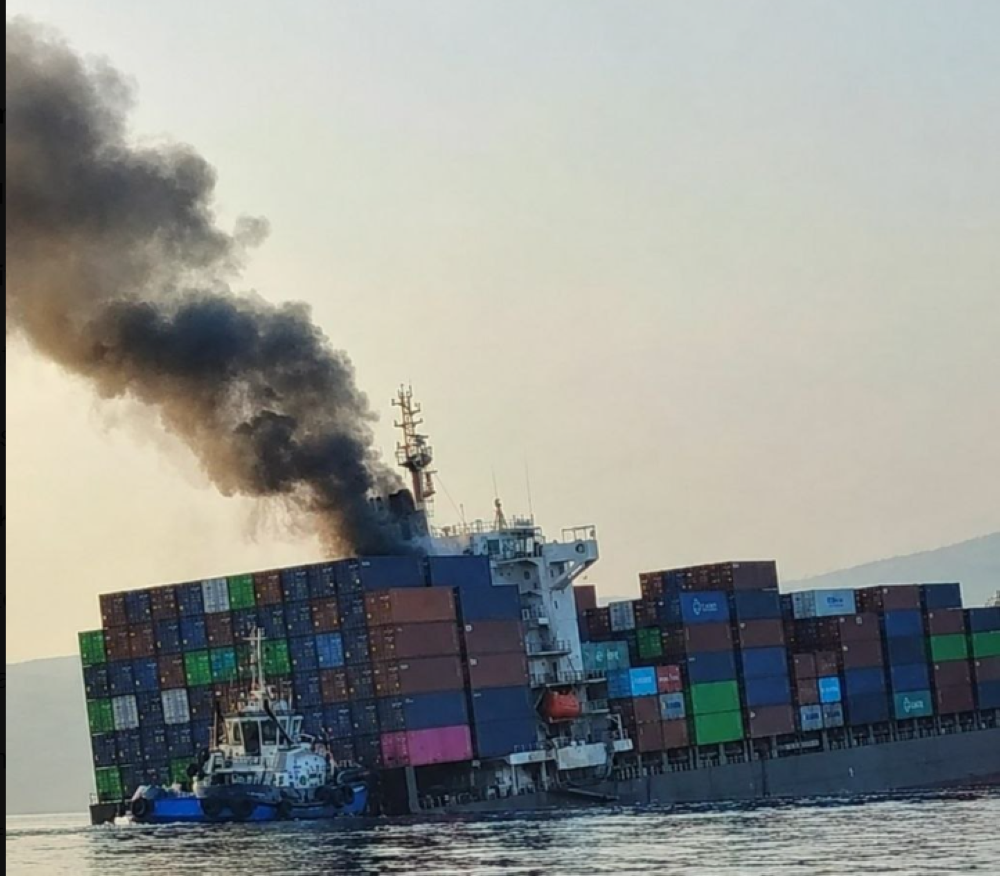
Two charts crossed my desk this week. The first showed Brent crude at $109.23 a barrel, nearly double its January level. The second, published by the International Monetary Fund, plotted vessel transits through Bab Al Mandeb and the Strait of Hormuz alongside regional flight activity since 2023. Together, they describe a structural shift: the global trading system is being repriced around the assumption that strategic sea-lanes are political instruments and the Gulf is paying the cost in real time.
The data first forces us to confront that the GCC is not a single bloc of risk. Qatar, whose entire LNG programme transits Hormuz, faces the most concentrated exposure of any Gulf state. Kuwait, with no meaningful bypass route, has already declared force majeure amidst the tightening of the blockade. Saudi Arabia’s East–West Petroline to Yanbu offers a partial bypass but routes its exports through a Bab Al-Mandeb corridor that has been degraded since the Ansar Allah attacks of late 2023. The UAE’s Habshan–Fujairah pipeline bypasses the strait in part, but the UAE’s decision to leave Opec signals just how hard the crisis is testing traditional alliances. Bahrain has few independent levers and Oman’s Indian Ocean ports are the only genuine geographic bypass in the bloc.
Geography has become strategy.
Within that asymmetry lies a set of opportunities the GCC has discussed for two decades and never fully executed. Pipeline diversification, inland rail connectivity, sovereign-grade insurance markets, regional refining and petrochemical value-add and integrated maritime security have all been on the agenda since the 1990s.
The 2026 crisis converts them from policy aspirations into existential necessities. Long-term LNG and crude contracts will be repriced on resilience, not merely volume and producers who can credibly guarantee delivery routes will command premiums that did not exist two years ago. Sovereign wealth funds, holding roughly four trillion dollars in combined assets, gain new leverage to invest downstream in importing markets and secure long-term offtake. And the regional workforce is being upgraded by operational pressure no business school can simulate.
The costs, however, are immediate and severe. The fiscal models behind Saudi Vision 2030 and the other Gulf transformation programmes were calibrated on assumptions of stable export volumes, predictable prices and a steadily de-risking investment environment. The current crisis breaks all three.
Foreign direct investment is quietly recalculating its geopolitical premium upwards. Marine insurance markets are quoting Hormuz cover at multiples of last year’s rates, if at all. Regional aviation has fallen by roughly half on IMF and Flight Radar data, a signal to millions of expatriate workers and their employers that regional connectivity is contingent. Internal GCC cohesion is also under strain. Crises of this magnitude either consolidate blocs or shatter them; the next twelve months will reveal which.
The global ripple is wider than oil. Roughly one-third of China’s crude imports flow through Hormuz, with Japan, South Korea and India even more exposed in percentage terms. Twelve to fourteen per cent of European liquefied natural gas comes from Qatar through this single corridor.
The Gulf produces nearly half of the world’s urea and 30 per cent of its ammonia and fertiliser prices in markets from Pakistan to sub-Saharan Africa are already climbing, with food-price effects to follow within three to six months. About one-third of global helium, irreplaceable in semiconductor manufacturing and medical imaging, transits the same strait and sulphur disruption has forced China to ban exports, hitting Chilean copper output. The IEA has released 400 million barrels from member reserves, but reserves are finite. IMF modelling suggests sustained closure raises global inflation by between two and four percentage points over a 180-day window.
The strategic question for the GCC is no longer whether to invest in resilience, but who will lead it. The states that emerge strongest will be those that translate the asymmetry of geography into the symmetry of institution-building: shared insurance pools, integrated logistics corridors, joint investments in alternative routes and credible long-term commitments to delivery reliability that command premium pricing.
Those that retreat into bilateral hedging will spend more for less and watch their share migrate to suppliers offering whatever reliability the system still has. For the first time in a generation, the strategic logic of the Gulf is being written by external pressure rather than internal ambition. The question now is whether the region answers as a bloc, or as six fragments.
Oman Observer is now on the WhatsApp channel. Click here