




Heart emergencies do not always look the same. A person suffering a heart attack may remain conscious and able to speak, while someone experiencing cardiac arrest can collapse and stop responding within seconds. Knowing the difference is critical when every minute counts.
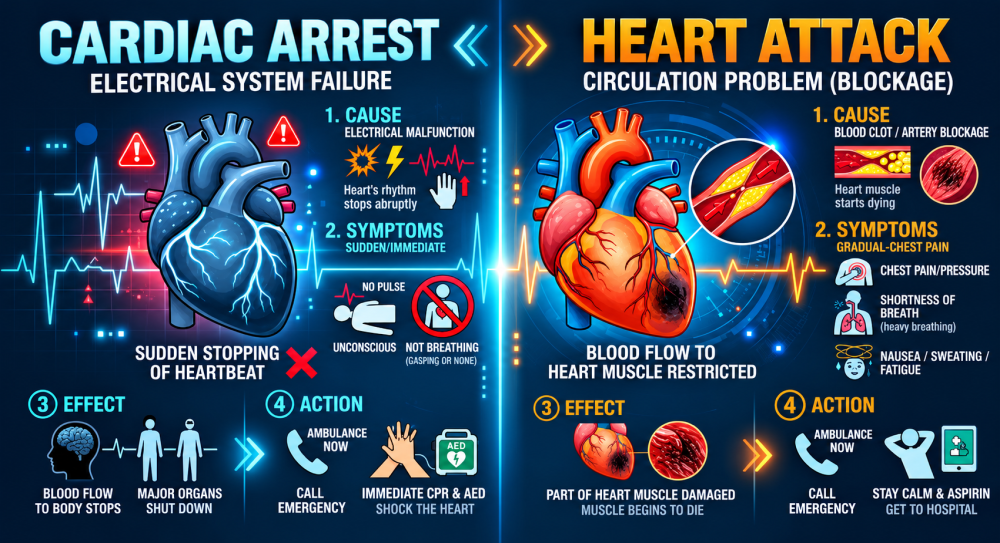
A heart attack usually occurs when blood flow to part of the heart muscle is blocked. The person is often awake and breathing. Cardiac arrest means the heart has stopped pumping blood effectively; the person becomes unresponsive and is not breathing normally. A heart attack can sometimes lead to cardiac arrest, but most people with heart attack symptoms do not need CPR.
Cardiovascular disease remains the world's leading cause of death, taking over 20 million lives annually and the global medical fraternity is calling for action before it is too late to save a life.
Main calls to action include protecting one’s heart, adopting heart-healthy daily choices, such as eating a balanced diet, staying physically active, and avoiding tobacco, the medics call to see the signs of a cardiac arrest.
“One should recognise hidden or subtle heart disease warning signs that are frequently ignored or dismissed and it is extremely crucial to get medical assistance at the right time in order to save the life,” says Dr Mahmoud al Rahbi, Head of Emergencies at Ministry of Health.
World Heart Day 2026 is observed on September 29’ focusing on the World Heart Federation's ongoing campaign theme, ‘Don't Miss a Beat.’
“It is crucial to recognise a possible heart attack,” says Dr Benny Tharukutty Panakkal, a senior cardiologist based in Muscat.
“One should watch for pressure, tightness, heaviness or pain in the chest, especially if it lasts more than a few minutes or returns. Discomfort may spread to an arm, the back, neck or jaw. Shortness of breath, cold sweating, nausea or unusual weakness can also occur, sometimes without prominent chest pain. Never wait for symptoms to become severe before seeking help.”
In an emergency, call the Ministry of Health’s toll-free emergency number, 9999, without delay. The person should stop any activity, sit or rest comfortably, and remain calm while waiting for medical help. They should not attempt to drive themselves to the hospital. Follow the instructions given by the emergency dispatcher. If the person is alert, has no known allergy to aspirin, and has not been advised by a healthcare professional to avoid it, a dispatcher or medical professional may recommend chewing aspirin while awaiting help. However, never delay the emergency call while looking for medication.
If someone suddenly collapses, others need to first ensure the scene is safe. Tap their shoulders and shout to check for a response. If they do not respond and are not breathing normally—or are only gasping—call 9999, put the phone on speaker and ask someone to bring an automated external defibrillator (AED), if available. Begin chest compressions immediately. Occasional gasps are not normal breathing.
Many cardiac emergencies happen in front of family members, colleagues or strangers. With this in mind, the Directorate-General of Private Health Institutions at the Ministry of Health has launched a campaign titled ‘Save a Heart’ in association with Badr Al Samaa Group of Hospitals to bring practical education into the community for World Heart Day 2026. Public interactions, demonstrations and supervised CPR practice help people turn awareness into action at different locations of the country on different days ensuring the public participation and educating them in facing such emergency situations.
MAIN POINTS
1. A heart attack usually involves blocked blood flow while the person remains conscious; cardiac arrest causes sudden collapse, abnormal or absent breathing.
2, Chest pressure, tightness or pain, along with possible pain spreading to the arm, back, neck or jaw, shortness of breath, sweating, nausea or unusual weakness.
3. Call 9999 in case of emergency and follow the dispatcher’s instructions. Do not wait for symptoms to become severe or delay the call while looking for medication.
4, If someone collapses and is unresponsive and not breathing normally, get an AED if available and begin chest compressions immediately.
5. Protect heart health through a balanced diet, regular physical activity, avoid tobacco and pay attention to warning signs.
6. The Ministry of Health’s “Save a Heart” campaign, aims at equipping people with practical skills for cardiac emergencies.
Oman Observer is now on the WhatsApp channel. Click here