I was invited to attend the inauguration of the art exhibition “What the House Knows” that’s currently taking place in Stal Gallery. There are seven artists — six Omani and one Egyptian — who share their interpretations of what a house could hold.
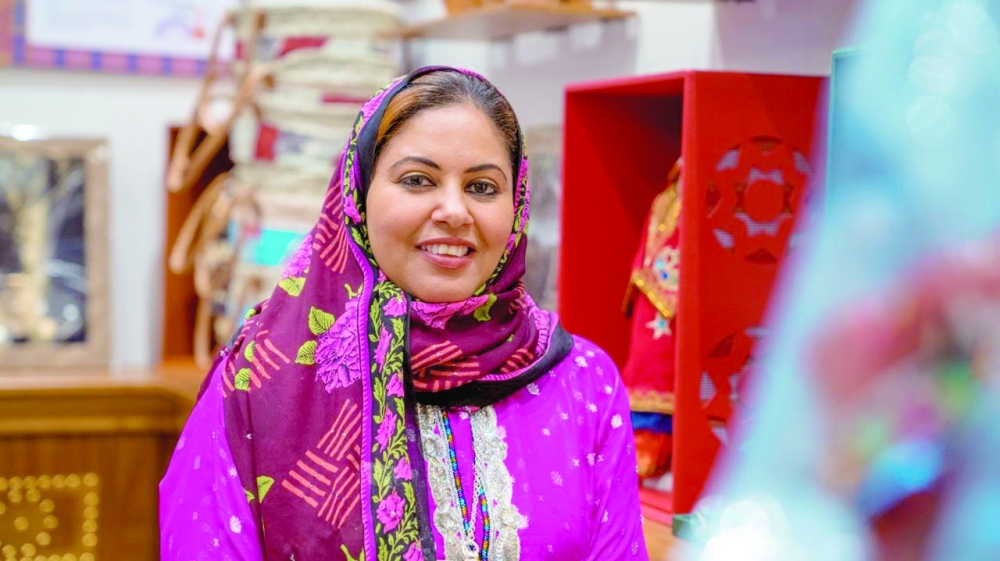
Starting with Sara al Aulaqi’s displays that represents attires from different regions of Oman, varying from traditional silver jeweled face veils to head covers and traditional trousers worn by women. The display of the tapered ends of these traditional trousers was fascinating as they’re woven from gold and silver threads and they’re so accurately made that it’s hard to tell the front from the back.
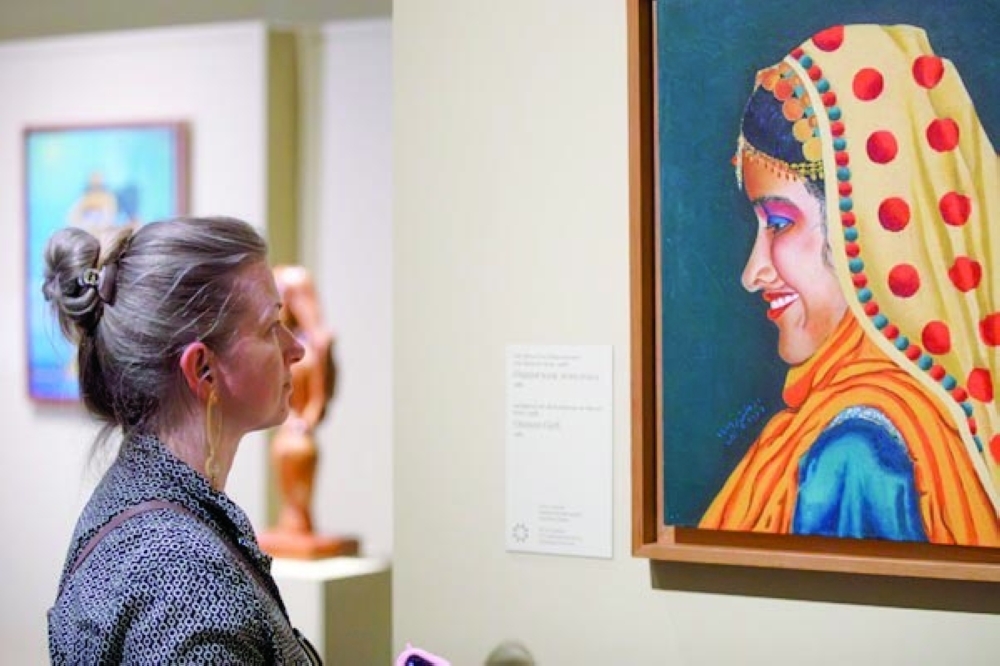
Artist Hassan Sakhi shares a few portraits of Omanis in traditional attires. There are two paintings that represents two different parts of the Baluchi dress. These dresses used to be hand embroidered by housewives for themselves and their children using stamps with distinctive designs. One of Sakhi’s paintings represents an embroidered sleeve and the other what we Baluchis call Pendul which is an embroidered long house-shaped design stitched at the front of the dress and opened at one side to serve as a huge pocket. These Penduls saved me from carrying a bag as it runs deep and fits everything. However, getting things out is much harder than dropping them in as the opening is narrow and at times, I had to lift the Pendul up in order to get whatever I had inside: from a purse to a mobile phone to chewing gum! Sakhi also shares two portraits of three women with their backs to you wearing a Laisu, the traditional long head scarf that women wear and is part of the African heritage that we have here.
Artist Mohammed al Zadjali’s paintings represent different patterns that you could find on traditional metal doors that were part of every Omani’s childhood. They brought fond memories of my visits to relatives in the old city of Muscat who lived in these traditional houses and how the adults used the door knockers to announce our arrival.
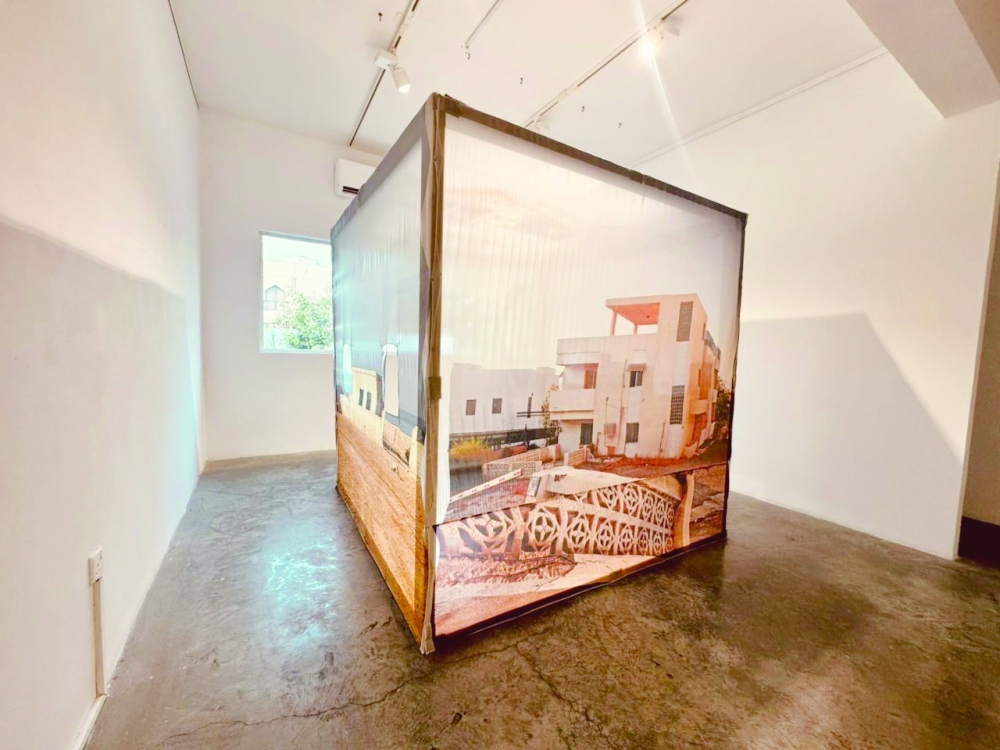
As for Egyptian artist Wael Hamdan, in three vibrant portraits, he shares the image that many of us who visited Cairo could easily relate to: the old houses built haphazardly with their wide-opened wooden windows and balconies, that trap cool air all year round and give Cairo its architectural uniqueness. In between the crowding houses, you could spot domes that represent Christian and Islamic faiths that have coexisted in harmony for centuries.
The painting that I liked most was Anwar Sonya’s Traditional Omani Wedding. It consists of three huge paintings side by side, representing the Henna night that usually takes place in the bride’s house. The first painting depicts the groom and his family entering the bride’s house. The groom is wearing the traditional wedding attire that includes a red turban and a matching Shal wrapped around the Khanjar he’s wearing. In the second painting you could see a woman ahead of the groom (probably his mother or sister) and is facing another woman (the bride’s mother or sister), with other invitees from the bride’s side sitting on the floor in bright attires with their backs to you. In the third painting you could see the bride sitting in a traditional Hijla (a four-poster wooden bed turned into a hutlike structure adorned with green gold threaded material, mirrors and traditional jewelry).
In my childhood, building these Hijla’s was an art and had specialised women brought to the house to build it. I left the exhibition feeling nostalgic to my childhood spent in the safety of my grandparent’s house and proud of my distinctive Omani heritage.
Rasha al Raisi
The writer is the author of The World According to Bahja.
Oman Observer is now on the WhatsApp channel. Click here