




MUSCAT: The group art exhibition 'In the Presence of Absence' opened last week at Stall Art Gallery in Sultan Qaboos City, Qurum, in collaboration with Mazar Studio, bringing together five artists whose works explore themes of memory, belonging and the enduring traces left behind by people, places and experiences.
Running until June 10, the exhibition features works by James Wagstaff, Khadija al Maamari, Bashayer al Balushi, Ali Waqar and Nouf al Jabri, each offering a distinct interpretation of absence — not as emptiness or rupture, but as a continuing presence shaped by memory and transformation.
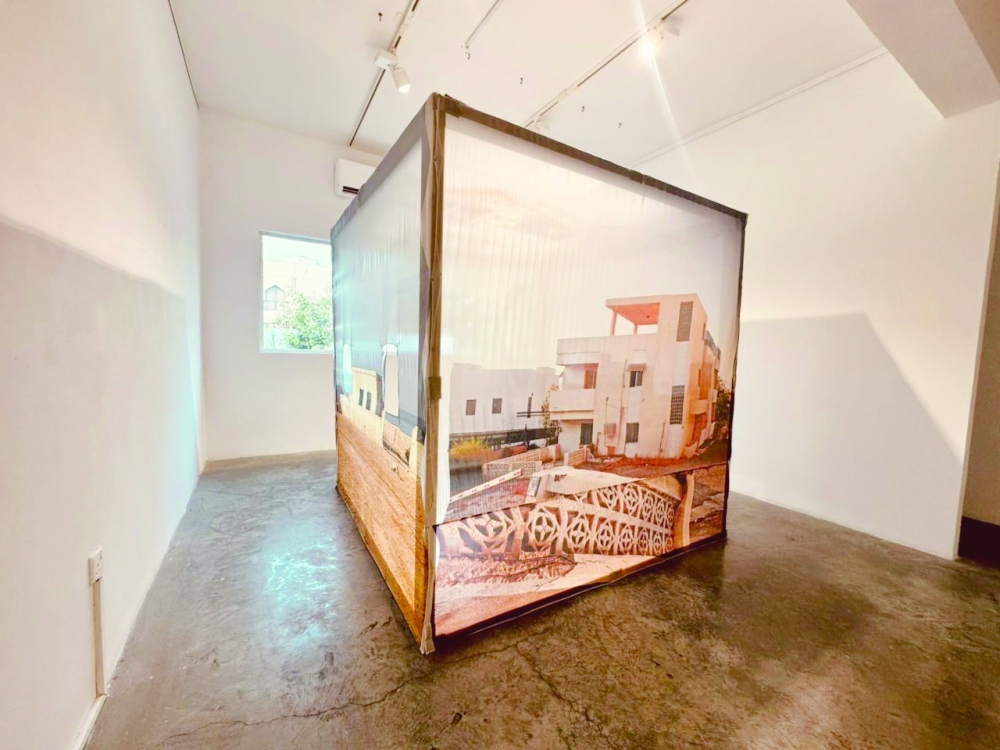
The exhibition presents a visual dialogue on what remains after departure, examining the impact of time on material objects, the imprint of people on places, and the ways memory lingers within the body, language and everyday objects. Through discarded materials, personal belongings, sound, imagery and installation spaces, absence is transformed into something tangible and emotionally resonant.
Speaking about the concept behind the exhibition, Omani artist Ruqaya Mazar said the core message centres on the deep relationship people maintain with their earliest places, memories and formative experiences.
“The exhibition raises questions about belonging and what remains of a person in a place after they leave,” she said, adding that ordinary everyday objects often become emotional and psychological archives carrying the traces of those who once passed through them.
Mazar explained that the exhibition also reflects on the idea that memory does not exist solely in the past, but continues to inhabit the body, consciousness and imagination — even in its quietest and most fragile forms.
The showcase includes a wide range of artistic media, including installation works, video art, cyanotype prints, sound pieces, sculpture, textiles, embroidery and visual archiving practices using remnants and everyday materials.
According to Mazar, the exhibition highlights conceptual and installation art alongside contemporary artistic practices that employ materials as vessels of memory and meaning.
She noted that James Wagstaff’s work transforms wooden details into metaphors for relationships and experiences shaped by time, use and transformation. Nouf al Jabri’s work, Temporary House, revisits childhood memories through construction debris, presenting the home as a fragile space where play, presence and absence intersect.
Ali Waqar’s contribution explores nostalgia for earlier versions of the self through collected personal belongings carrying emotional resonance, while Bashayer al Balushi documents abandoned places and forgotten objects as archives of migration, transformation and loss.
Khadija al Maamari’s work, meanwhile, reflects on silent female memory, questioning whether experiences disappear when they remain unspoken or continue to survive as internal traces.
Mazar emphasised that what distinguishes In the Presence of Absence from conventional group exhibitions is its treatment of memory not merely as an archival concept, but as a lived sensory and psychological experience that can be encountered visually and emotionally.
The exhibition also moves beyond traditional modes of display, creating an immersive environment in which visitors journey through layers of memory, trace and absence. Materials carrying histories of use — including wood, construction debris, fabric, plaster and personal belongings — lend the works a distinctly human and intimate quality.
Despite the differing artistic backgrounds and approaches of the participating artists, Mazar said the exhibition creates a sense of cohesion through a shared exploration of what remains after change, movement or loss, opening a broader space for reflection and interpretation. — ONA
Oman Observer is now on the WhatsApp channel. Click here