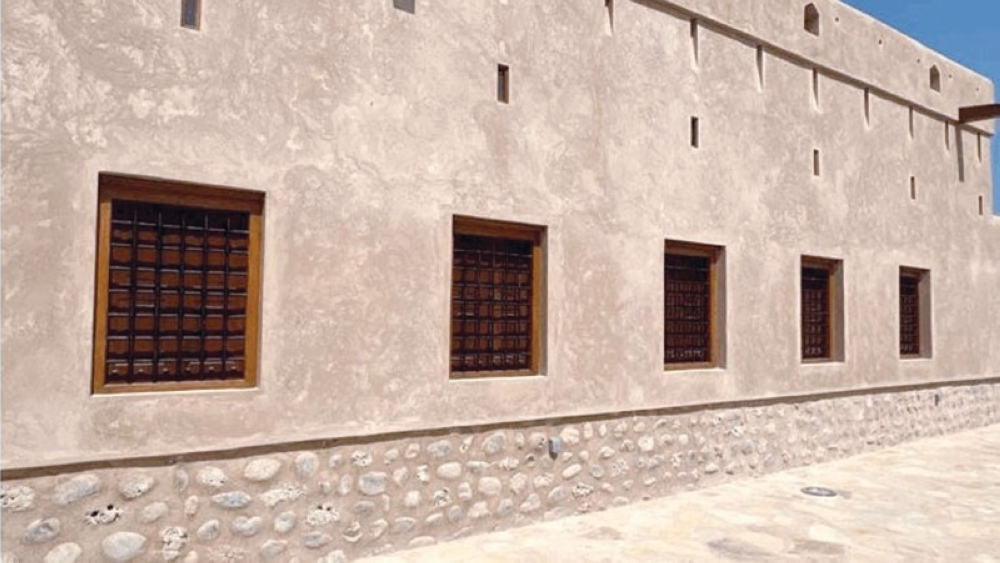





MUSCAT: Al Seeb Fort, one of the prominent historical and cultural landmarks in Muscat Governorate, has been reconstructed as part of efforts to preserve Oman’s architectural heritage and enhance its tourism potential.
Built more than 200 years ago, the fort served as the headquarters for managing the affairs of the wilayat, settling disputes and issuing judicial rulings.
The two-storey fort comprised a council, or Barza, on the ground floor, where disputes were heard. It also included an office for the notary public, a detention room, stores and a rest area for guards. The upper floor was originally used as a residence for the wali and his family.
Eng Asma bint Hilal al Kharousi, Director of the Department of Castles, Forts and Historical Landmarks, said the reconstruction was carried out in accordance with available archaeological evidence.
It served as the residence of the wali and his family before becoming the administrative headquarters of the wilayat.
The reconstruction project, undertaken by the Ministry of Heritage and Tourism, drew on old photographs, historical sources and oral accounts to determine the fort’s original appearance, dimensions, architectural features, layout and functions.
Work began on September 11, 2023, and was completed on October 15, 2025.
The removal of debris and cleaning of the site revealed remains of the original foundations, which were documented and used to determine the locations and dimensions of the buildings and architectural elements before reconstruction.
The fort occupies an area of 2,975 square metres and consists of a main block known as Al Qasaba, along with administrative and service facilities including the Sabla, guards’ rest area and steam room.
Al Qasaba has two floors, with two rooms on each floor. The upper rooms originally served as the wali’s residence, while the ground-floor rooms were used as stores. The upper rooms were later converted into offices for the wali and judge, and the fort became an administrative headquarters. - ONA
Oman Observer is now on the WhatsApp channel. Click here