




MUSCAT, SEPT 21As digital payments become increasingly embedded in Oman’s economy, an accompanying question is gaining importance for its rapidly expanding Islamic-finance industry: can digital cash be Sharia-compliant?
The answer does not depend simply on whether money exists electronically. Islamic-finance principles focus on what an instrument represents, how it is created and exchanged, whether it provides legitimate economic utility and whether its structure involves riba, or interest; maysir, or gambling; and excessive gharar, meaning uncertainty.
The question is commercially significant for the Sultanate of Oman. By the second quarter of 2026, assets held by Islamic banks and windows had exceeded RO 9.6 billion, accounting for 19 per cent of total banking-sector assets, according to the Central Bank of Oman.Quarterly profits topped RO 23 million, while the sector maintained a non-performing loan ratio of 3.3 per cent.
Oman’s Islamic banking industry has grown rapidly since the Islamic Banking Regulatory Framework was introduced in 2012. The CBO is now seeking to deepen the Islamic money and sukuk markets while encouraging responsible digital innovation.
Asia al Raisi, Deputy Chief Economist for Investment and Market Operations at the CBO, said the central bank had identified five priorities: deepening the Islamic money market, accelerating sukuk development, promoting responsible digital innovation, strengthening governance and supervision, and directing more financing towards Oman’s economic transformation.
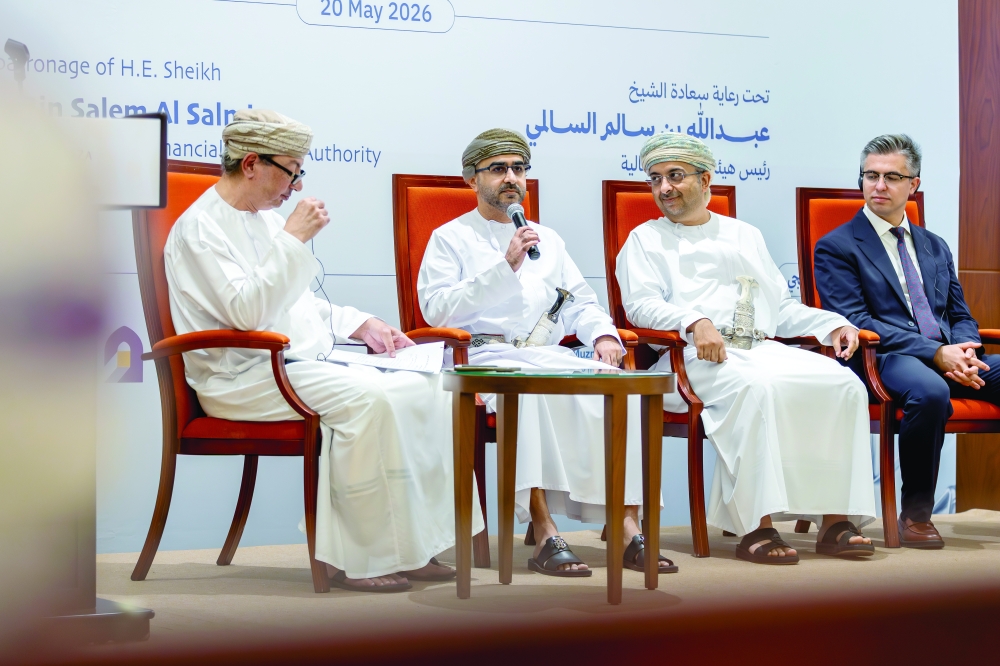
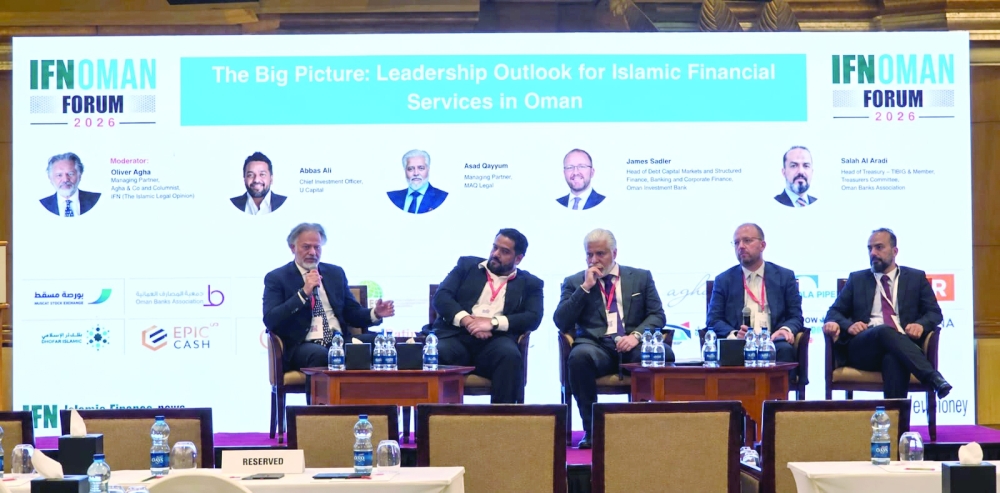
Speaking at the IFN Oman Forum 2026, she said the CBO’s open banking and digital banking frameworks would provide a regulatory foundation for innovation while maintaining requirements covering cyber resilience, data protection and governance.
The development comes as Oman’s consumers and businesses increasingly replace cash and cheques with cards, mobile applications, electronic gateways and instant bank transfers.
The value of transactions processed through local electronic-payment gateways jumped 76.3 per cent to approximately RO 3.2 billion in 2025, according to CBO data. Transaction volumes surged from 67 million to more than 168 million.
Point-of-sale transactions exceeded RO 7.5 billion, increasing 33.2 per cent, while the number of QR-code payments rose 133.5 per cent. QR transactions were valued at approximately RO 8 million, nearly three times the level recorded a year earlier.
These figures show that digital money is already part of everyday commerce. However, bank balances, electronic wallets, central bank digital currencies, stablecoins and decentralised cryptocurrencies are fundamentally different instruments.
An electronic transfer of Omani rials does not create a new currency. It moves an existing, officially recognised currency through a digital channel. A decentralised cryptocurrency, by contrast, may derive its value from software-defined scarcity, network participation and market demand rather than the backing of a central bank
.SHARIAH TEST GOES BEYOND TECHNOLOGY
Islamic scholars generally assess digital financial instruments according to their substance and use rather than the technology on which they operate.
The principal tests include whether the asset has lawful utility and recognisable value, whether ownership and delivery are genuine, and whether transactions avoid interest, deception, gambling and excessive uncertainty. How an asset is traded also matters: an instrument regarded as permissible in itself may still be used through an impermissible lending arrangement, derivative or speculative transaction.The International Islamic Fiqh Academy examined electronic currencies under Resolution No 237 but did not issue an unrestricted ruling declaring all cryptocurrencies either Sharia-compliant. It identified unresolved questions concerning their nature, value, trading and associated risks and called for further research.
The absence of a universal judgment means each cryptocurrency must be examined individually. A Shariah opinion covering one token cannot automatically be applied to thousands of other digital assets with different structures and uses.
At an Islamic-finance gathering in Muscat, digital-asset developer Max Freeman argued that digital cash could be Sharia-compliant if it were designed around Islamic principles.
Discussing Epic Cash, a privacy-focused cryptocurrency developed through a proof-of-work protocol, Freeman said coins were awarded to miners as “a lawful gain for a service rendered”. Miners use computing resources to validate transactions and maintain the distributed ledger.
Freeman contrasted this arrangement with proof-of-stake networks, where participants commit their coins to help validate transactions and receive rewards. He argued that staking could resemble compound interest because rewards are linked to the amount of capital held.Islamic-finance research suggests that the distinction may not be absolute. Proof-of-stake validators perform a network function and may lose part of their committed assets for improper behaviour. Its Shariah status could therefore depend on the contractual arrangement, the source of rewards and the risks undertaken, rather than simply on the receipt of additional coins.
Proof of work does not automatically guarantee Shariah compliance either. Mining involves competition for rewards, volatile costs and potentially heavy electricity consumption. A comprehensive assessment would have to consider resource use, governance, market manipulation and whether the resulting asset provides genuine economic utility or is traded mainly for speculative gain.
PRIVACY AND REGULATION
Financial privacy is another point in the debate. Privacy-focused cryptocurrencies can prevent employers, competitors and other outsiders from tracing a user’s balance and complete transaction history.
Freeman described the preferred balance as “lawful disclosure, yes; indiscriminate surveillance, no”, arguing that holders should be able to disclose transactions selectively to accountants, auditors and regulators.
Commercial privacy may protect lawful wealth and sensitive business information. However, it must coexist with customer-identification, sanctions and anti-money-laundering obligations.
The Financial Action Task Force requires countries to regulate virtual-asset service providers and subject them to preventive controls comparable to those imposed on financial institutions. A privacy-focused asset would therefore need mechanisms enabling regulated providers to identify customers, assess risk and report suspicious activity.
In Oman, Shariah compliance and legal recognition are separate issues. The CBO has cautioned that cryptocurrencies are not legal tender, are not backed by the central bank and do not carry the protections available to regulated banking products.
The Financial Services Authority requires businesses undertaking virtual-asset activities to register and comply with anti-money-laundering and counter-terrorist-financing requirements. It has also been developing a wider regulatory framework for virtual assets and their service providers. The CBO, meanwhile, has been studying central bank digital currency. A digital rial would be issued by the monetary authority and represent a sovereign liability, giving it a fundamentally different legal and risk profile from privately issued cryptocurrencies.
Oman’s development of Islamic money-market instruments could provide another route towards digital financial innovation. The CBO is advancing Wakalah certificates of deposit and Islamic government treasury bills, building on its collateralised Qard Hasan intraday facility and restricted Mudarabah overnight facility.
It is also seeking to expand the domestic sukuk market. “A deep domestic sukuk market can diversify funding, finance productive investment, and attract a wider investor base,” Al Raisi said.Globally, Islamic financial assets reached approximately $5 trillion in 2025, with GCC states accounting for nearly 70 per cent. Outstanding sukuk exceeded $1 trillion, while annual issuance reached around $234 billion.
Digital cash, therefore, is not inherently Sharia-compliant. Electronic payments and a future digital rial can be structured in accordance with Islamic principles, while privately issued digital assets may also qualify following rigorous examination. With credible Shariah supervision, clear regulation and strong consumer safeguards, digital money could help Oman lower payment costs, widen financial inclusion and channel its expanding Islamic-finance industry towards investment, SMEs and the economic-diversification priorities of Oman Vision 2040.
Oman Observer is now on the WhatsApp channel. Click here