




Soaring fuel and borrowing costs have overtaken aircraft shortages as the biggest concern for jet financiers, delegates at a major industry meeting said this week, signalling a shift in sentiment after years of supply-driven disruption.
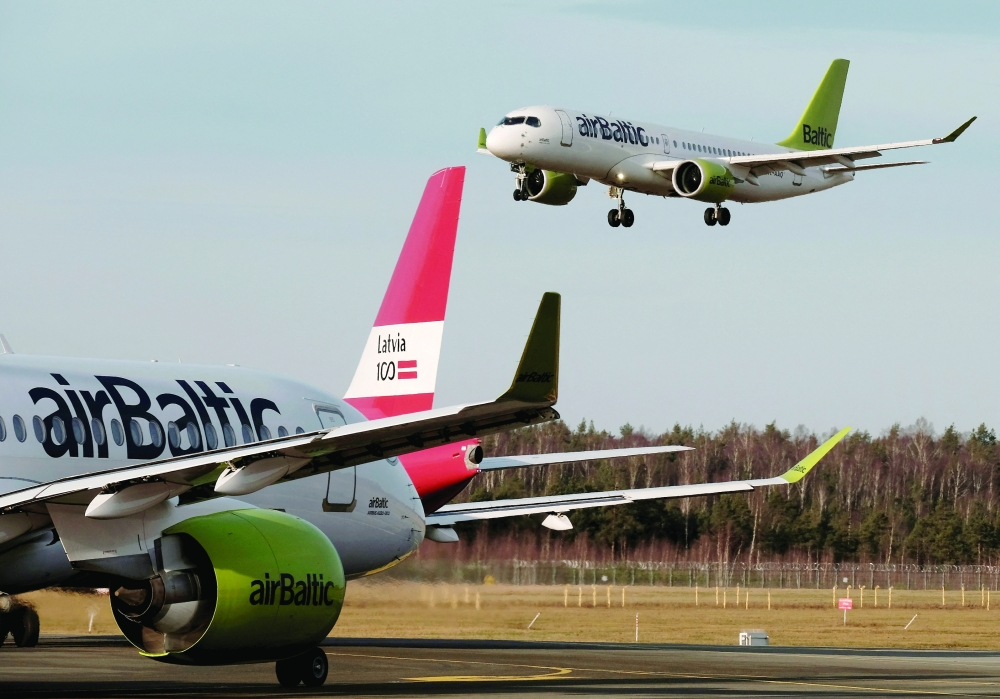
Recent market turmoil has reinforced the change in mood, including airBaltic's bankruptcy filing, a surge in oil prices linked to advances by Yemen's Houthis in the Middle East war, and a jump in U.S. Treasury yields.
"I feel the market is turning. I think winter is going to be colder (financially) than people expect," Thomas Baker, CEO of leasing company Aviation Capital Group, told the event hosted by the International Society of Transport Aircraft Trading (ISTAT).
Analysts have already warned that smaller airlines could come under pressure from higher fuel costs in the coming months.
AVIATION WAVE COULD 'STALL OR CRASH'
A year ago, speakers at ISTAT, which began 43 years ago as an informal Florida gathering of second-hand aircraft dealers, focused on shortages of aircraft and engines that pushed up values and lease rates.
Now, while manufacturing bottlenecks remain, many executives view them as a buffer against a potential slowdown in demand rather than the industry's main challenge.
"It's pretty shocking how quickly things have changed," Bertrand Dehouck, global head of transportation capital markets at BNP Paribas, told delegates.
"The wave on which aviation has been sustained for quite some time now could stall or crash pretty dramatically during the winter period, which is typically (when) difficulties in the market are revealed, especially in Europe," he added.
Andy Cronin, CEO of aircraft leasing company Avolon, said concerns about interest rates had risen rapidly even as some supply-chain pressures eased.
"You've got a very sharp decline in engine and parts shortages and a very rapid increase in the concern around interest rates," he said.
The cost of borrowing is critical for aircraft lessors, which control about half of the global airline fleet and rely heavily on debt financing.
Backing the wrong airline or aircraft can hurt for years. But misjudging liabilities "kills your business very quickly," Cronin said.
OIL OVER $100 A BARREL A PAIN POINT
Delegates said rising fuel costs had begun to cool activity in the second-hand aircraft market, with some lease rates falling 5% to 10%.
"I think this is going to bite pretty quickly. At $100 a barrel ... mid-life (aircraft) business models have got to hurt," said Ted O'Byrne, CEO of Saudi lessor AviLease, referring to aircraft up to 15 years old.
Some executives said they were debating for the first time in years what might trigger a return to overcapacity, although plane and parts shortages are not expected to ease anytime soon.
"I think it is an intermediate bump," Baker told Reuters.
The challenges have not deterred new investors from entering aviation finance, a positive for the sector overall but a source of competition for lessors pursuing the same aircraft assets.
"The pie is just not big enough to satisfy everyone, especially on the leasing front," said Mounir Kuzbari, co-CEO of Novus Aviation Capital.
Even so, executives said there were no immediate signs that higher fuel prices and borrowing costs were causing a significant drop in travel demand.
"It's going to become even more important in the next (6-12) months to really know what you're underwriting, who you're getting in with," said Paul Sheridan, CEO of Aergo Capital, which specialises in mid-life jets.
After crises ranging from the safety grounding of the Boeing 737 MAX to the idling of hundreds of Airbus A320neo jets over engine bottlenecks, some executives said the next downturn could come from outside the aviation sector.
"I wouldn't be surprised if this cycle is ultimately broken by an exogenous shock. It could be somehow geopolitical, it could be the bond market finally causing something to break, but it'll be the unknown," Baker told delegates. — Reuters
HIGHLIGHTS
High fuel costs and rising borrowing rates have replaced aircraft and engine shortages as the primary threat
Market volatility driven by airBaltic's bankruptcy, oil prices climbing toward $100 per barrel and rising US Treasury yields
Manufacturing bottlenecks are now viewed as a helpful buffer against potential market overcapacity
Elevated interest rates pose a severe threat to leasing companies as mismanaging debt liabilities poses a far greater risk
Rising fuel prices are squeezing mid-life aircraft business models, leading to a 5% to 10% drop in some lease rates.
The next major downturn could be triggered by exogenous macroeconomic or geopolitical shocks.
Oman Observer is now on the WhatsApp channel. Click here