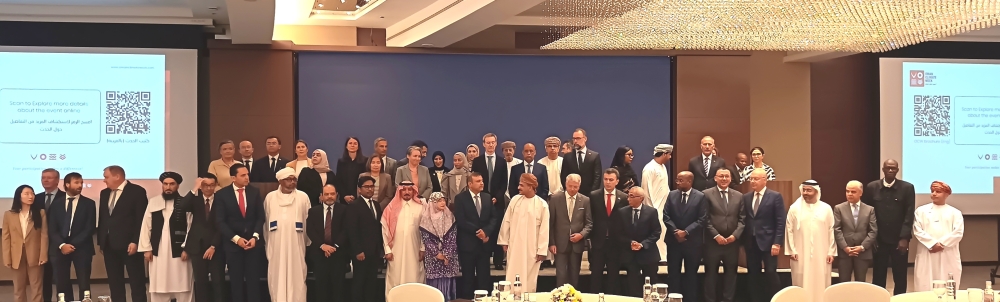
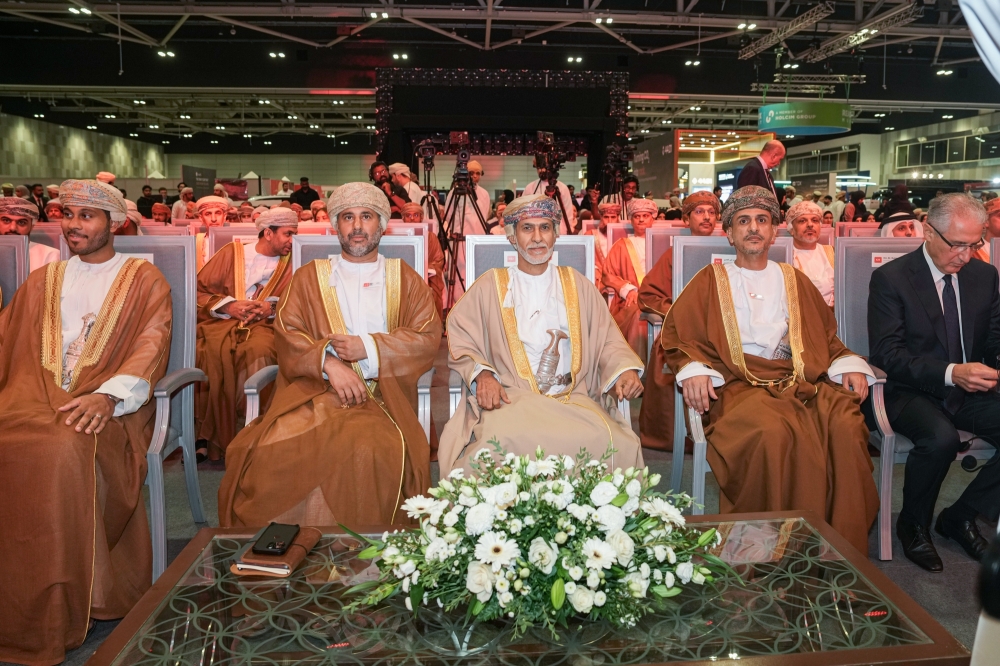
Three days in Muscat, and the halls of Oman Climate Week were full of people who do not normally share a building. Ministry officials, bankers, scientists, students, engineers and people who run village councils, moving between sessions under the theme from vision to implementation. On the first day I was in a session on the implementation of Oman’s Nationally Determined Contribution, representing civil society, when the question came, and it was a fair one: what does an environmental organisation actually contribute to a national climate commitment?
I said what I have said before, that a commitment made nationally has to be carried by everyone. We bring evidence, gathered across over two decades of research in Oman’s marine and terrestrial systems, because decisions about the environment should rest on what is happening to it. We bring a room that belongs to nobody in particular, where people can put questions to one another that are harder to ask elsewhere. And we bring the slower work of helping people feel they are inside environmental responsibility instead of watching it happen to them.
I still think all of that is true; what has been turning over in my mind since is that I answered in the language of roles, when the more interesting question was what happens between them. By then I had heard the word implementation often enough that it had begun to sound strangely simple, as though the difficult thinking were already behind us and what remained were instructions to be followed. We set the target, write the policy, secure the investment, and then, presumably, implement.
The conversations suggested the opposite, because a national target has to pass from one institution to another before it becomes anything at all. Science has to become policy, policy has to become regulation, regulation has to make sense to an investor, investment has to become a project, and a project has to sit inside a community, an ecosystem and an economy that may experience it very differently from the people who designed it. There is no single leap from ambition to action; there are hundreds of handovers, and most happen between people who do not share a vocabulary.
Once I started listening for this, I heard the same problem in rooms discussing apparently different things. Finance depended on whether policy could be translated into something capital understood, and conversations about cities, water and health kept arriving, by different routes, at the question of what happens when responsibility passes from one part of a system to another. This is where ambition is most fragile, because a target can be scientifically sound and still stall between a ministry and an investor.
We tend to call this a need for better coordination, as though coordination were the administrative support around the real work, and I am increasingly convinced that coordination is the work.
For three days the week gave us proximity, which is rarer than it sounds; people who normally operate in separate systems sat in the same rooms and occasionally discovered that the problem on their desk had begun on somebody else’s. Then the badges come off and we go back to our own buildings, and the handovers have to hold with nobody watching. So I have been asking which of them are mine to keep, and whether I have been treating them as the work or as the thing that happens around it.
Oman Observer is now on the WhatsApp channel. Click here