




MUSCAT: Oman is moving to deepen its Islamic money and sukuk markets as the Central Bank of Oman (CBO) seeks to strengthen the sector’s role in financing investment, economic diversification and the country’s broader development agenda.
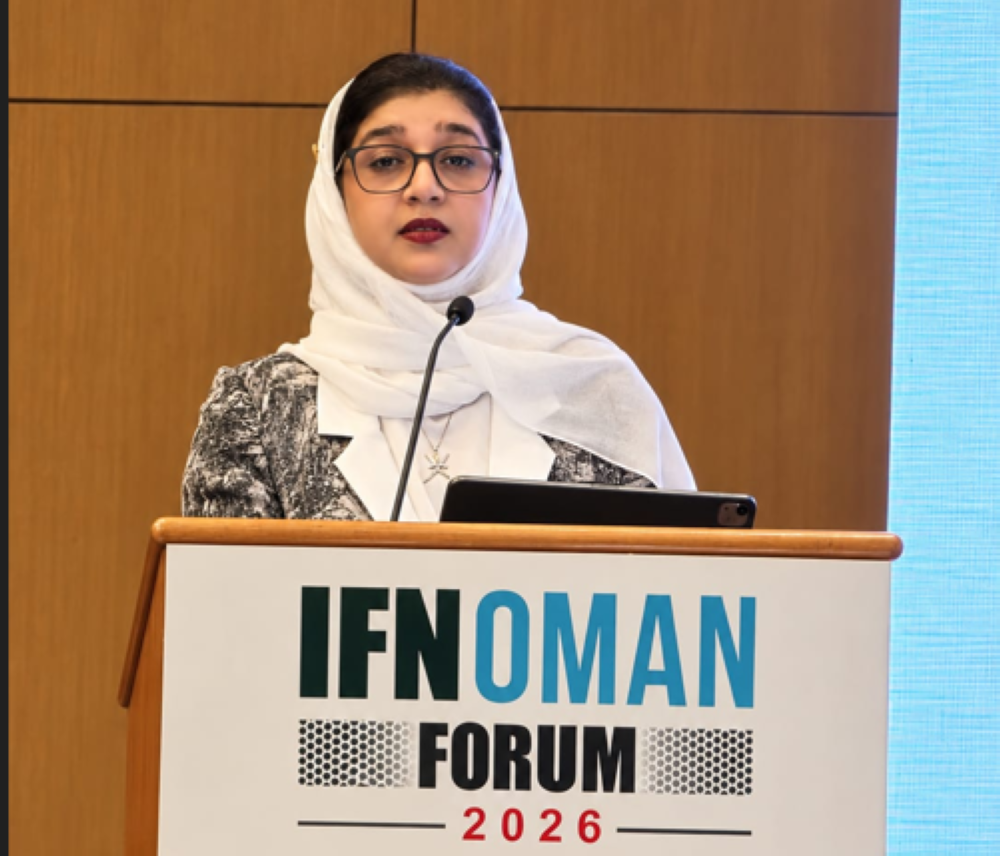
Asia al Raisi, Deputy Chief Economist for Investment and Market Operations at the CBO, said the central bank was advancing Wakalah certificates of deposit and Islamic government treasury bills as part of efforts to build a deeper and more liquid Islamic money market.
Speaking at the IFN Oman Forum 2026, Al Raisi said the measures would build on existing instruments, including the collateralised Qard Hasan intraday facility and restricted Mudarabah overnight facility.
The CBO is also seeking to accelerate the development of the domestic sukuk market, which could provide alternative funding for productive investment and broaden the investor base.
“A deep domestic Sukuk market can diversify funding, finance productive investment, and attract a wider investor base,” Al Raisi said, adding that greater standardisation, transparency and legal certainty would improve comparability, tradability and cross-border participation.
Oman’s Islamic banking industry has expanded rapidly since the Islamic Banking Regulatory Framework was introduced in 2012.
By the second quarter of 2026, Islamic banking assets had exceeded RO 9.6 billion, accounting for 19% of total banking sector assets, while quarterly profit topped RO 23 million, Al Raisi said. The sector maintained a non-performing loan ratio of 3.3%.
The CBO is now pursuing structural changes aimed at strengthening the industry. In July, it issued the Islamic Banking Windows Conversion and Transformation Framework, establishing a phased process from 2026 to 2030 for existing Islamic banking windows to become independent Islamic banks.
Al Raisi said the transition was intended to create institutions with stronger governance, clearer accountability, greater operational autonomy and sufficient scale to compete regionally.
The central bank has identified five priorities for the sector: deepening the Islamic money market, accelerating sukuk development, promoting responsible digital innovation, strengthening governance and supervision, and directing more financing towards Oman’s economic transformation.
The CBO’s open banking and digital banking frameworks would provide a regulatory foundation for innovation, while maintaining requirements covering cyber resilience, data protection and governance, she said.
Islamic finance should also play a greater role in supporting Oman Vision 2040, particularly by financing small and medium enterprises and sectors targeted for economic diversification.
The CBO’s targeted-sector capital framework provides incentives for banks to direct financing towards activities supporting diversification, employment and sustainable growth, Al Raisi said.
Globally, Islamic financial assets reached about $5 trillion in 2025, with GCC countries accounting for nearly 70%. Outstanding sukuk exceeded $1 trillion, while annual issuance reached about $234 billion.
Al Raisi said the expansion of Islamic finance across borders would require closer cooperation between central banks, regulators, standard-setters and financial institutions, particularly on prudential standards, Sharia governance, disclosure, resolution frameworks and sukuk documentation.
Oman aims to position itself as a trusted centre for responsible innovation, high-quality regulation and sustainable Islamic finance, she added.
Oman Observer is now on the WhatsApp channel. Click here