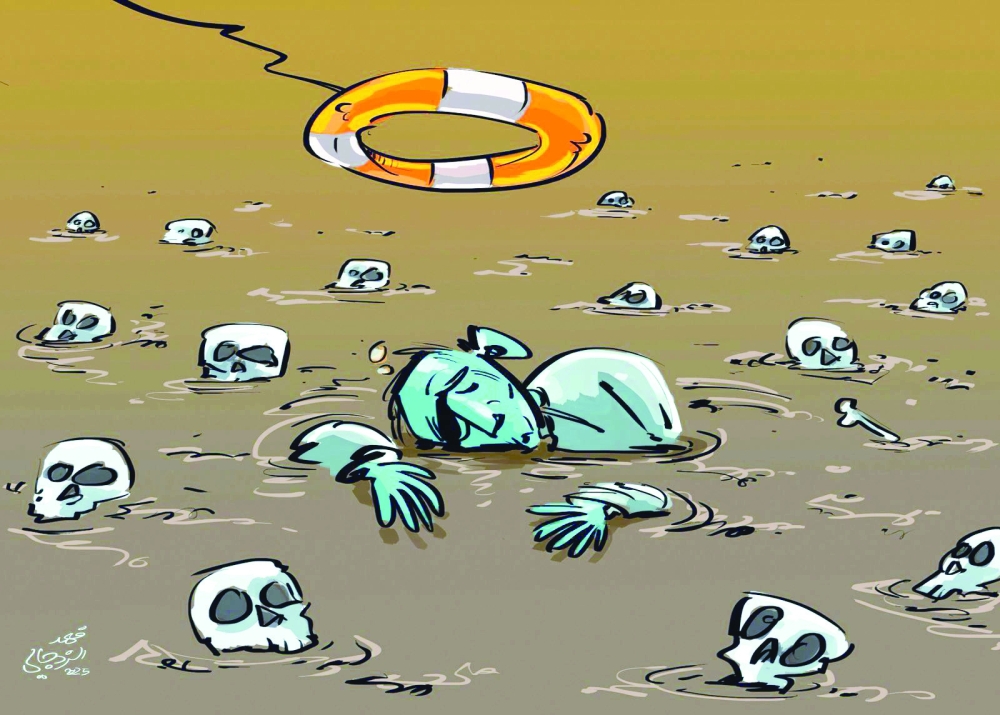





MUSCAT: The Law on Combating Narcotic Drugs and Psychotropic Substances promulgated by Royal Decree No (67/2026) provides for severe punishments for the violators including the death penalty or life imprisonment.
The newly enacted law stipulates a fine between RO 35,000 and RO 60,000 for importing, exporting, producing or manufacturing narcotic drugs or psychotropic substances with the purpose of trafficking.
The death penalty is imposed in cases of smuggling narcotic drugs with the purpose of trafficking, repeat offenses, abuse of power, licenses, or legal immunity, using a person lacking legal capacity or with diminished capacity, or participating in or cooperating with international gangs involved in smuggling narcotic drugs and psychotropic substances.
The law also stipulates a minimum prison term of 15 years and a fine ranging from RO 10,000 to RO 25,000 for possession, transportation, sale, delivery and distribution of drugs for the purpose of trafficking. The penalty can be increased to life imprisonment if the crime is committed in educational institutions, cultural, sports, or correctional facilities, places of worship, camps, or prisons, or if the narcotic or psychotropic substance is provided to a person lacking legal capacity or with diminished capacity.
The law also stipulates that anyone who possesses, acquires, purchases, produces, or manufactures narcotic or psychotropic substances for personal use or consumption shall be punished with a prison term ranging from one to three years and a fine between RO 1,000 and RO 5,000. It also allows for the placement of individuals with drug dependency in a rehabilitation centre or for treatment in specialised clinics instead of imprisonment, in accordance with specified regulations.
As per the law, individuals who have been previously placed in a rehabilitation centre twice pursuant to a prior sentence, or who have been released from such a centre less than five years prior, may not be placed in a rehabilitation centre. The release from a rehabilitation centre is subject to court order upon recovery. The period of admission to the centre may not be less than six months nor more than one year. No criminal charges shall be established against a drug user who voluntarily presents themselves to the public authorities for treatment at a rehabilitation centre, or who is referred by a relative within the degree of kinship specified by law.
The law authorizes the court to take several measures against a convicted Omani citizen, including placement in a healthcare institution, mandatory participation in vocational rehabilitation and training programmes and periodic medical examinations, restrictions on residence or electronic monitoring, travel bans or restrictions on access to certain places, prohibition from practicing a profession or trade and assignment to public service.
Oman Observer is now on the WhatsApp channel. Click here