The war that began on February 28, 2026 exposed a structural weakness in the Gulf economy that high oil prices could not conceal.
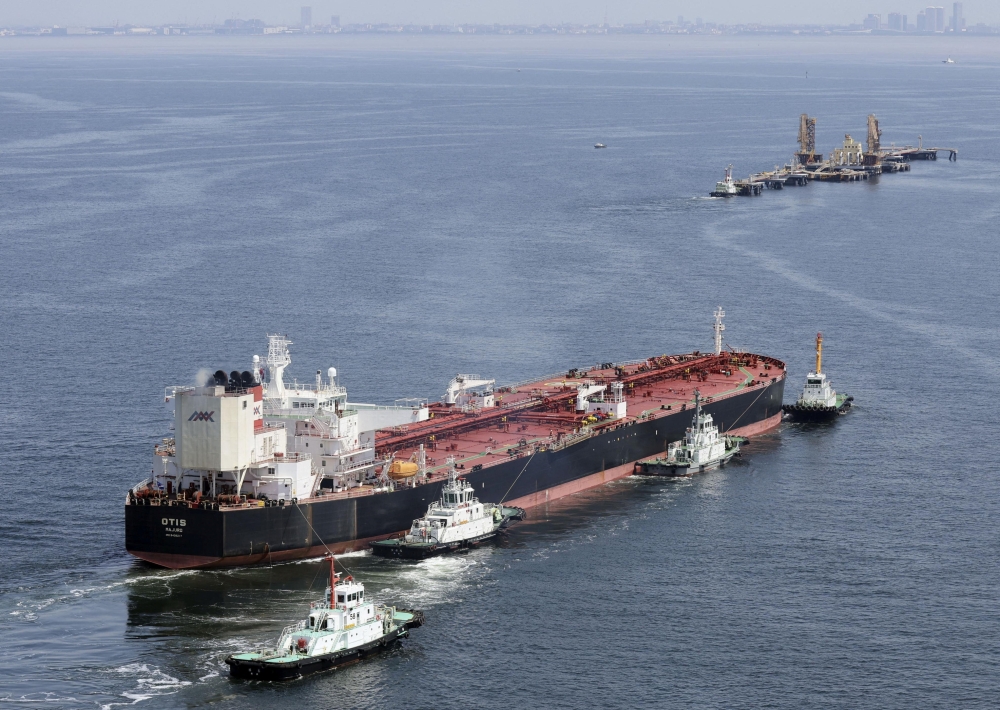
When shipping through the Strait of Hormuz slowed to a fraction of normal levels, the shock moved rapidly beyond energy. Freight became more expensive, supply chains were disrupted and exporters were forced to look for other routes.
The lesson is no longer simply that Hormuz must be kept open.
It is that no critical economic system should depend excessively on one route.
The Gulf does not need one substitute for Hormuz. It needs a network of alternatives.
Saudi Arabia demonstrated the principle during the crisis. The Kingdom increased crude flows through its East-West pipeline for export from Yanbu on the Red Sea. The International Energy Agency, based on Kpler data, said Saudi oil exports from Yanbu rose from around 2 million barrels per day before the war to more than 5 million barrels per day in early June 2026.
The pipeline did not eliminate the geopolitical crisis. It gave the economy another option.
The UAE offers a second version of the same logic. Its Abu Dhabi Crude Oil Pipeline carries crude from Habshan to Fujairah, outside the Strait of Hormuz. The IEA puts the line's current capacity at close to 1.8 million barrels per day. ADNOC is also accelerating construction of a second pipeline intended to double export capacity through Fujairah, with completion targeted for 2027.
Saudi Arabia and the UAE therefore illustrate two different forms of energy redundancy: one reaches the Red Sea, the other the Sea of Oman.
Oman adds a third geographic dimension. Its principal ports at Al Duqm and Salalah face the Arabian Sea and Indian Ocean, while Suhar sits close to the entrance to the Gulf. Oman does not need a new coastline outside Hormuz; it already has one.
The strategic question is whether these separate advantages can function as parts of one Gulf system.
That question has become less theoretical in 2026.
During the disruption, GCC states activated alternative logistics corridors and redirected shipments from Arabian Gulf ports towards ports on the Red Sea and Arabian Sea, supported by joint customs and logistics facilitation.
In May 2026, the Sharjah Ports, Customs and Free Zones Authority, working with Oman Customs, launched an integrated logistics corridor linking Sharjah with Omani ports by land. The corridor covers Suhar, Al Duqm and Salalah and was designed to expand logistics options and support continuity in regional supply chains.
Rail is beginning to add another layer. Hafeet Rail is intended to connect Suhar with the UAE network, and a preliminary commercial agreement signed in 2025 envisages seven container trains a week between Suhar and Abu Dhabi once the line is completed.
Taken together, these developments suggest a more useful way to think about Gulf integration.
For years, connectivity has largely been discussed as an efficiency project: shorter journeys, bigger markets, cheaper transport and greater intra-GCC trade.
Those benefits remain important. But 2026 has added another purpose.
Connectivity is now also a form of economic insurance.
The engineering principle is redundancy. Critical systems are designed with alternatives because even the best-protected component can fail. The objective is not to predict every disruption but to ensure that failure at one point does not stop the entire system.
Economies need the same discipline.
A Gulf resilience network would mean energy able to reach different coastlines, cargo able to switch between ports and land corridors, electricity able to cross borders during shortages, and strategic food or medicine stocks held in more than one location.
The electricity sector already provides a working model. The GCC interconnection has for years allowed member states to support one another during power contingencies. The new direct Oman-GCC link now under development will add roughly 530 kilometres of 400-kV transmission lines and up to 1,600 MW of capacity between the UAE side of the GCC grid and Ibri in Oman.
This is important not because another cable is being built, but because it demonstrates what genuine regional resilience looks like: spare capacity in one part of a network can support another part under pressure.
The same logic should now be applied to trade and logistics.
Oman and Saudi Arabia have a direct land connection through the Rub' Al Khali border crossing, while the Economic Zone at Al Dhahirah is being developed near the Saudi border with cross-border trade and a dry port among its intended functions.
Meanwhile, the UAE-Oman logistics corridor and Hafeet Rail create a different axis between Emirati logistics networks and Suhar, Al Duqm and Salalah.
Saudi Arabia provides access to the Red Sea. The UAE has built an oil export route to Fujairah outside Hormuz. Oman has ports open to the Arabian Sea and Indian Ocean.
What is missing is the connective tissue that allows these assets to operate as one system rather than as national alternatives sitting beside one another.
That is also why the September 1, 2026 Oman-Saudi discussions in Jeddah matter beyond bilateral trade. Oman's Foreign Ministry said the leaders discussed ways to advance relations across various sectors and exchanged views on regional and international developments, including solutions aimed at de-escalation and peace while safeguarding states, peoples, economies and interests.
But the argument should not stop with Oman and Saudi Arabia. The deeper issue is Gulf-wide.
Not every GCC state has the same level of geographic or energy redundancy. The IEA notes that Saudi Arabia and the UAE are the only Gulf producers with operational crude pipelines capable of rerouting substantial volumes around Hormuz. That makes regional integration more valuable, not less.
The strategic value of a Gulf network is that a state does not necessarily need to own every alternative itself if it can reliably access alternatives elsewhere in the region.
That requires more than concrete, steel and cables.
Building infrastructure is easier than integrating systems.
A highway is not a resilient trade corridor if a truck loses hours at administrative borders. A railway has limited regional value if regulations, documentation or operating standards differ from one market to another. A strategic stockpile cannot provide resilience if emergency procedures for releasing and transporting supplies are slow.
The next chokepoint may therefore be administrative rather than geographical.
An IMF assessment published in December 2024 put intra-GCC trade in goods and services at around 10 per cent of total exports, well below integration levels in the EU and major North American trade arrangements. The same assessment noted that, despite zero intra-GCC import tariffs, there remains scope to deepen integration by reducing non-tariff measures.
That is an important distinction. The Gulf does not primarily suffer from an absence of infrastructure. It has invested heavily in ports, airports, roads, electricity networks and industrial zones. The harder task is making those assets operate as one regional system when circumstances demand it.
That means interoperable customs data, faster border procedures, compatible technical requirements, emergency protocols and greater certainty that goods and energy can move across national systems without unnecessary friction.
The most useful test of Gulf integration is therefore not how many projects are announced, but how quickly the system responds under pressure:
If a port is disrupted, how quickly can a shipment be moved to another coast?
If one electricity system comes under pressure, how much power can neighbouring grids supply and how quickly?
If food or medicine stored in one GCC state is urgently required in another, can it cross the border without becoming trapped in procedure?
And if Hormuz faces another serious disruption, can Gulf exporters redirect meaningful volumes through a network that already exists rather than improvising the solution after the crisis begins?
Those are economic resilience tests.
The objective is not to build a Gulf economy in which disruption never happens. Geography and geopolitics make that impossible.
The objective should be to make disruption at any single point less capable of paralysing the wider system.
The next phase of Gulf integration should therefore be measured less by kilometres of railway, megawatts of interconnection or the capacity of new ports, and more by whether those assets can work together under pressure.
The Gulf has spent decades building infrastructure. Its next strategic task is to turn Saudi Arabia's Red Sea access, the UAE's Fujairah corridor and Oman's Arabian Sea gateways into parts of a network that is stronger than any single route.
Oman Observer is now on the WhatsApp channel. Click here