




SALALAH, AUGUST 30
Greater Salalah is targeting a 300 per cent increase in water storage capacity as part of a long-term infrastructure plan designed to support urban growth, strengthen water security and improve resilience to climate risks through 2040.
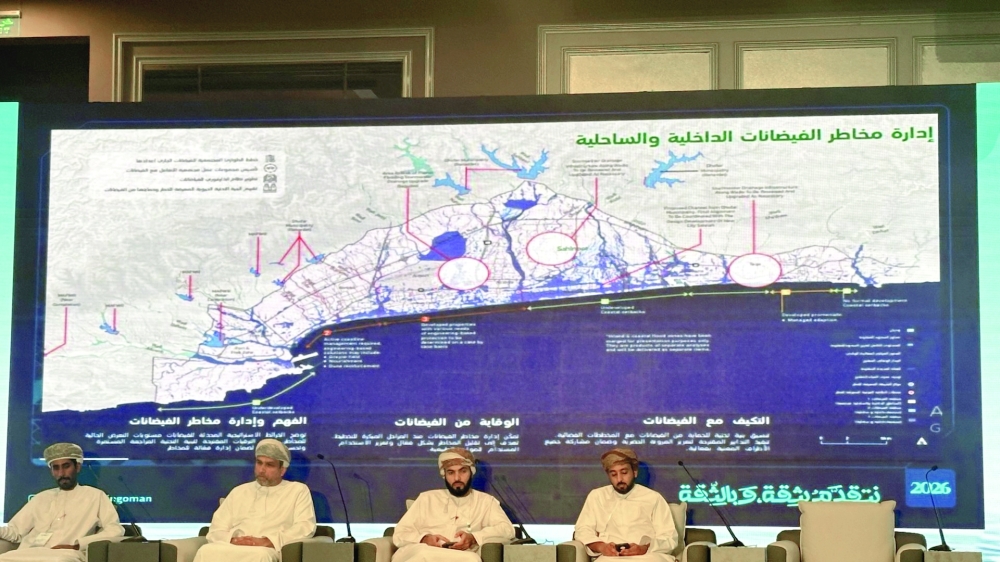
The Greater Salalah Structure Plan also targets 100 per cent coverage of water and sewerage networks, while providing an additional 23.8 million litres a day of treated water available for reuse, according to a presentation by Eng Haitham Al Shanfari of the Ministry of Housing and Urban Planning.
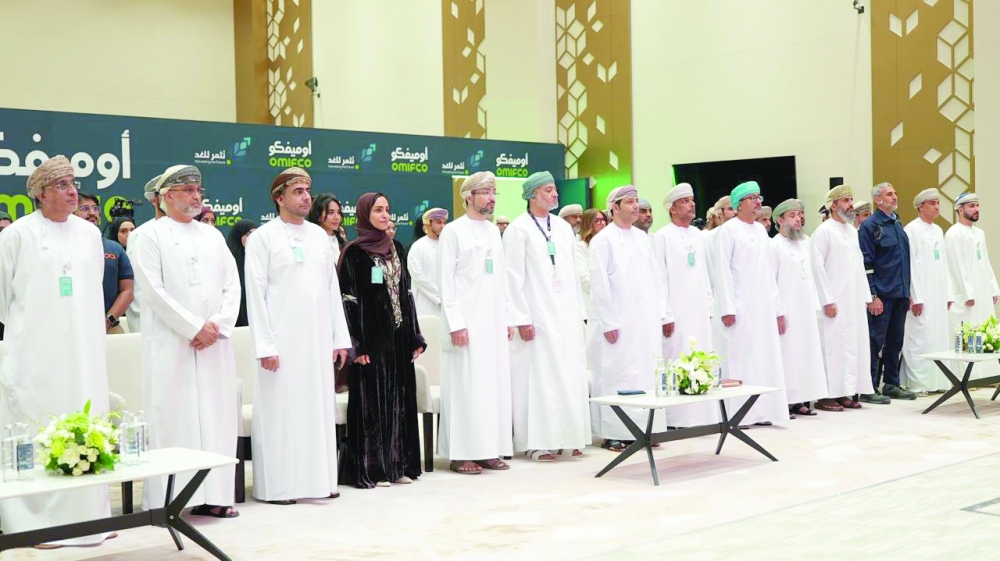
Al Shanfari presented the plans during the Water Sustainability: Water and Climate Change symposium in Dhofar on Sunday.
The structure plan is designed to accommodate 674,000 people in Greater Salalah by 2040, within an overall planning area of around 427 million square metres, highlighting the scale of future pressure on water, energy and urban infrastructure.
Alongside the expansion in storage, planners are targeting 23.8 million litres of water savings per day and 400 MW of green energy capacity within the plan.
Water security forms part of a wider framework of 41 indicators covering four areas central to the future resilience of Greater Salalah.
These comprise nine water-security indicators, 13 climate-resilience indicators, 12 covering khawrs, ecosystems and water, and seven related to clean energy.
The water indicators include access to drinking water, sewerage coverage, water storage, wastewater management and recycling, smart water systems, household water-use performance, water efficiency and rainwater harvesting.
Climate measures include early-warning systems, flood resilience, coastal resilience, emergency preparedness and strengthening the ability of critical infrastructure to withstand climate-related risks.
The presentation also highlighted the role of Dhofar’s natural systems in future urban planning, including the protection of khawrs, agricultural areas and watersheds, as well as irrigation efficiency and ecosystem health.
Under the Dhofar Regional Spatial Strategy, water is addressed through four direct policies covering groundwater monitoring and management, protection of water resources, optimal use of available water resources and flood-risk management.
These policies are translated into seven identified plans and projects.
They include regional groundwater-management plans, monitoring of the coastal aquifer and water sources, reuse of treated wastewater, reuse of water associated with oil production, utilisation of brackish groundwater and a flood-management and mitigation plan.
Three of the seven initiatives are classified as high priority, while four have medium priority.
The approach reflects a shift towards integrating water management with land-use planning rather than treating water infrastructure as a separate utility requirement.
That challenge is expected to become more significant as Greater Salalah expands through new residential, logistics, tourism and commercial developments.
The wider structure plan also incorporates Salalah Future City, a planned development covering around 10 square kilometres, with 13,000 housing units designed to accommodate about 60,000 people.
It also seeks to strengthen transport links between the Port of Salalah and the free zone, while supporting year-round marine and environmental tourism.
Together, the targets place water reuse, storage, network coverage and climate resilience at the centre of planning for the next phase of Greater Salalah’s growth.
Oman Observer is now on the WhatsApp channel. Click here