Shortly after Russia’s full-scale attack of Ukraine in 2022, I wrote a column under the headline “This Is How World War III Begins.” More than four years on, I wonder how much I got right.
My argument was based on the origins of World War II, which did not simply start with Germany’s attack of Poland on Sept. 1, 1939. Instead, the war was an accumulation of regional wars and crises, beginning with Japan’s attack of Manchuria in 1931, which gradually gathered into a single global conflict.
That gathering, abetted by the converging ambitions of the totalitarian states and the divisions and vacillations of the democracies, led to catastrophe. Added to this was a revolution in military technology and tactics that gave the dictatorships an early advantage in offensive combat. Also an advantage: their willingness to inflict — and endure — a level of brutality and suffering their adversaries were initially reluctant to match.
In 2022, I saw a similar pattern unfolding: Decades of Western appeasement of Vladimir Putin had given the Russian strongman a sense that he could get away with nearly anything. His burgeoning ties with North Korea, Iran and especially China — memorialised by the pledge of a “no limits” partnership with Beijing announced weeks before the attack — gave him additional confidence. So did the spectacle of American weakness during our shambolic withdrawal from Afghanistan just six months earlier.
But Ukraine did not, as I had feared, turn out to be the France of 1940. It was more like Britain, prepared to fight, as Winston Churchill put it that May, “however long and hard the road may be.” The Biden administration, for all its fatal hesitation about letting Kyiv take the war to Russia, at least helped ensure that Ukraine didn’t lose. Ukraine has also held the technological edge, pioneering equipment and tactics that are finally stimulating a long-overdue rethink about how wars of the future will be fought.
That’s the good news. There’s far more by way of bad news.
First, as in the 1930s and ’40s, the spheres of conflict have multiplied and are merging.
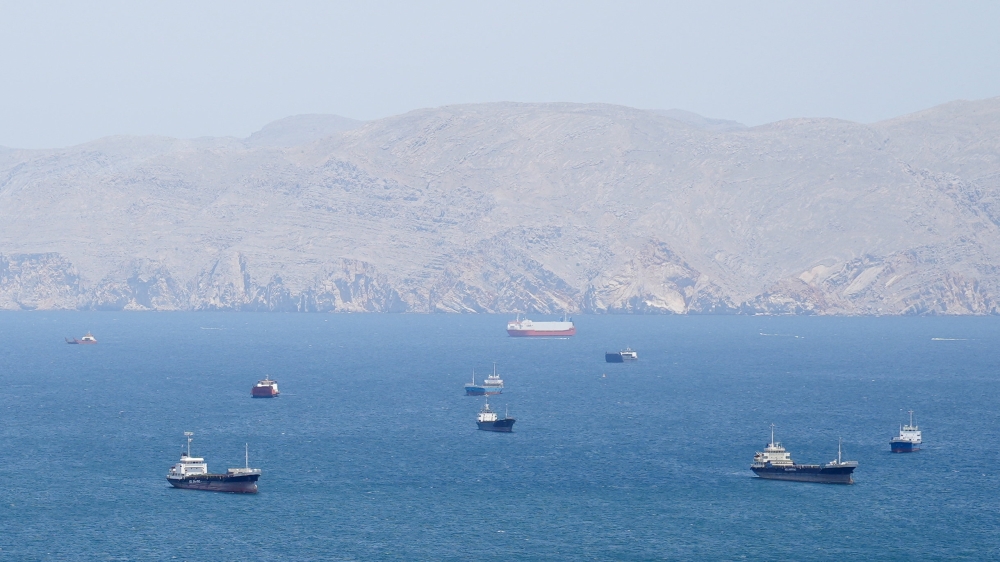
Russia’s battlefield reversals seem to have done nothing to diminish Putin’s appetite for risk as he expands his campaign, in barely concealed attacks and threats, against Moldova, Poland and Germany, among other states, while his political allies repeatedly call for direct strikes on Europe and the use of nuclear weapons against Ukraine. Hamas’ assault on Israel in 2023 became, in stages, a war between Israel and Hezbollah, the Houthis and Iran; then a war between Iran, the United States and the Gulf States. More recently, Ukraine has directed long-range strikes in the Caspian Sea to disrupt Iranian military supplies to Russia. And decisions in one theatre directly affect outcomes in the other: The expenditure of missile interceptors in the Middle East means that few can now be spared for Ukraine.
Second, the Axis of Authoritarians has become a fully operational military alliance.
Russia is providing North Korea with help to modernise its armed forces, while the North has returned the favour by sending millions of artillery rounds and is now reportedly prepared to send thousands of additional troops to fight for Russia in Ukraine. China supplies Russia with most of the electronic components used in its drones and other military hardware. Russia has given Iran critical targeting intelligence to strike U.S. bases and ships in the Middle East. In the event of a Chinese attack on Taiwan, Beijing could call in its chips with Moscow by engaging the aid of Russia’s powerful Pacific submarine fleet, as detailed in a new paper from the Australian Strategic Policy Institute.
Third, the West is a mess.
President Donald Trump complains of our allies’ weakness. The allies complain of Trump’s bullying, capriciousness, callowness, mendacity and incompetence. Both sides are right. The latest U.S. tariff salvo on Canada is a case in point: politically ill advised, economically self-defeating, strategically enervating.
Yet none of that erases the fact that Canada, a trade-dependent nation with the world’s longest coastline, barely has a navy to speak of, or that its government’s “new strategic partnership” with China is immoral, unwise and unsound — unless Mark Carney, the prime minister, really thinks that Trump’s idiotic outbursts are a graver long-term threat to Canada and the free world writ large than the patient designs of the People’s Republic.
Fourth, we are militarily unprepared.
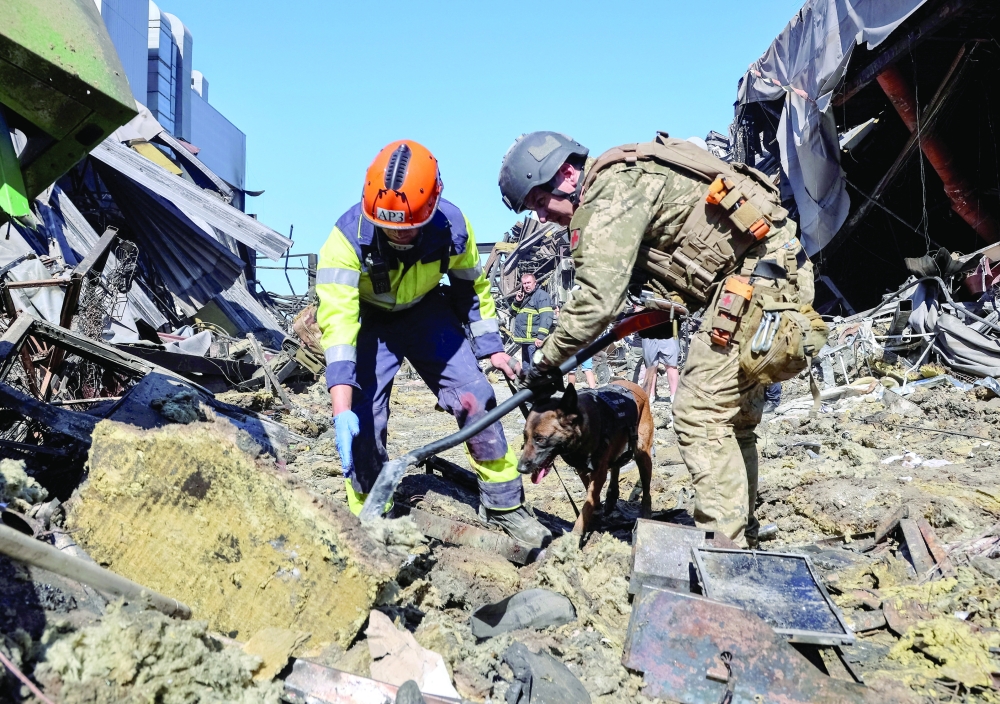
The war against Iran revealed not just the munitions shortages, which helped bring the war to a premature close, but also America’s acute sensitivity to military fatalities and economic pain, which gave Iran’s leaders an asymmetric advantage given their own tolerance for human suffering. The war in Ukraine has demonstrated that even the most sophisticated U.S. military kit is entering obsolescence thanks to the advent of AI-assisted drone warfare. The tanks we and our allies supplied Kyiv during the Biden administration “now mostly sit idle, hidden in forests and collecting cobwebs,” as The New York Times reported this week.
Yet Pete Hegseth, our testosterone-obsessed defence secretary, last week decided to phase out an Army drone unit, seemingly because it was championed by generals he didn’t like. The travails of the USS Abraham Lincoln during the carrier’s long deployment are a national scandal. But they should call attention to the historically small size of the fleet and our depleted industrial base that struggles to build and maintain ships. Democrats blocking the defence appropriations bill aren’t helping things, either.
Fifth, we may be near the economic brink.
One great difference between the 1930s and the present is that, unlike then, we are not in the midst of a worldwide depression. But the warning signs of a sharp and abrupt downturn are everywhere. What happens if or when the AI boom starts to run out of steam, much as the dot-com boom did at the beginning of the century? Or if the currency crisis in Japan causes it to start selling off its U.S. Treasury bonds? Stanley Druckenmiller, the legendary investor, recently warned in The Wall Street Journal that the Treasury Department’s bond buybacks were all but destined to fail: Ultimately, the price of a $40 trillion national debt will be felt in sharply higher interest rates and the risks they pose to every sector of the economy that’s depended for too long on cheap credit.
A deep US recession, or a global financial panic, will inevitably worsen every trend mentioned above. In periods of economic distress, democracies almost always become more risk-averse, while dictatorships become risk-prone. That’s a pattern of history worth recalling as we continue to drift, only dimly aware, toward the gathering storm.
Oman Observer is now on the WhatsApp channel. Click here