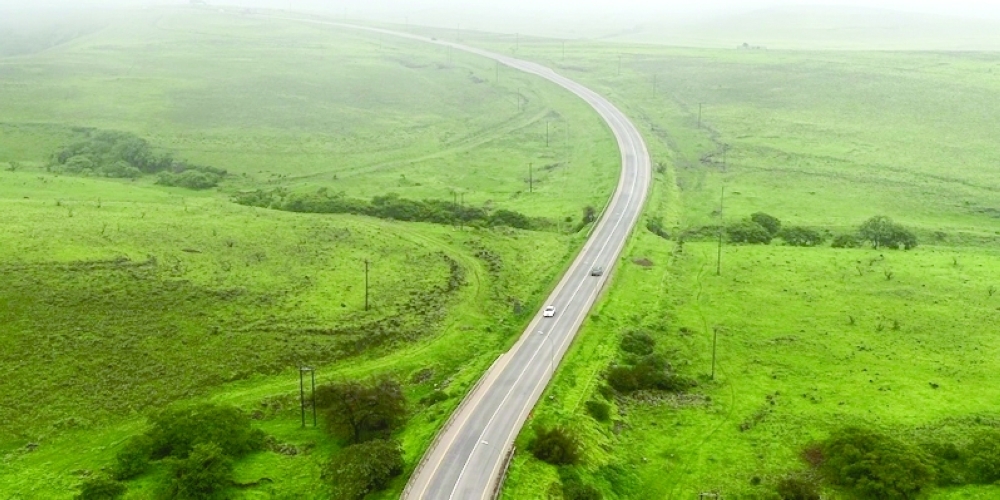
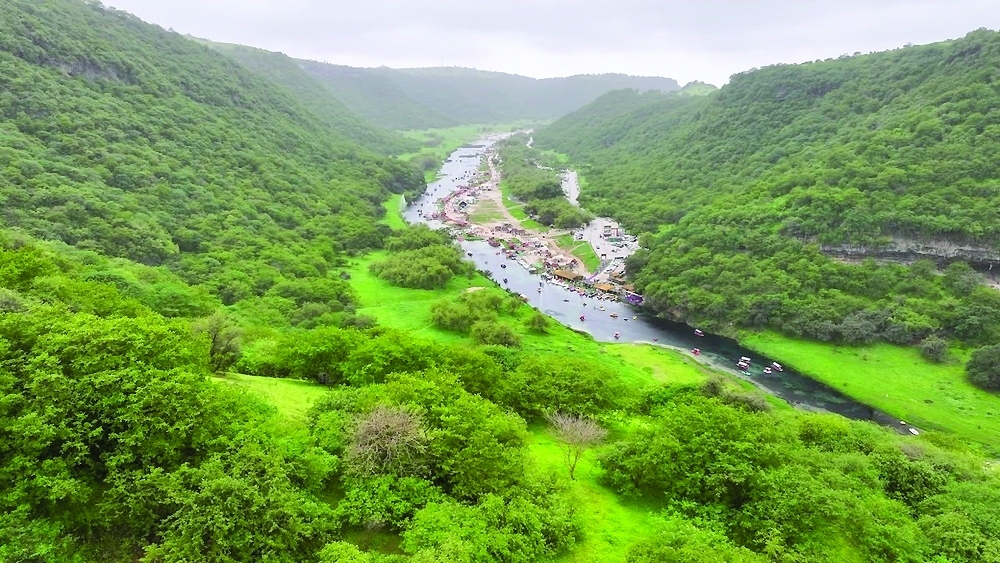
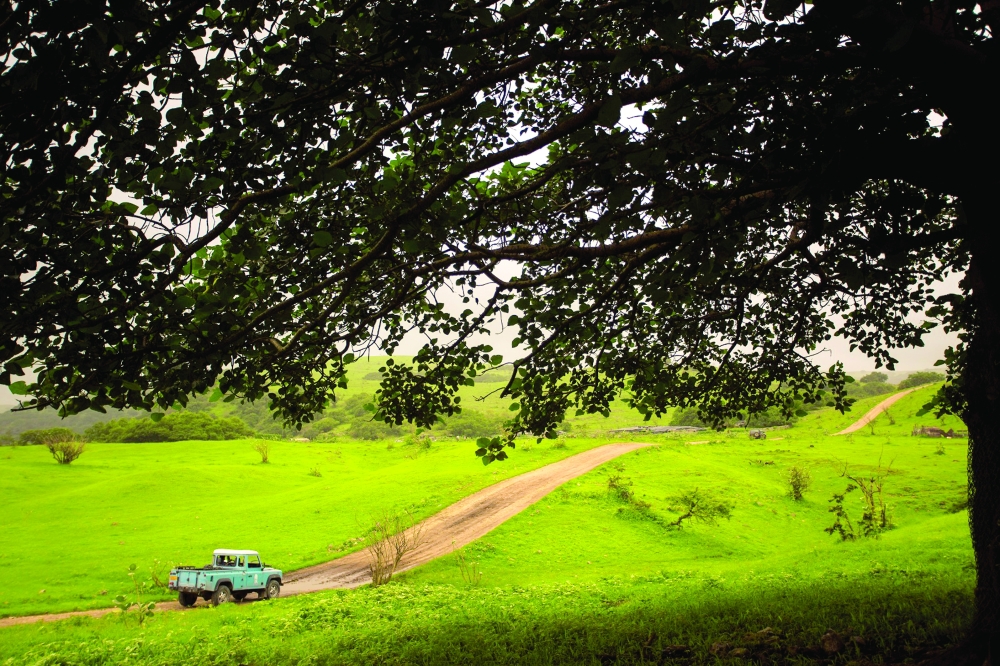





SALALAH: West of Salalah, Oman’s main city in Dhofar Governorate, the landscape and economy change quickly. The road leaves the coastal plain, climbs into the mountains of Jabal Al Qamar and continues towards small communities facing the Arabian Sea and, eventually, Oman’s border with Yemen.
For readers unfamiliar with the area, 'western Dhofar' is not an official administrative region. It is a geographical description covering the coastal corridor from Al Mughsail — still part of the Wilayat of Salalah — through Rakhyout and Dhalkout towards Sarfait, together with Al Mazyouna farther inland on the Yemeni border.
The distinction matters because this is not one economy.
Rakhyout and Dhalkout are mountain and coastal wilayats where fishing, livestock, farming and increasingly tourism shape local activity. Al Mazyouna is different: an inland border wilayat whose economy is more closely connected to public services, logistics and cross-border trade.
Here, distance itself has economic consequences.
Until Al Mazyouna Hospital opened in 2024, patients requiring higher-level hospital care could face a journey of about 250 kilometres to Sultan Qaboos Hospital in Salalah, according to a Ministry of Health spokesperson interviewed by the Observer at the hospital’s opening.
The 50-bed hospital provides emergency, dialysis, surgical and diagnostic services and forms part of the ministry’s effort to decentralise healthcare and bring specialised services closer to communities.
Access is also changing along the coast.
The first phase of the Al Mughsail Road and Bridge opened to traffic in July 2026. Al Mughsail lies within the Wilayat of Salalah but serves as the principal gateway towards Rakhyout and Dhalkout. Remaining works are scheduled to continue into the first quarter of 2027.
For visitors, a better road means easier access to beaches, viewpoints and mountain landscapes. For residents, the implications are more basic: shorter and more reliable journeys to services and markets, easier emergency access and improved movement of fish, livestock and farm products.
Electricity infrastructure has undergone a similar transformation.
Oman Electricity Transmission Company commissioned a new 132 kV grid station at Al Mazyouna in May as part of a wider Dhofar transmission programme. The expansion strengthens electricity supply to remote areas and reduces reliance on isolated diesel generation.
Together, the road, grid and hospital illustrate how western Dhofar is becoming physically better connected.
But connectivity alone does not necessarily create stronger local economies.
That question becomes particularly relevant during Khareef, the summer monsoon season that turns Dhofar’s coastal mountains green and draws visitors from Oman and abroad.
Preliminary official estimates show that nearly half a million people visited Dhofar by the end of July this year, with arrivals running ahead of the same period in 2025. Tourism is already economically significant: official data put total visitor expenditure during the full 2025 Khareef season at RO 124.6 million.
The more important question for western Dhofar is not simply whether visitors spend money, but where that money is retained.
Published data do not show in sufficient detail how much reaches individual wilayats such as Rakhyout and Dhalkout through accommodation, restaurants, transport, guiding, local products and family-run businesses.
Ali Hardan, a resident of western Dhofar, told the Observer that improved roads had made viewpoints and natural sites easier to reach, while photographs and videos shared on social media were introducing places previously known mainly to local communities to a much wider audience.
He said digital exposure had encouraged more people to explore the western mountains and coast, while rising visitor numbers made awareness of safety and responsible behaviour increasingly important.
Shaat, in the Wilayat of Rakhyout, illustrates the change.
Dhofar Municipality figures recorded more than 50,000 visits within roughly three weeks of the opening of its new glass viewing platform in July. The figure demonstrates strong early interest, but it does not show how much of that visitor traffic translated into income for accommodation providers, restaurants, transport operators, guides, producers and other businesses in surrounding communities.
That distinction is increasingly important as tourism expands westward.
Better connectivity also creates an environmental challenge.
Between Rakhyout and Dhalkout lies Khor Kharfot Archaeological Reserve, declared a natural reserve under Royal Decree No 58/2021. The legal framework provides for regulated entry and activities as part of the reserve’s protection and management.
For visitors unfamiliar with the area, the distinction is important: a road making a landscape easier to reach does not make every location an unrestricted tourism site.
Western Dhofar’s natural environment is one of its greatest economic assets, but it is also an asset that increased traffic can put under pressure.
The region has a cultural landscape that is less visible from the road.
Alongside Arabic, communities in the western mountains use Modern South Arabian languages, including Jibbali, also known as Shehri, and Mehri. These are distinct languages rather than dialects of Arabic and form part of Dhofar’s living cultural heritage.
Any expansion of tourism therefore has to balance access and economic opportunity with the protection of the region’s environmental and cultural character.
Al Mazyouna represents another side of western Dhofar.
Its free zone functions as a commercial and logistics gateway linked to trade with Yemen. Madayn reported around RO 140 million in cumulative investment in Al Mazyunah Free Zone by the end of 2025.
New projects added during that year represented a much smaller amount, an important distinction between investment accumulated over the zone’s lifetime and new capital arriving in a single year.
Goods handling increased during 2025, but movement across a border does not automatically mean value is being created locally.
A fish-processing facility exporting seafood to Asian markets provides one example of how economic activity can move beyond transit into processing and production.
Al Mazyouna’s border position also brings an external variable. Trade can benefit from demand in neighbouring Yemen, while conditions across the border can affect flows in ways that infrastructure on the Omani side cannot entirely control.
For the wilayat, the longer-term challenge is therefore to translate its geographical advantage into deeper production, services, investment and employment.
Western Dhofar should not be understood simply as the scenic country west of Salalah, nor only as Oman’s frontier with Yemen.
Rakhyout and Dhalkout face the challenge of turning better access and growing visitor interest into sustainable local businesses while protecting sensitive landscapes.
Al Mazyouna faces a different task: converting border movement and accumulated investment into deeper production, services and employment.
Oman can increasingly measure what has reached the west — roads, electricity, healthcare, visitors and trade.
What remains much harder to see at wilayat level is where income stays, where jobs are created and how much of the value generated by tourism, fisheries and trade is retained by local communities.
Oman Observer is now on the WhatsApp channel. Click here