

MUSCAT, NOV 15
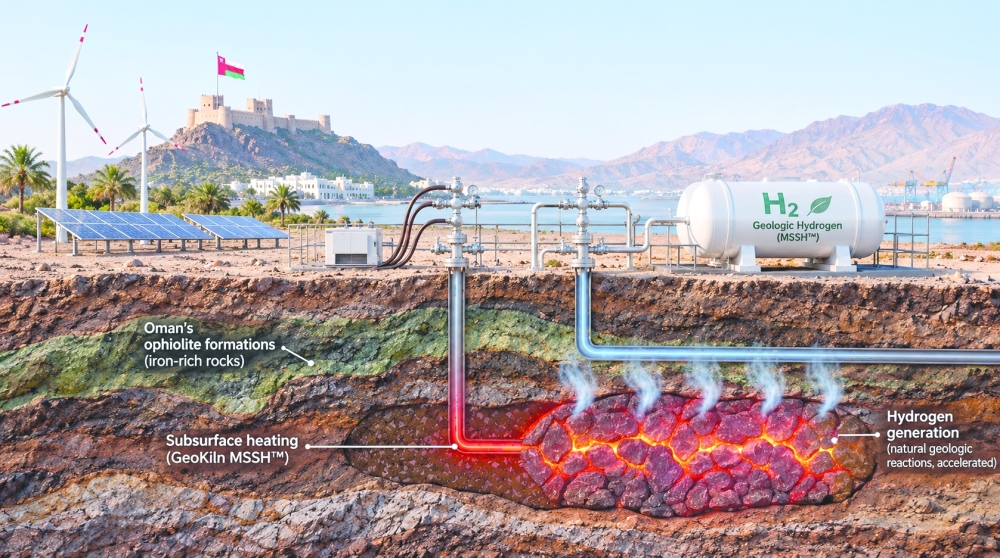
Oman's distinctive approach to developing an integrated green hydrogen ecosystem, combining government-led master planning with shared infrastructure development, has been highlighted in a new international study as a model for coordinating large-scale hydrogen production and export ambitions.
The assessment is featured in Hydrogen's Trade Gateway: Catalysing Investment in Export Infrastructure, a November 2026 report published by the Germany-based H2Global Foundation, a non-profit organisation supporting the development of international clean hydrogen markets through market-building mechanisms, research and industry collaboration.
The report identifies Oman, alongside Brazil, Namibia and South Africa, as an important case study in emerging hydrogen export infrastructure development, singling out the central coordinating role of Hydrom, the government-owned entity established in 2022 to orchestrate the Sultanate's green hydrogen sector.
According to the report, Oman's approach differs from conventional project-led development by integrating land allocation, hydrogen production planning and enabling infrastructure requirements within a nationally coordinated framework.
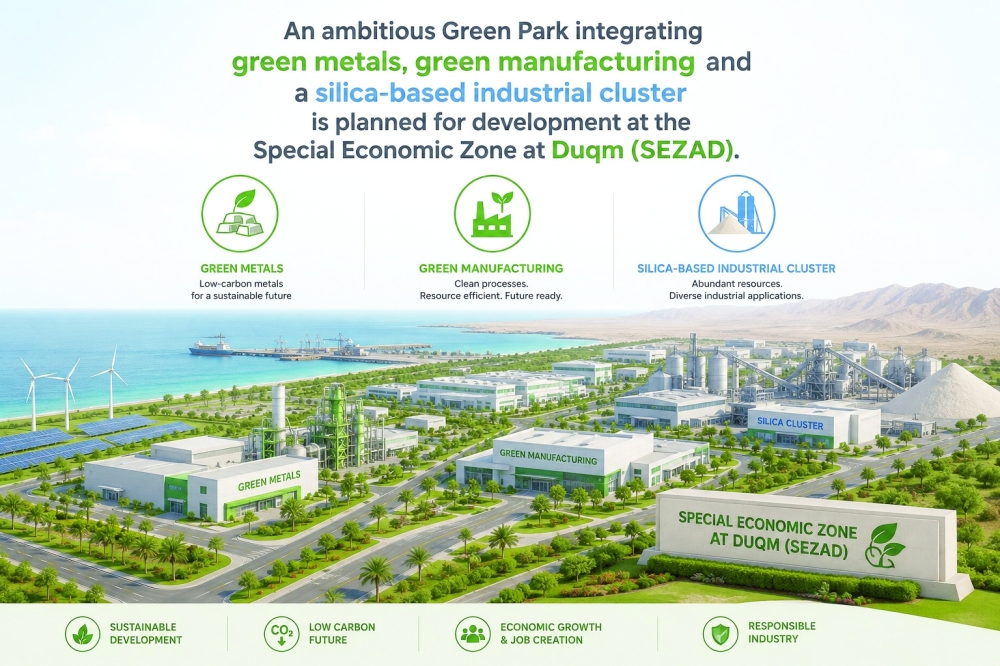
Rather than leaving individual developers to independently secure land and establish supporting infrastructure, Hydrom oversees competitive land-allocation rounds and coordinates infrastructure planning across emerging hydrogen clusters, particularly in Duqm and Salalah.
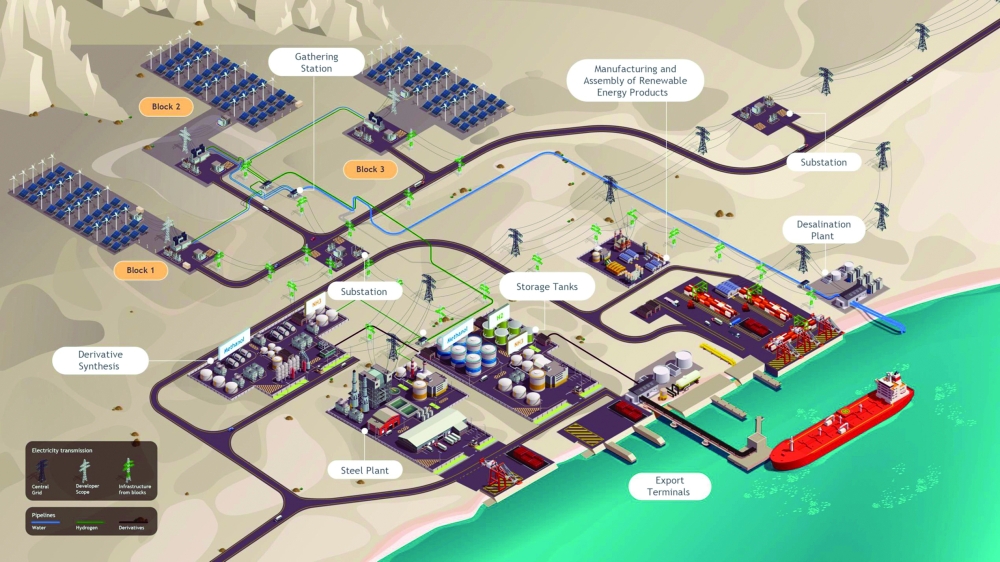
A defining element of this model is Common-User Infrastructure (CUI), under which essential facilities are planned to serve multiple hydrogen producers instead of being developed separately for each project.
The proposed CUI framework encompasses hydrogen transmission pipelines, electricity transmission networks, desalination facilities and water transportation systems. In Duqm alone, plans include approximately 200 kilometres of hydrogen pipelines alongside associated electricity and water infrastructure.
The report observes that this shared approach can capture economies of scale, minimise infrastructure duplication and potentially improve project economics. However, the study cautions that commercial arrangements covering tariffs, cost recovery, ownership and risk allocation remain under development or have yet to be publicly disclosed.
The report also highlights the differing infrastructure requirements of Oman's two principal hydrogen hubs. Duqm, with approximately 4 million tonnes per annum of announced hydrogen-equivalent production capacity across its remaining projects, requires substantial new export infrastructure. Salalah, with approximately 0.9 million tonnes of planned capacity, can leverage existing chemical-handling facilities, although significant expansion would still be necessary.
Significantly, Hydrom's latest project awards further underscore the evolution of this integrated development model. Two new green hydrogen projects awarded in Duqm under Round 3, announced during COP31, target a combined 121,000 tonnes of green hydrogen annually by 2032. Their downstream output will include approximately 625,000 tonnes of green ammonium nitrate and 400,000 tonnes of green ammonia annually, reflecting a growing emphasis on value-added green commodities.
Importantly, the H2Global study notes that export terminals, storage and loading facilities may follow independent development models outside the centrally coordinated CUI framework.
It concludes that Oman's experience demonstrates how government-led planning and shared infrastructure can coexist with privately developed or project-specific export facilities, offering valuable lessons for emerging hydrogen economies seeking to balance infrastructure investment, commercial risks and future market demand.
Oman Observer is now on the WhatsApp channel. Click here