




Built during the Middle Ages to shelter communities from attacks, Transylvania’s fortified churches risk crumbling despite efforts to preserve them and breathe new life into the buildings.
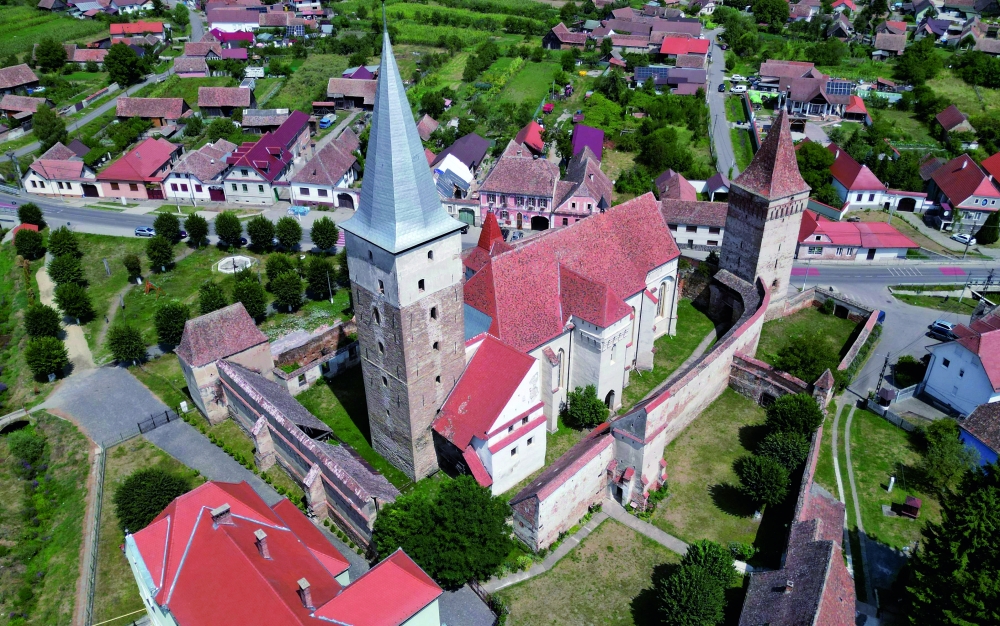
In a stark reminder of their fragility, part of the outer wall of a historic church in Mosna, central Romania — visited by Britain’s King Charles III in 1998 — collapsed one night in June.
Since then, Mariana Rempler, the village’s last remaining woman from the German-speaking Saxon minority, has feared that one of the church’s towers could also collapse. The site attracts around 4,000 visitors a year.
“I felt a great pain inside me. It was as if I had collapsed at the same time with that wall”, the 74-year-old said, recalling the incident with tears in her eyes inside the church where she was baptised and married.
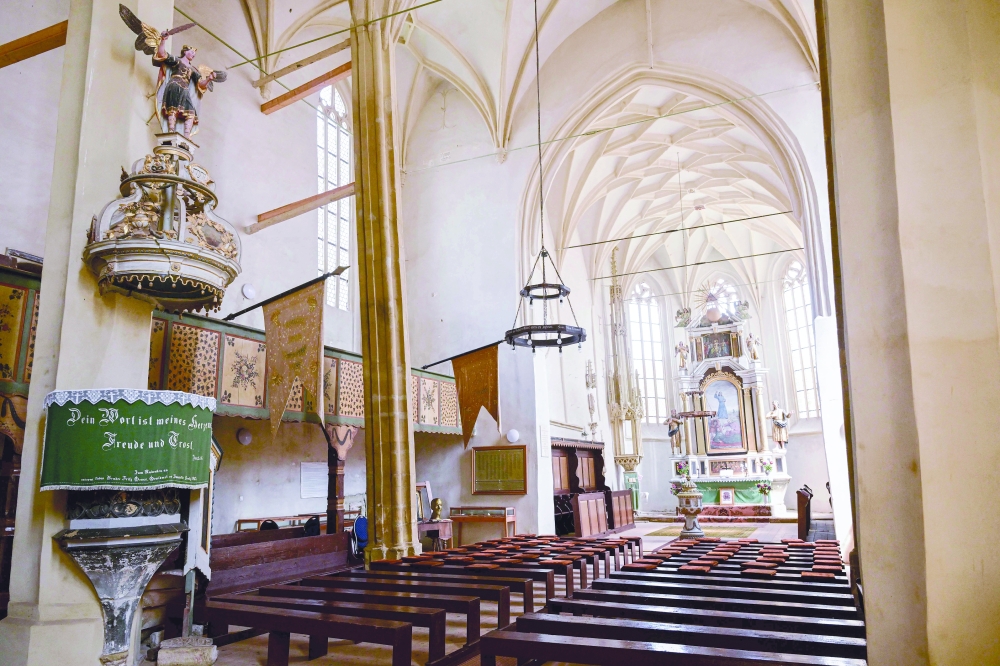
Mosna is home to one of more than 160 fortified churches in Transylvania. Surrounded by defensive walls, they were built by the German minority to shelter people from attacks by Tatars and Ottomans in what was then a disputed border territory.
As the Saxons left Romania — many fleeing the communist dictatorship of Nicolae Ceausescu — several churches deteriorated, with no one remaining to care for them.
Even sites such as Mosna, renovated after the fall of communism in 1989, remain at risk as funding for further work is difficult to secure.
Of the approximately 300,000 Saxons who lived in Transylvania before World War II, only around 10,000 remain today.
About half of the region’s fortified churches — around 80, including Mosna — have undergone restoration during the past 35 years or are expected to do so over the next five, according to Cristian Cismaru, manager of the Fortified Churches Foundation.
The foundation works with the Evangelical Church in Romania to preserve the monuments through grants and donations, with around 85 per cent of its funding coming from the European Union.
“I don’t think we’ll be able to address the other half of our heritage in our lifetime. That will be left for future generations”, Cismaru said.
“Our role, those of us who live in Transylvania, regardless of nationality, race or religion, is to continue to look after these monuments”, he said. “We want to breathe new life into these fortified churches”.
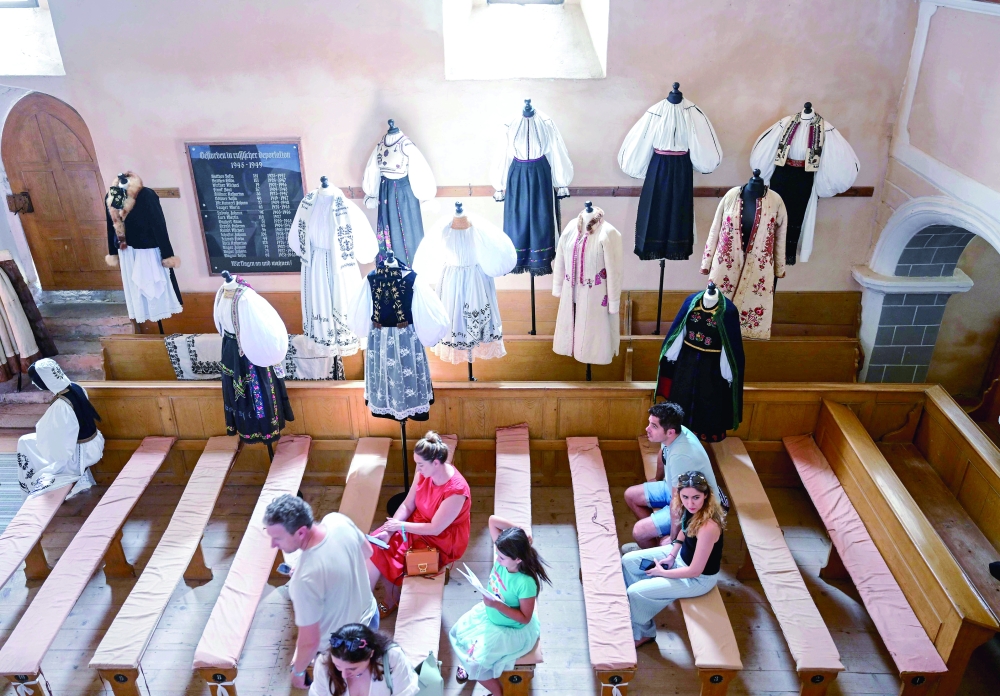
Cismaru said many churches need “a new concept for their survival” because they can no longer function solely as places of worship. One proposal is to transform them into cultural spaces.
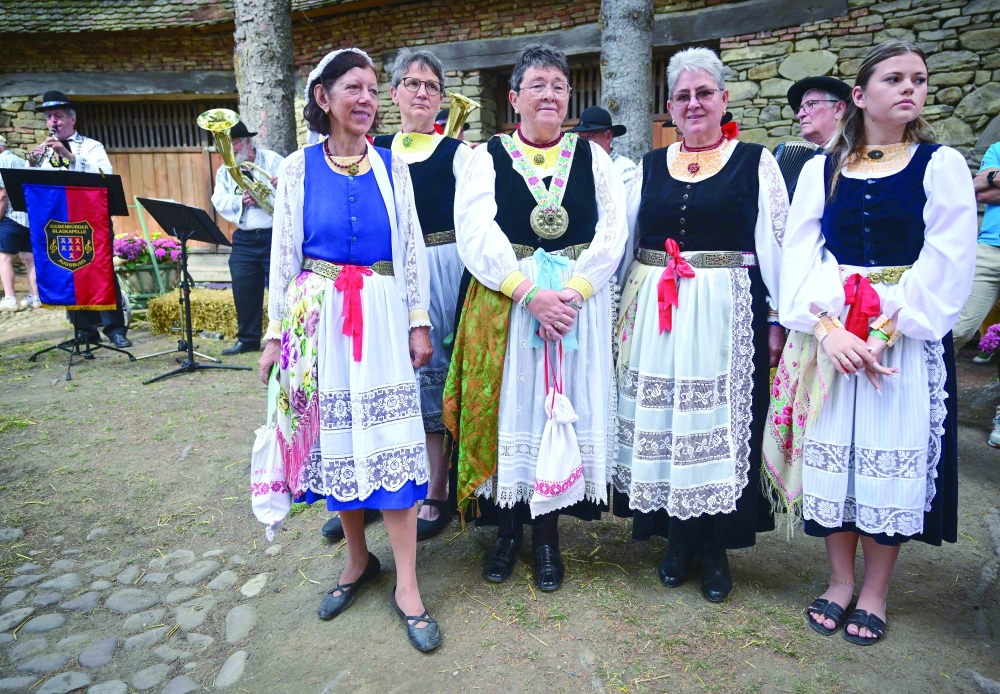
Earlier this month, the churches hosted dozens of events as part of Romania’s largest annual festival promoting Saxon heritage. It drew a record of almost 10,000 visitors this year, according to organisers.
In Mosna, Mayor Dumitru Nutu said more tourists have come to see the church since the wall collapsed.
“I keep seeing them from the town hall window. They’re all taking photos of the broken wall”, Nutu said.
Hundreds of scattered bricks, covered by a plastic sheet, are piled at the foot of the endangered tower, which was propped up with wooden beams in 2017.
Like the tourists, Rempler photographs the tower daily to document its visible cracks and encourage action.
“I’m afraid that in a month or two, that tower won’t still be standing”, she said, fearing the structure could collapse without the wall to support it.
She hopes the collapse will serve as a wake-up call and that a solution will be found.
“It would be a shame for us to let it fall into ruin”. — AFP
Oman Observer is now on the WhatsApp channel. Click here