




'By harnessing modern technologies, the youth are transforming heritage into interactive models that engage society, proving that staying rooted in identity is the true driver of innovation under Oman Vision 2040'
Maryam al Kimiani, Media & Marketing Department University of Nizwa -
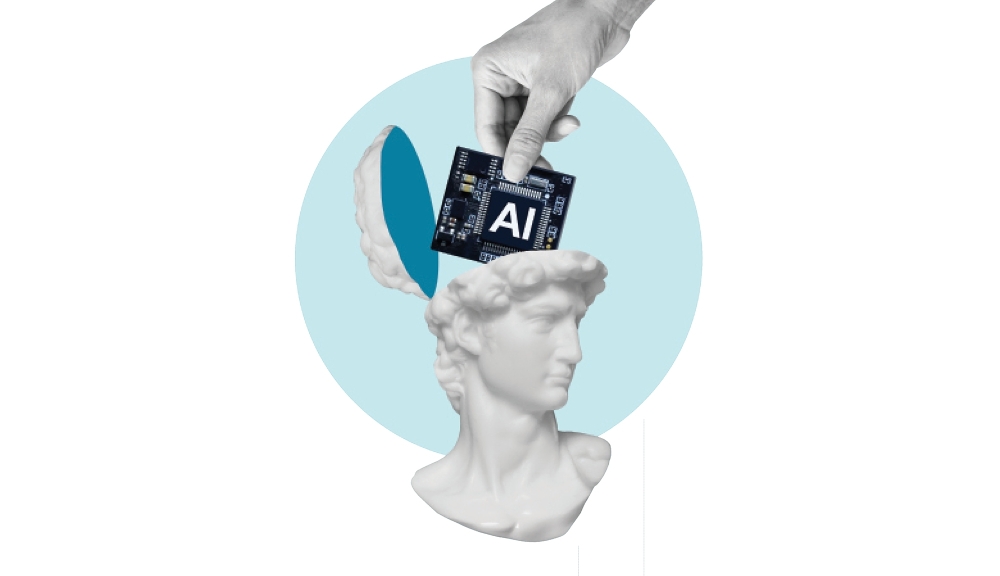
Artificial intelligence does not arrive in society with intentions of its own. It arrives as a tool and like any tool, its impact depends on the hand that uses it. In Oman, two conversations taking place almost simultaneously reveal how differently that hand can move — one warning against what AI can distort, the other showing what it can help preserve.
The first responsibility is defensive. As generative tools become capable of producing convincing text, images and videos within seconds, the line between what is real and what is fabricated has become increasingly difficult to discern.
Ayoub bin Suwailim al Ameri, Head of the Communication Development Section at the Department of Communication and Information Affairs, Omani National Commission for Education, Culture and Science, frames the challenge in terms that apply to almost anyone with a phone.
“In today’s fast-paced information environment, the ability to verify information has become an essential skill for every individual”, he says. His guiding principle is simple: “verify before you believe and think before you share”.
That principle carries weight because of the speed at which information now travels. A single share or forward can carry a claim far beyond its original context, stripped of nuance and source and reach people with little opportunity to establish where it began.
Misleading content can spread rapidly online because it is often emotionally charged and easily shared without scrutiny. In such an environment, pausing before sharing is not merely an act of caution. It is an essential checkpoint in an information system built around speed.
The second responsibility points in the opposite direction — not away from AI, but towards using it deliberately. At the University of Nizwa, Maryam al Kimiani of the Media and Marketing Department describes efforts to use the same generative capabilities that can spread misinformation to protect something more fragile: cultural identity.
“Artificial intelligence is not merely a technical tool, but a driving force for strengthening identity through digitising heritage and enhancing the presence of the Arabic language in the digital space”, she says.
This is not preservation in the sense of locking heritage away. It is closer to translation — taking material that risks losing relevance and giving it a form that a generation raised on screens can engage with.
Al Kimiani points to young people as central to this process.
“Omani youth represent the bridge between the depth of the past and the horizons of the future”, she says. “By harnessing modern technologies, they are transforming heritage into interactive models that engage society, proving that staying rooted in identity is the true driver of innovation under Oman Vision 2040”.
Placed side by side, the two perspectives describe the same underlying condition. AI has removed several barriers that once slowed both truth and culture: the effort required to create a convincing falsehood and the effort required to digitise and share a tradition worth carrying forward.
Neither barrier is coming back. What remains is a choice about which side of that reduced friction individuals, institutions and societies choose to stand on.
The response in these two cases is neither to resist the technology nor to adopt it uncritically. Instead, it is to ask a more specific question in each situation: Is the message true? And can a tradition survive its translation into digital form?
Neither question has a permanent answer. Both will need to be asked repeatedly as the technology evolves.
But asking them deliberately and publicly is itself a form of defence — one built not on rejecting AI, but on refusing to give it the final word.
Oman Observer is now on the WhatsApp channel. Click here