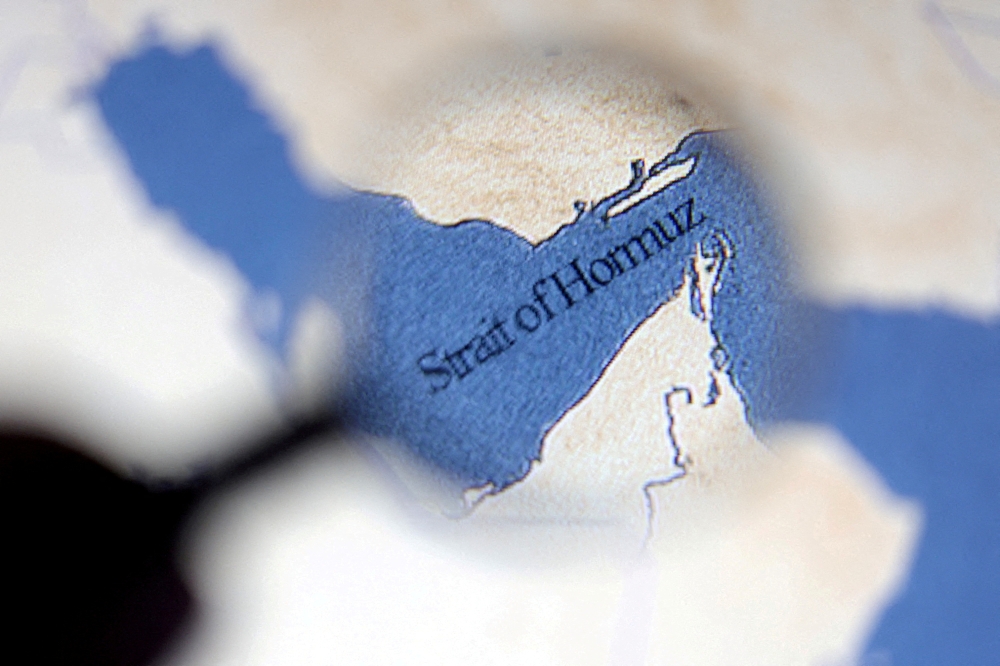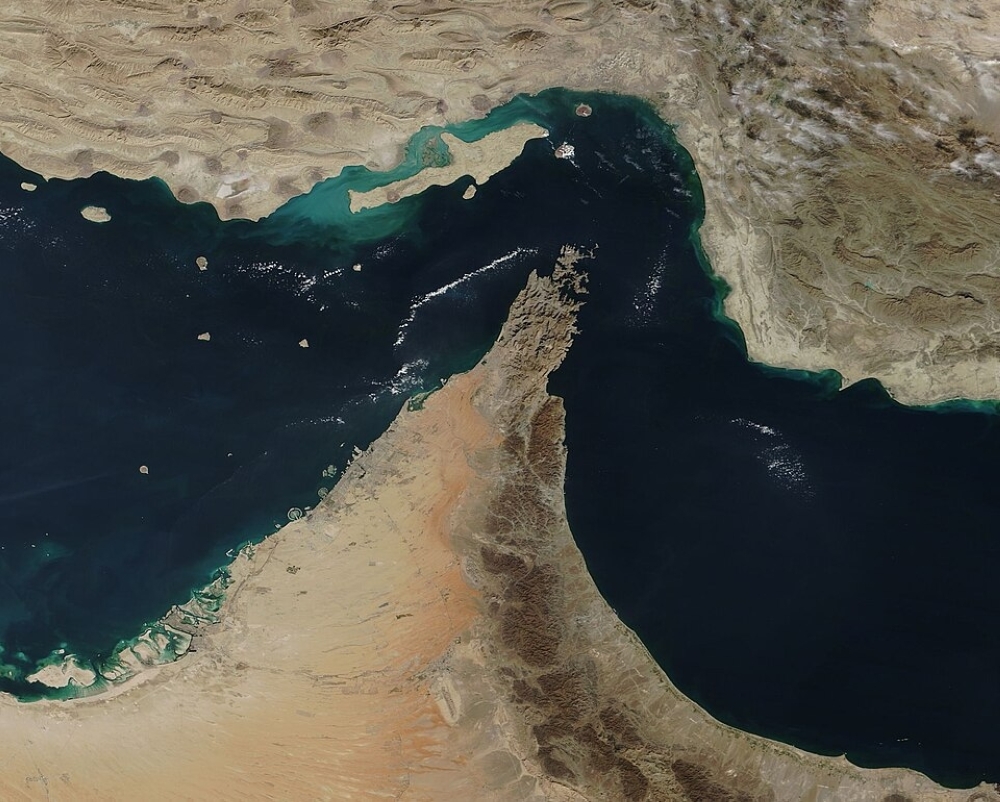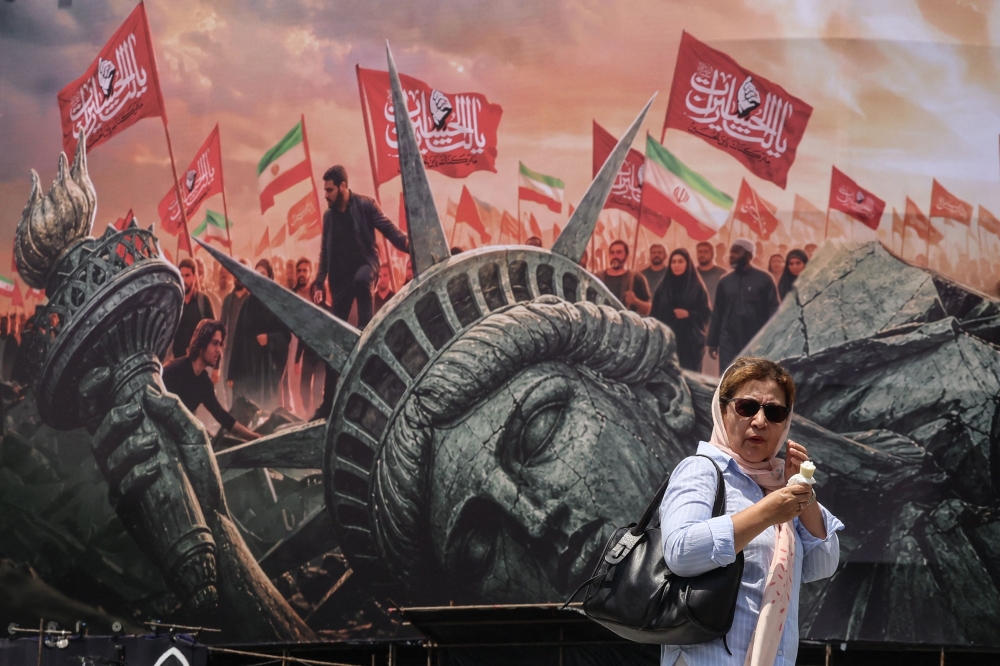





Anyone who imagined that reports in recent days of Iran and Oman being near an agreement on reopening the Strait of Hormuz meant that it might actually reopen, and that oil and other critical commercial traffic would soon resume, now knows better.
The strait, which Iran effectively shut down in retaliation for the war launched by the United States and Israel in February, will remain closed for business, a top Iranian official said Sunday.
“An agreement with Oman does not mean reopening the strait,” said the official, Foreign Minister Abbas Araghchi.
In keeping with negotiations that have progressed as fitfully as the ships stranded by the conflict, Iran on Saturday issued a sweeping list of demands it said would have to be met before vessels could move again, and world markets could get some much-needed reassurance.
In a statement, it called for the United States to lift its naval blockade and its sanctions on Iran, withdraw the US military from around the country, pay war reparations, and release frozen Iranian assets. It also demanded an end to attacks on Iranian allies in the region and to threats against the country.
Word that Iran and Oman were almost done coming up with a plan for the strait came days after President Donald Trump said he had canceled a potentially enormous U.S. military assault on the Iranians. He cited signs that the strait, a vital commercial waterway, would soon reopen.
But Iran has since made clear that it is not done using the strait for leverage.
As a practical matter, almost all of the demands it issued over the weekend align with the agreements in a memorandum of understanding Trump signed in June. It appears that the Iranians want to make sure that the United States delivers on its promises.
For now, that means that after months of grand pronouncements about an imminent return to ordinary commerce — “Let the oil flow!” Trump crowed after the June agreement was reached — the strait remains all but closed.
It may be worth a reminder that the war was not, at least at first, about the strait. Vessels flowed freely there before the war. In launching it, Trump cited Iran’s nuclear program and a desire to topple the theocratic regime.
Here is how we got here.
February
Feb. 28: The United States and Israel launched strikes across Iran, hitting a government compound in Tehran and military targets. The blasts killed Ayatollah Ali Khamenei, the nation’s supreme leader for almost 37 years, as well as other high-level military and intelligence leaders.
At least 175 people, most of them probably children, were killed in a strike on a girls’ elementary school in southern Iran, health officials and Iranian state media said. The strike was a targeting mistake by the U.S. military, according to U.S. officials familiar with a military investigation.
Iran retaliated for the U.S.-Israeli assault by firing missiles and drones at Israel and at U.S. military bases in the region, including in Qatar, Kuwait and the United Arab Emirates.
March
March 1: An Iranian drone attack killed six U.S. soldiers in Port Shuaiba, Kuwait, the first Americans to die in the war.
Hezbollah, the Iranian-backed group, dragged Lebanon into the conflict, firing rockets toward Israel in retaliation for the killing of Iran’s supreme leader.
In a brief telephone interview with The New York Times, Trump said the United States and Israel intended to sustain their assault on Iran for about “four to five weeks.”
March 8: With several top Iranian leaders killed in airstrikes, Iran named Mojtaba Khamenei, a son of the slain supreme leader, as his father’s successor. Khamenei, 56, was appointed by a committee of senior clerics, signaling continuity and defiance after Trump called him an “unacceptable” choice.
March 11: Iran escalated its attacks in and around the Strait of Hormuz, striking at least three ships. The attacks sent oil prices surging and the Trump administration scrambling to calm global markets.
March 12: Six American crew members died after a KC-135 military refueling aircraft crashed in Iraq, bringing the number of U.S. service members killed in the war to at least 13.
March 13: The U.S. military conducted a large bombing raid on Kharg Island, Iran’s main oil export hub. Trump said the raid had targeted military infrastructure but did not hit oil facilities on the island, which is responsible for about 90% of Iran’s oil exports.
March 17: The Israeli military killed two of Iran’s top leaders: Ali Larijani, head of the country’s National Security Council, and Gholamreza Soleimani, head of the Basij, a militia aligned with the Revolutionary Guard. The deaths represented the biggest blows to Iran’s leadership since Feb. 28.
March 18: Iran and U.S. allies traded attacks on key energy infrastructure in the Gulf. Israel attacked Iran’s South Pars gas field, which accounts for about 70% to 75% of its natural gas production. Qatar, a U.S. ally, said Iran had struck its Ras Laffan Industrial City, the world’s largest liquefied natural gas export plant.
March 23: Trump said that the United States and Iran were discussing an end to the war. It was the first public indication of diplomatic talks since the war began.
March 27: An Iranian strike injured 12 U.S. troops in Saudi Arabia on the Prince Sultan Air Base, one of the most serious breaches of U.S. air defenses in the war.
April
April 3: Iran shot down a U.S. Air Force F-15E fighter jet carrying two crew members, one of whom was recovered safely that day. The risky search-and-rescue operation for the second airman lasted two days and took commandos deep inside Iran. The downing of the F-15E was the first time that a U.S. combat aircraft was shot down in the war.
April 7: Trump announced a two-week ceasefire with Iran. Iran’s National Security Council confirmed the agreement, casting it as a victory.
April 8: Israel launched its heaviest bombardment of Lebanon since the start of the fighting, with more than 100 airstrikes in the space of just 10 minutes targeting Hezbollah. Israel said the U.S.-Iran ceasefire did not include Lebanon. On the same day, Iran publicly released a 10-point framework for talks, which included some maximalist demands.
April 11: Vice President JD Vance traveled to Islamabad for peace talks with Iran, brokered by Pakistan. Trump’s special envoy, Steve Witkoff, and his son-in-law, Jared Kushner, joined him. The Iranian delegation, led by the speaker of Iran’s parliament, Gen. Mohammad Bagher Qalibaf, included top diplomats, top military brass and finance experts.
April 12: The talks ended with no agreement as the two sides failed to compromise on major points, including Iran’s uranium stockpile and reopening the Strait of Hormuz.
April 13: The United States initiated a blockade on vessel traffic to and from Iranian ports in an attempt to cripple the Iranian economy, reversing a policy of allowing the country’s oil tankers to travel amid the war to ease pressure on energy prices.
April 16: Israel and Hezbollah agreed to a 10-day ceasefire in Lebanon in a deal brokered by U.S. diplomats, removing a major stumbling block to the talks between Iran and the United States.
April 17: Iran and the United States released statements declaring the Strait of Hormuz open to commercial vessels. Less than 24 hours later, Iranian officials said they were closing the waterway, and maritime officials recorded two incidents of vessels being hit.
April 19: U.S. Marines fired on and seized an Iranian cargo ship that tried to evade the U.S. naval blockade.
April 21: Trump announced that he was extending the ceasefire with Iran, hours before it was set to expire, saying he would give Tehran time to come up with a new proposal to end the war.
May
May 1: Trump rejected Iran’s proposal to end the war. but on the same day, the president sent letters to Congress saying that hostilities with Iran “have terminated.” The letters argued that the War Powers Resolution of 1973, which requires a president to seek congressional authorization to continue military operations after 60 days, did not apply because of the ceasefire.
May 3: Trump announced an initiative by the United States to guide ships through the Strait of Hormuz, but within days paused it, saying he was doing so at the request of Pakistan and other countries.
May 18: Trump said that he had authorized a new wave of attacks against Iran but that he was holding off to allow for more negotiations.
May 23: Trump said he had spoken with several Middle Eastern leaders about a memorandum of understanding “pertaining to PEACE” with Iran. “Final aspects and details of the Deal are currently being discussed, and will be announced shortly,” Trump said in a post on Truth Social.
June
June 3: Israel and Lebanon announced a new U.S.-brokered ceasefire deal contingent on Hezbollah, which is separate from the Lebanese government, refraining from firing into Israel. Hezbollah’s leadership had rejected direct talks between Israel and Lebanon but said it welcomed a wider truce between Iran and the U.S. that would include the conflict in Lebanon.
The House voted to direct Trump to withdraw U.S. forces from the conflict with Iran or win approval from Congress to continue, in a striking rebuke of the military campaign.
June 7: Iran attacked Israel for the first time since the April ceasefire, saying it was retaliating for an Israeli attack on Hezbollah near the Lebanese capital, Beirut. Israel responded with strikes in Iran early the next morning. The renewed strikes threatened to derail any potential peace agreement between Iran and the United States.
June 9: The United States struck in Iran, retaliating for what it said was Iran’s downing of a U.S. Army helicopter gunship patrolling near the Strait of Hormuz. Iran’s state television reported explosions and air defense sirens at several military installations, radars and artillery batteries along Iran’s southern Persian Gulf coast.
June 10: A new round of Iranian attacks targeted Bahrain and Kuwait, provoking the condemnation of Gulf state leaders. Iran’s foreign ministry said that it was the responsibility of Persian Gulf countries to prevent U.S. strikes on Iran from their territories.
June 14: Trump announced that a deal had been reached to end hostilities, reopen the Strait of Hormuz and lift a U.S. naval blockade on ships traveling to and from Iranian ports. The initial “memorandum of understanding” extended the ceasefire that the two sides agreed to in April for 60 days, during which time the two sides agreed to negotiate the more contentious issues — Iran’s nuclear program, sanctions relief and more.
June 19: Israel said it had agreed to a ceasefire in Lebanon with Iran’s ally, Hezbollah, hours after Israeli strikes there prompted Tehran to pull out of the day’s planned negotiations for a long-term peace agreement. U.S. and Iranian teams met in Switzerland the following day instead.
June 25: Iranian forces launched a drone attack on a container ship, the Ever Lovely, in the Strait of Hormuz, in the first attack after Washington and Tehran agreed to peace talks. The strike prompted two more days of retaliatory fire between the United States and Iran, and caused oil prices to spike as traffic through the waterway was once again halted.
July
July 4: Negotiations were paused for the start of the multiday funeral ceremonies of Ayatollah Ali Khamenei, who was killed in the opening bombardments of the war.
July 7: Three ships were attacked in the Strait of Hormuz, prompting the U.S. military to launch attacks and setting off a cycle of escalating exchanges over the next weeks.
July 8: While at a NATO summit, Trump said he thought the ceasefire was “over” and called Iran’s leaders “scum,” among other insults.
July 13: Trump reinstated a naval blockade on Iranian ports. He announced he would charge ships a fee for transiting the Strait of Hormuz but then backtracked on that idea.
July 17: Three American service members were killed in an Iranian attack on a base in Jordan. The attack came amid an eighth night of strikes between the United States and Iran, and as both countries increased the intensity and scope of their attacks.
July 19: The Ansar Allah group in Yemen said it would impose a blockade on Saudi shipping in the Red Sea — a move that threatened to further destabilize oil prices.
July 27: Saudi Arabia intercepted drones it said were launched by Iranian-backed Iraqi militias targeting petroleum facilities. Iraqi militias have not claimed responsibility for the attacks.
July 28: The war, which Trump said in March would last two or three weeks, entered its sixth month. About 1,700 Iranian civilians have been killed since the war began Feb. 28.
July 29: The war’s scope widened as U.S. and Saudi fighter jets attacked militias in Iraq. For the first time in the war, Egypt was struck, with a drone attack setting two tankers on fire at a Mediterranean port.
July 31: Trump said the United States was prepared to hit Iran “very hard” as his administration weighed additional military action after the renewed exchange of attacks across the region.
August
Aug. 2: Trump said he had canceled a military assault on Iran after Middle Eastern countries asked him to refrain from attacking. He said the “perimeters of a deal” had been reached to reopen the Strait of Hormuz.
Aug. 3: Iran and Oman held talks on temporarily reopening the strait. U.S. and Iranian officials said the countries were closing in on a possible agreement. The accord would ratify Tehran’s control over what, before the war, was an open, international waterway.
Aug. 4: U.S. and Qatari officials said there had been progress in talks, but the sides hadn’t reached a deal. Qatar’s foreign ministry spokesperson said draft language of a possible agreement had been “circulated among the parties.”
Aug. 8: The Iranian Supreme National Security Council issued a statement, carried by state media, outlining the requirements for reopening the strait. The list of demands upended expectations that a deal with Oman would soon allow commerce to flow through the strait once more, easing global energy prices. It will probably put pressure on Trump to consider Iran’s conditions if he wants to lower consumer prices for Americans before November’s midterm elections.
Aug. 9: The Iranian foreign minister said, “Talks with Oman on the Strait of Hormuz are progressing well and in the final stages as experts are working on maps.” He added a caution: “However, an agreement with Oman does not mean reopening the strait, which remains dependent on fulfilling conditions conveyed through mediators.”
This article originally appeared in The New York Times.
Oman Observer is now on the WhatsApp channel. Click here