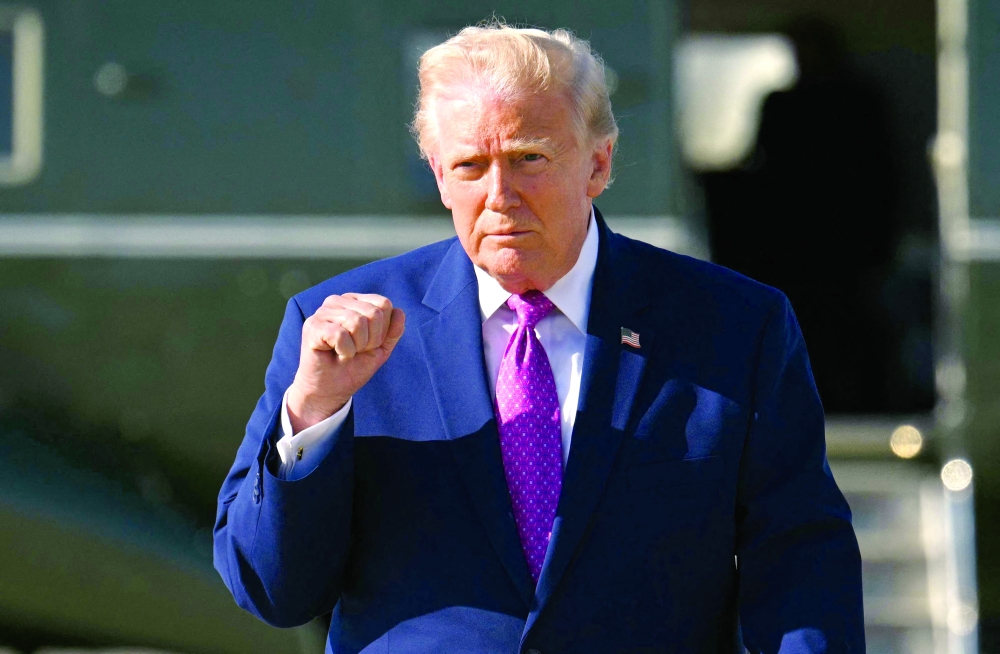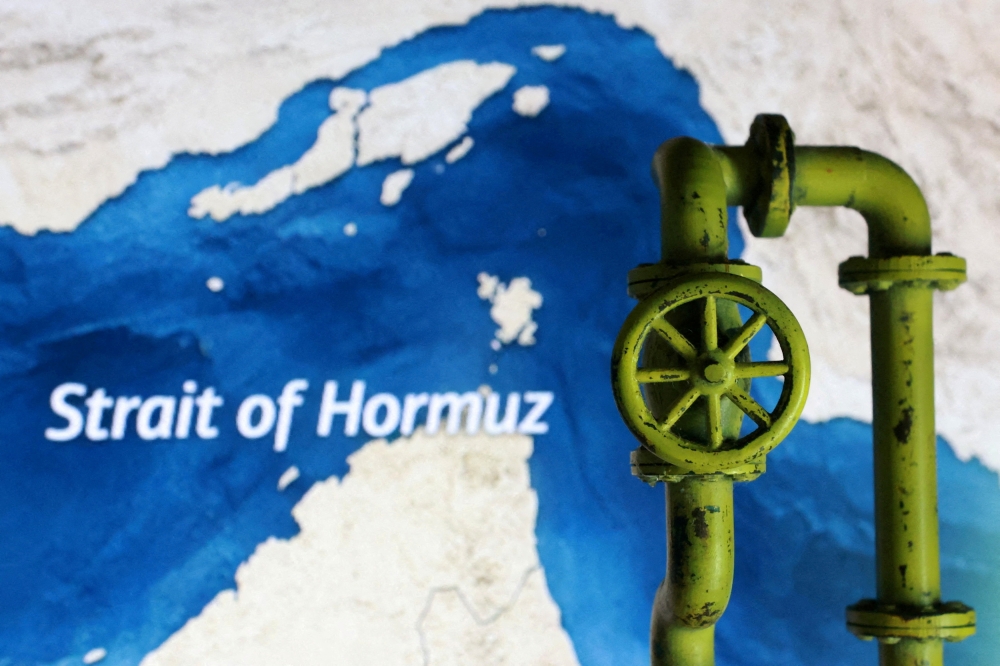





After weekend peace talks in Pakistan between the United States and Iran ended with no agreement, President Donald Trump on Sunday said the U.S. Navy would impose a blockade in the Strait of Hormuz, a vital shipping waterway that Iran has mostly choked off since the war began in late February.
“Effective immediately, the United States Navy, the Finest in the World, will begin the process of BLOCKADING any Ships trying to enter, or leave, the Strait of Hormuz,” Trump said in a post on social media. “At some point, we will reach an ‘ALL BEING ALLOWED TO GO IN, ALL BEING ALLOWED TO GO OUT’ basis.”
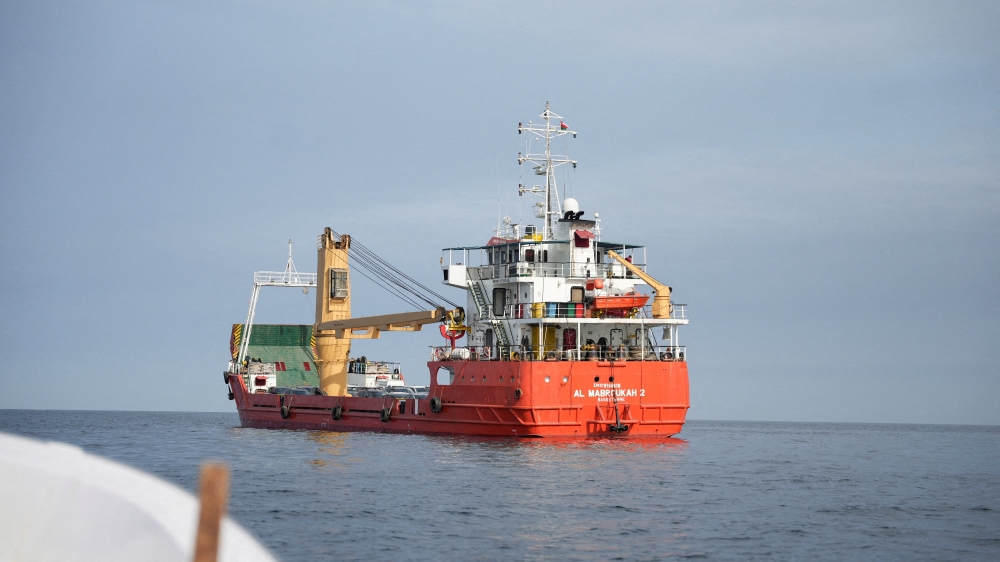
The statement came as traffic in the strait, through which a major portion of the world’s seaborne oil and natural gas passes, has ground to a practical halt for more than a month amid Iranian strikes on commercial vessels in the region.
While Iran has allowed some ships to pass through the waterway — possibly for a fee — it has used control over the strait, including threats that it has been mined, to disrupt the global economy and to pressure the Trump administration.
The United States Central Command, known as CENTCOM, said Sunday that a blockade would be enforced “impartially against vessels of all nations entering or departing Iranian ports and coastal areas, including all Iranian ports on the Arabian Gulf and Gulf of Oman.”
Here’s what to know about the American plan for a blockade.
How might it be enforced?
U.S. forces will not impede freedom of navigation for vessels transiting the strait to and from non-Iranian ports, CENTCOM said. The blockade will begin Monday at 10 a.m. Eastern Time, it said.
Parties at war can exercise the right of “visit and search,” meaning that they can stop and inspect even private vessels in waters that are not neutral and decide whether or not they may pass, said James Kraska, a professor of international maritime law at the U.S. Naval War College and a visiting professor at Harvard Law School.
A U.S. blockade of the Strait of Hormuz would mean that any ship that attempts to transit the waterway would have to submit to a search if asked to do so and U.S. forces would be able to determine whether or not to allow it to proceed, he said.
Such a blockade could inflict economic damage on Iran that would undermine its ability to keep fighting over the long term by denying it the ability to export oil and earn revenue. But it could also leave countries that rely on Iranian oil, like China, in a bind, Kraska said.
But there still may be mines in the strait, and Iran maintains the ability to fire missiles and drones, Kraska noted.
What would a blockade mean for Iran?
A U.S. blockade on Iranian ports would quite likely mean that Iranian vessels, which have been able to transit the Strait of Hormuz amid the war, would no longer be able to do so, and that other ships that have been stuck at port or at sea could begin to move supplies in and out through this route.
This would be a reversal of the U.S. approach so far. Even as the United States has been attacking Iran, U.S. officials have taken steps that enabled Iranian oil to flow to limit pressure on energy prices around the world.
Last month, Scott Bessent, the Treasury Secretary, said that the United States was allowing Iranian oil tankers to traverse the strait to keep up global supplies. The United States also temporarily lifted sanctions on Iranian oil at sea, allowing it to be sold to most countries, including the United States, for a month.
Some economic analysts have called on the United States to block the flow of Iranian oil as a means to end its effective control of the strait.
Robin J. Brooks, a senior fellow at the Brookings Institution, has argued that Iran’s dependence on oil exports means it will not be able to afford to keep attacking ships once its own economy takes a hit. On Sunday, he said in a post on social media that a blockade “collapses Iran’s business model.”
But Iranian officials, who have been keenly aware of the pressure on Trump as a result of spikes in energy prices, appear unconcerned. In a post on social media Sunday, the speaker of Iran’s parliament and the country’s top negotiator, Mohammad Bagher Ghalibaf, wrote: “Enjoy the current pump figures. With the so-called ‘blockade’, Soon you’ll be nostalgic for $4-$5 gas.”
What would the consequences be for the world?
Normally, about 150 vessels transit through the Strait of Hormuz daily. In March, a little more than 150 passed through the waterway all month, according to data from S&P Global Market Intelligence. Those that did transit had made arrangements with Iranian authorities and may have paid a toll or fee for passage, shipping intelligence firms have reported.
The halt in traffic has led to a spike in oil prices. If an American blockade on ships to and from Iran leads to freedom of navigation for vessels transiting the waterway with oil from Persian Gulf countries, it could mean lower prices, though how quickly that could happen is not clear.
Trump said Sunday that “any Iranian who fires at us, or at peaceful vessels, will be BLOWN TO HELL!”
But much remains unclear. Whether vessel operators will run the risk of transiting the strait at this point could depend on how Iran responds to the blockade. Whether the United States will be able to control vessel passage is also an open question.
After CENTCOM announced that it would not impede freedom of navigation for vessels transiting the Strait of Hormuz to and from non-Iranian ports, vessel trackers expressed doubts about enforcement, pointing to tricks ships have used, like changing their identification data, to evade notice.
“This will get tricky as several Iran-linked tankers make bogus port calls in Saudi Arabia and Iraq with the help of AIS spoofing,” the company TankerTrackers posted, referring to Automatic Identification Systems. “Good luck with that, CENTCOM.”
A retired Navy admiral, James Stavridis, welcomed the blockade announcement in a post on social media Sunday. “In recent days,” he wrote, “the ONLY people benefiting from Gulf transit were the Iranians.” He said that the United States and its allies “are no worse off than we were after the Iranians started holding the Strait hostage.”
This article originally appeared in The New York Times.
Oman Observer is now on the WhatsApp channel. Click here