Over the past 20 years, global travel freedom has expanded dramatically, according to the latest 20th anniversary of the Henley Passport Index
In 2006, the most powerful passports — held by citizens of the USA, Denmark, and Finland — provided visa-free access to 130 destinations. In 2026, Singapore tops the index with access to 192 destinations.
The number of visa-free destinations in the world has improved from 58 in 2006 to 108 in 2026.
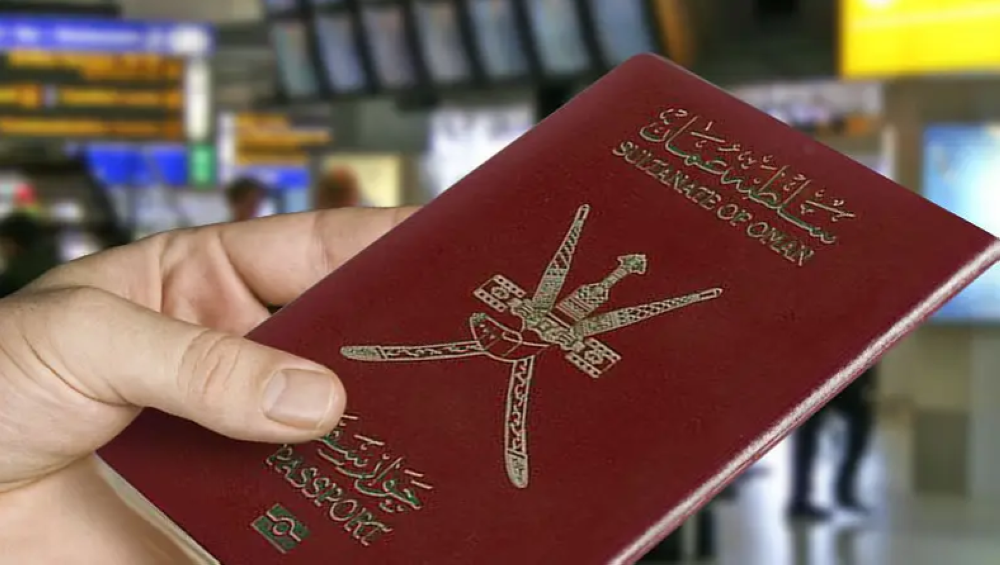
The Sultanate of Oman's Passport was ranked 61 in 2006, which dropped to 71 in 2011 and 72 in 2012, and is currently at its best ranking of 58 as of 2026.
The passport offers visa-free entry to 85 destinations.
The gap between the most and least mobile citizens has widened sharply. In 2006, Afghanistan ranked last with access to just 12 destinations, creating a 118-destination gap between the top and bottom of the index.
Today, Afghanistan remains at the bottom with access to only 22 destinations, while Singapore’s score of 192 creates a record-breaking 170-destination global mobility gap.
The UAE is recording the greatest improvement of any passport in the index’s history, adding 153 visa-free destinations over 20 years and rising from the middle of the rankings to become one of the world’s most powerful passports.
Dr. Christian H. Kaelin, Chairman of Henley & Partners and creator of the Henley Passport Index, says the two historic datasets reveal a profound shift in global power. “Twenty years of data show that passport power is one of the clearest expressions of a country’s geopolitical capital. It reflects far more than peace or prosperity alone. The world’s strongest passports belong to nations that other countries want as partners — for trade, investment, security, or cooperation. Mobility is ultimately a measure of the value other countries place on their relationship with you.”
New analysis by Henley & Partners comparing the Henley Passport Index (HPI) and the Global Peace Index (GPI) over the past two decades reveals a strong positive relationship between peacefulness and passport power
At both ends of the spectrum, the pattern is remarkably consistent. Many of the world’s most peaceful countries also hold the world’s strongest passports. Singapore ranks 8th on the GPI and 1st on the HPI, while Japan, Switzerland, Ireland, Austria, Portugal, Finland, Denmark, New Zealand, Canada, Czechia, and Malaysia all feature among the global leaders on both indices.
The same pattern is evident at the opposite end of the rankings. Afghanistan, Syria, and Yemen sit among the world’s least peaceful nations and have the world’s weakest passports, illustrating the impact that conflict, instability, and state fragility have on international mobility.