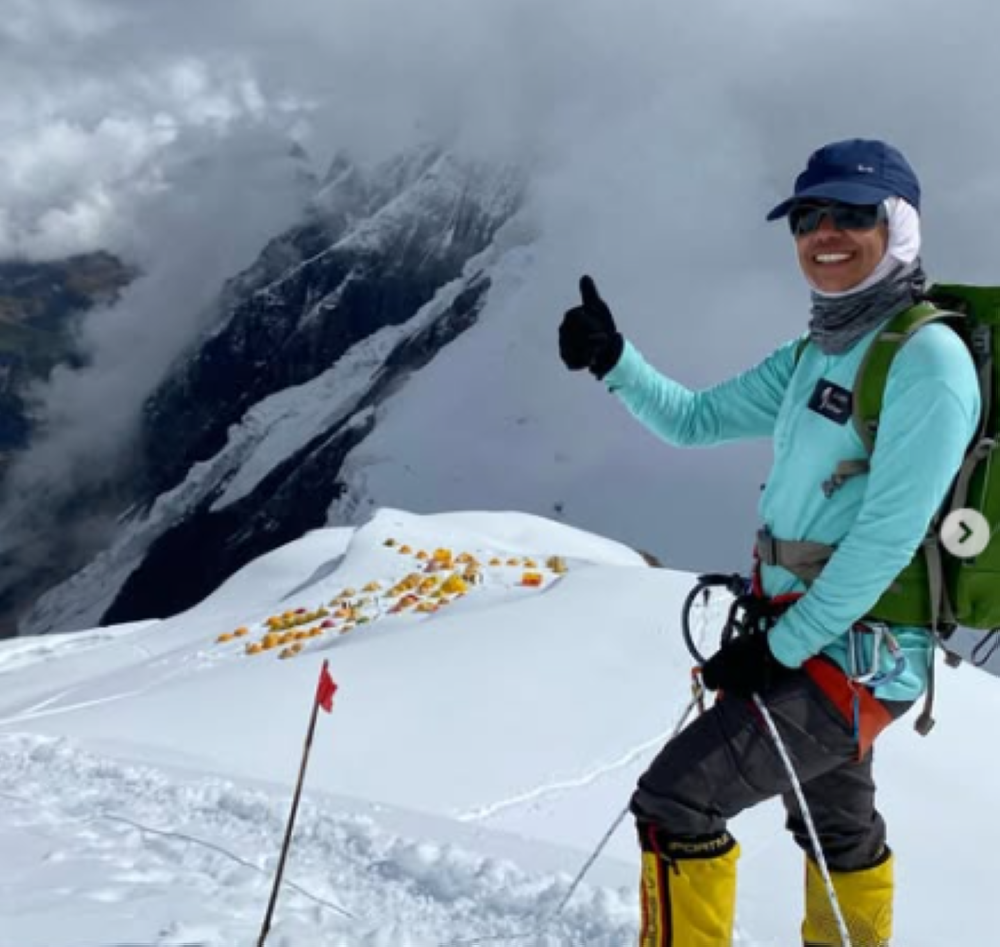
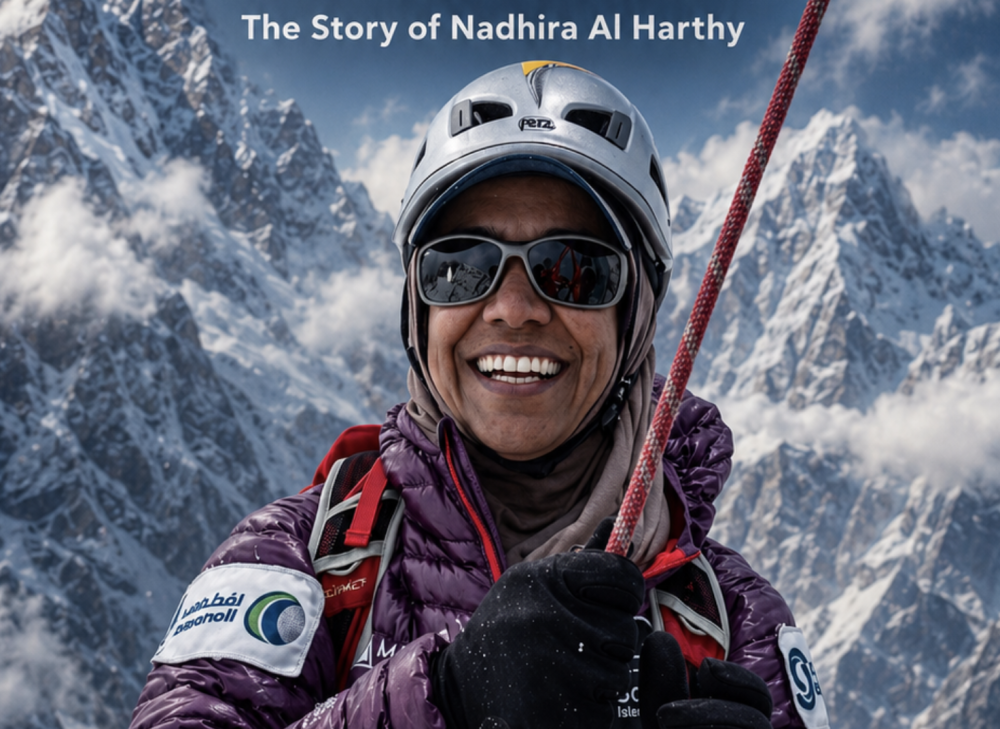
This weekend, Oman on social media mourned the death of Nadhira al Harthy, the pioneering mountaineer who lost her life in an avalanche on Broad Peak in Pakistan.
The sadness was immediate and heartfelt. Omanis remembered not only the first woman from the country to stand on the summit of Mount Everest, but also an educator, mentor and public servant whose life inspired thousands. Yet now that the first shock has passed, perhaps the most important question is not how she died but what her life teaches us.
Nadhira did not begin her career as a mountaineer. She studied social and geographic studies and devoted many years to education as a teacher, curriculum developer, administrator and leader in youth and environmental programmes.
Climbing entered her life only after she accompanied Omani students to Mount Kilimanjaro in 2015. Although she did not reach the summit because of altitude sickness, the experience changed the course of her life. Instead of accepting defeat, she accepted a challenge.
Her achievements are now well known. Inspired by Khalid al Siyabi, the first Omani man to climb Mount Everest, she followed in his footsteps and became the first Omani woman to summit Mount Everest in 2019. Later, she became the first Arab woman to summit Ama Dablam and the first Omani to reach K2, the world's second-highest mountain. She went on to climb other demanding peaks, including the Matterhorn in 2023 and Nanga Parbat in 2024. These achievements made her the first Omani woman to climb four mountains higher than 8,000 metres.
Nadhira also became a familiar and admired figure on Instagram. She shared not only moments of success but also the preparation, fear, difficulty and patience behind them. This honesty made her achievements more meaningful.
Young Omani women could see someone from their own society entering a field that few had imagined for them. She showed that ambition has no fixed age, background or traditional path.
What many people saw on social media, however, was only the visible part of her journey. Behind every summit were years of training, discipline, setbacks and determination. She succeeded not because the mountains became easier, but because she became stronger.
For me, this is the most important lesson from Nadhira's exceptional life. Many people have ambitions. Many believe they are capable of achieving great things. The difference is that very few are willing to accept the daily effort, discomfort and uncertainty that meaningful dreams demand. Nadhira did. She trained after work, returned after disappointment and refused to let failure become the final chapter.
She also understood something else that is often forgotten. Courage is not the absence of fear. Experienced climbers know the dangers of the mountains better than anyone else. They prepare carefully, rely on experienced teams and make difficult decisions in unforgiving conditions. Nadhira accepted those risks with open eyes and a beautiful smile. That awareness did not prevent her from pursuing what she loved.
The avalanche on Broad Peak in Pakistan ended Nadhira al Harthy's life — and the lives of many other brave souls including the renowned Nirmal Purja, whose achievements were featured in the Netflix documentary 14 Peaks.
But this end should not define her journey. Her true legacy is far greater than the mountain on which she took her last steps. She showed us that purpose can be discovered at any stage of life, that failure can become a beginning rather than an end and that the greatest achievements belong to those who are willing to act. That is how Oman should remember her.
DR NAJMA AL ZIDJALY
The writer is an Associate Professor, Sultan Qaboos University
Oman Observer is now on the WhatsApp channel. Click here