




MUSCAT: An ambitious land restoration programme being developed by the Global Green Growth Institute (GGGI) in partnership with Oman’s Environment Authority aims to transform 30,000 hectares of degraded landscapes in the Dhofar mountains and surrounding Salalah into a catalyst for sustainable economic growth, climate resilience and green employment.
The Accelerating Resilience and Innovation for Sustainable Ecosystems Management (ARISE) programme is a six-year, $100 million initiative that combines large-scale ecosystem restoration with the development of new bioeconomy value chains, positioning nature-based solutions at the heart of Dhofar’s long-term development strategy.
Structured in two phases spanning six years, ARISE targets the sustainable management and rehabilitation of 30,000 hectares of land while generating an estimated 750,000 tonnes of carbon dioxide equivalent (tCO₂e) in annual greenhouse gas emission reductions. The programme also seeks to create more than 1,000 green jobs, many linked to emerging local value chains and environmentally sustainable enterprises.
Rather than viewing environmental restoration as a standalone conservation effort, ARISE integrates ecological recovery with economic development through the establishment of Sustainable Special Economic Zones (SSEZs). These zones are intended to nurture businesses that utilise sustainably managed natural resources while reducing pressure on fragile rangelands.
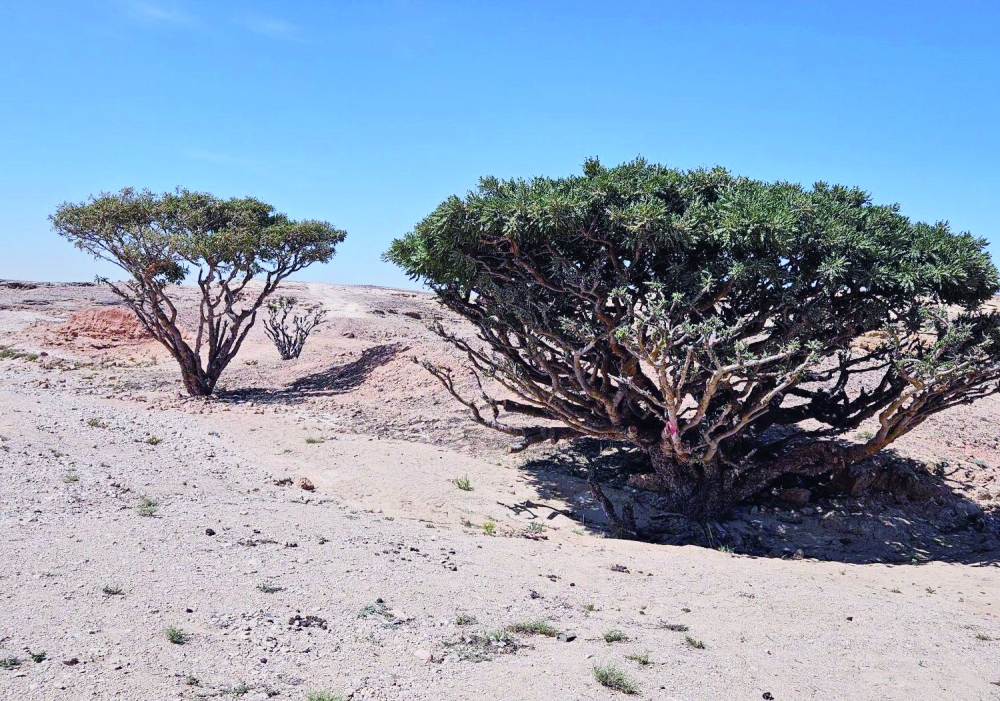
A key feature of the programme is the development of alternative value chains centred on products deeply rooted in Dhofar’s economy and culture, including milk, meat, turmeric and frankincense. By creating higher-value commercial opportunities around these products, ARISE aims to diversify rural incomes while encouraging more sustainable land-use practices.
According to GGGI, the initiative demonstrates how restoring degraded ecosystems can simultaneously enhance biodiversity, improve climate resilience and stimulate local economic activity through the bioeconomy. Linking restoration efforts with commercial value chains is expected to provide pastoral communities with viable alternative livelihoods, reducing dependence on unsustainable grazing practices that contribute to land degradation.
GGGI Regional Director for the Middle East and North Africa, Mahamadou Tounkara, said the programme illustrates how innovative financing mechanisms can help address desertification in arid environments while creating tangible economic opportunities.
He noted that ARISE combines blended finance, nature-based solutions and sustainable economic zones to attract investment into land restoration while strengthening livelihoods for pastoral communities, ultimately transforming environmental vulnerability into long-term resilience.
The initiative builds on a cooperation programme signed in September 2024 between Oman’s Environment Authority and GGGI to promote nature-based solutions, land restoration and access to green finance. The agreement also covers collaboration on climate change adaptation and mitigation, biodiversity conservation, sustainable pastoralism, green entrepreneurship and support for accessing international climate finance, including resources from the Green Climate Fund.
Beyond ecosystem rehabilitation, the partnership seeks to facilitate climate-smart technologies, improve resource efficiency and develop innovative financing mechanisms for sustainable environmental projects across the Sultanate.
Momentum behind the programme gathered pace in May 2026 when Dhofar Governorate, in collaboration with the Environment Authority, hosted a five-day GGGI mission in Salalah to develop an integrated road map for sustainable ecosystem management.
The programme also explored agricultural initiatives aligned with international standards for combating invasive species and protecting biodiversity.
Oman Observer is now on the WhatsApp channel. Click here