




SALALAH: Behind Dhofar’s mist-covered mountains, crowded attractions and busy roads, a round-the-clock emergency operation is under way to support the safe movement of residents and visitors during the Khareef season.
The Civil Defence and Ambulance Authority has deployed a specialised support force comprising personnel trained in firefighting, land rescue, water rescue and emergency medical services, backed by purpose-built vehicles, specialist equipment and logistical resources.
The seasonal plan also includes forward response points on roads leading to Dhofar, reinforced readiness at Civil Defence and Ambulance centres, and the strategic deployment of teams and vehicles at key tourism and high-footfall locations.
In an exclusive statement to the Observer, Lt Abdullah bin Abdulaziz Tabuk, an officer at the Relations and Media Department of the Civil Defence and Ambulance Authority, said Khareef Dhofar was one of the largest tourism seasons in the Sultanate of Oman.
“Khareef Dhofar is one of the largest tourism seasons in the Sultanate of Oman, attracting significant numbers of visitors from within the country and abroad,” Tabuk said.
“The resulting movement across roads, tourism sites, mountains, wadis and coastal areas requires the highest levels of readiness and close coordination among all relevant authorities.”
According to Tabuk, the plan is designed to bring emergency services closer to areas experiencing increased visitor activity and to reduce the time required for teams to reach incidents.
Emergency control rooms operate around the clock to receive reports, coordinate resources and direct field teams, while technical systems support the monitoring of incidents, the management of personnel and equipment, and operational decision-making.
“During a single day, teams may respond to a road traffic collision, a medical emergency at a tourism site, a rescue operation in a mountain area affected by fog, or an incident involving a wadi or coastal location,” Tabuk said.
“This requires flexible deployment, coordination among specialist teams and continuous readiness to respond to a wide range of scenarios in accordance with established professional standards.”
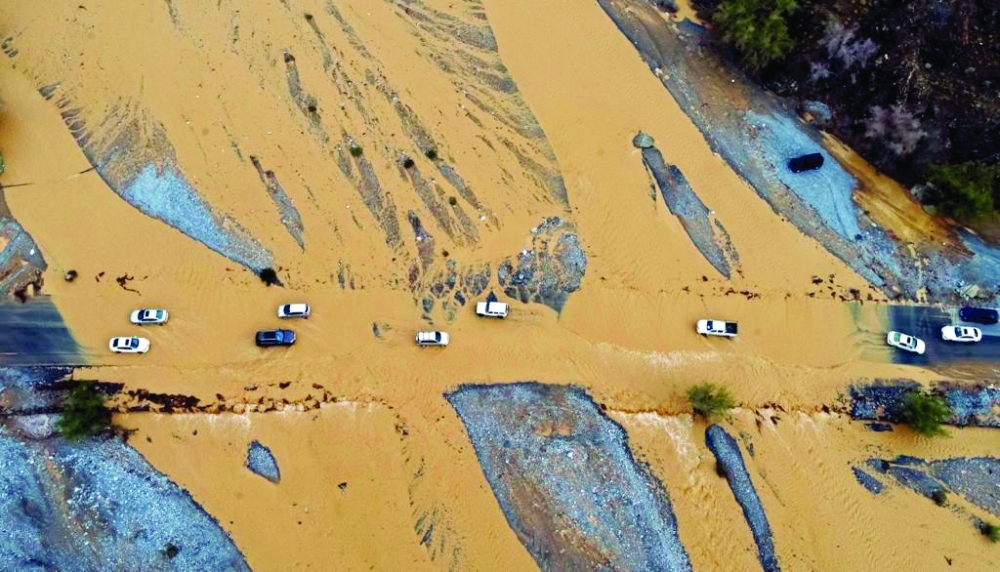
The varied terrain means that emergency personnel must remain prepared to operate across roads, mountains, wadis, beaches and heavily visited tourism sites, often under rapidly changing weather conditions.
The Authority is also maintaining the logistical support required to ensure the uninterrupted delivery of firefighting, rescue and ambulance services throughout the season.
Public awareness forms another central component of the seasonal plan.
The Authority’s Relations and Media Department continues to deliver safety messages through media outlets and digital platforms, focusing on responsible driving, compliance with instructions at natural attractions and the avoidance of behaviour that could place lives at risk.
“All members of the Civil Defence and Ambulance Authority carry out their duties with professionalism and a shared sense of responsibility, guided by their humanitarian and national mission to protect lives and property,” he said.
“The Authority will continue to perform its role in cooperation with the relevant bodies to help ensure a safe Khareef season that reflects the level of preparedness and institutional coordination in the Sultanate of Oman.”
The operation extends beyond emergency response. It is designed to ensure that one of Oman’s most important tourism seasons is supported by a safety network capable of protecting residents and visitors while maintaining confidence in Dhofar as a safe and welcoming family destination.
Oman Observer is now on the WhatsApp channel. Click here