




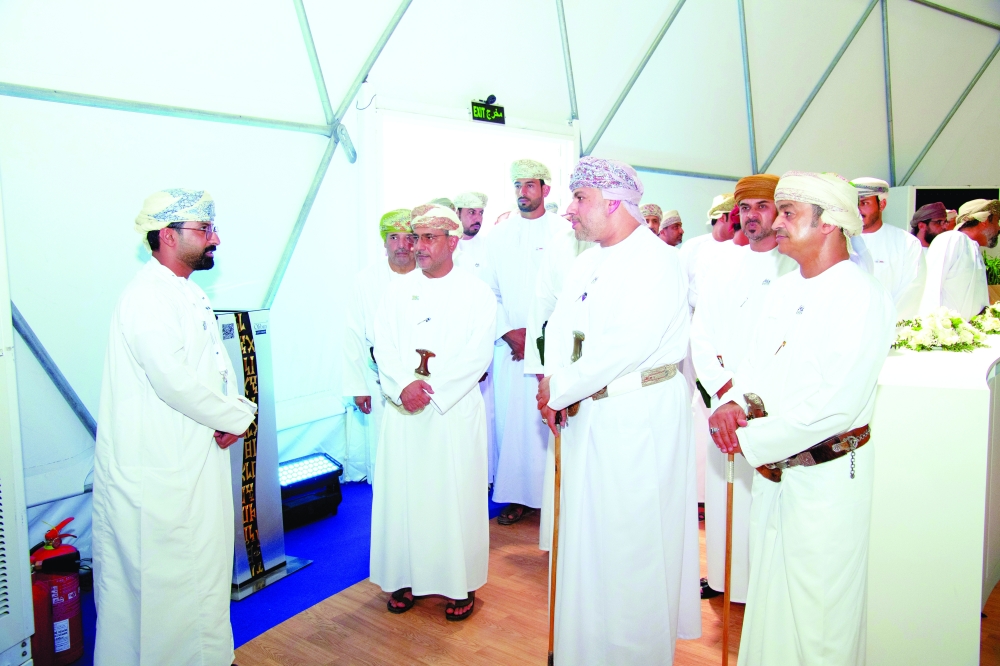
SALALAH: A visitor entering the Energy and Minerals Exhibition 2026 in Salalah can move within minutes from an oil reservoir and a national gas pipeline to mineral samples, e-vehicles, artificial intelligence and Oman’s plans for green hydrogen and carbon markets.
Organised by the Ministry of Energy and Minerals in cooperation with companies operating across the sector, it runs until August 6. Its stated purpose is to make industries usually described through technical reports and large investment figures understandable to citizens, residents and visitors during the khareef season.
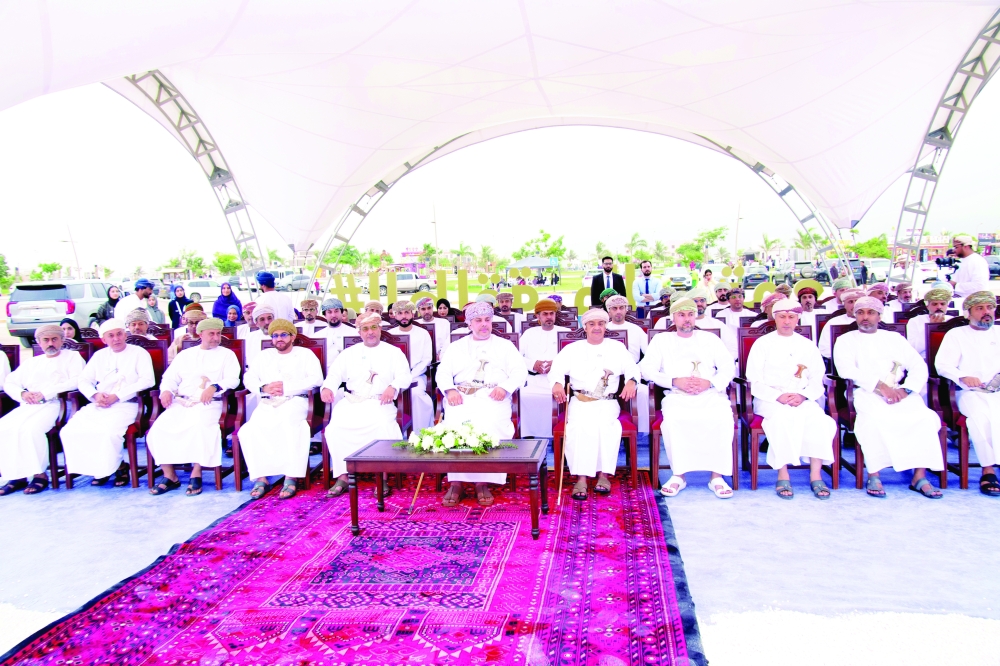
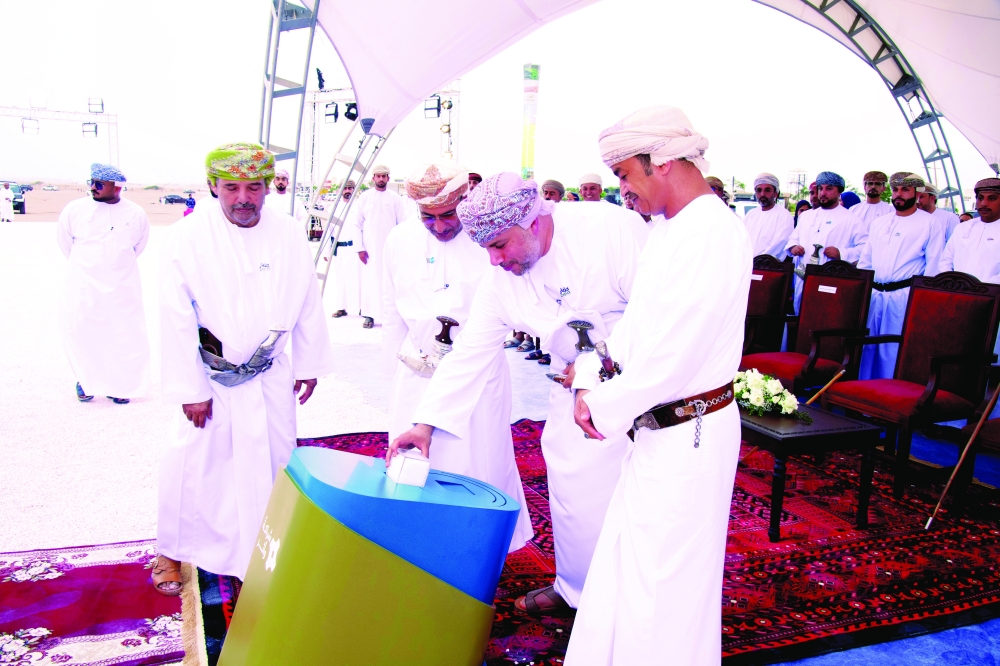
Opened on Saturday at Atin by His Highness Sayyid Marwan bin Turki al Said, Governor of Dhofar, the exhibition brings together nine interactive sections explaining how oil, gas, electricity, minerals and emerging low-carbon technologies connect with industry, transport, employment, public services and daily life.
In his opening remarks, HH Sayyid Marwan said the exhibition reflected “the importance of strengthening direct communication and consolidating the partnership between government institutions, sector companies and society”.
He said Dhofar possessed strong potential in renewable energy, green hydrogen and mineral resources, supported by the governorate’s strategic location and developed infrastructure, which could help attract projects and investment, localise industries and create sustainable added value.
Oman’s production of crude oil and condensates averaged 1.0021 million barrels per day (bpd) in 2025, while exports averaged 843,700 bpd. The country held an estimated 4.728 billion barrels of crude oil and condensate reserves, according to the ministry’s sector indicators.
Natural gas production averaged 151.2 million cubic metres per day and liquefied natural gas exports totalled 11.3 million metric tonnes. The oil and gas sector recorded an Omanisation rate of 91.6 per cent.
These figures give context to the oil and gas sections, which trace the industry from geological surveys, exploration and drilling to production, processing, transportation, refining and manufacturing. Rather than presenting a barrel of oil as the final product, the exhibition shows how hydrocarbons enter wider economic chains, including construction, healthcare, communications, transport and industrial manufacturing.
Dhofar’s role expands
The location gives that message added weight. Dhofar is not only hosting a seasonal public event; it holds specific assets in electricity transmission, renewable energy, hydrogen and minerals that feature in the ministry’s plans for the sector’s next phase.
A 400-kilovolt transmission project linking Al Duqm with the Dhofar electricity network was reported by the ministry to be 87 per cent complete, with completion scheduled for October 2026. The project is intended to integrate Oman’s northern and southern power systems, improve electricity security and provide greater flexibility as new generation is added.
The 50 MW Dhofar Wind Farm at Harweel is in operation, while additional wind sites in Dhofar, including Sadah and Shaleem, and at Al Duqm feature in the project pipeline to 2031. A separate scheme to supply the Hallaniyat Islands with renewable power and battery storage is due to be tendered during 2026.
Salalah is also one of three broad areas — alongside Al Duqm and Al Jazir — where awarded green-hydrogen projects are concentrated. In minerals, ministry material describes Oman as holding the world’s largest commercially exploitable gypsum reserves, with major deposits in Thamrait, Shaleem and Hallaniyat Islands, alongside limestone and marble resources in Dhofar.
The exhibition does not present this as an immediate replacement for oil and gas. It places conventional energy, renewable electricity, hydrogen, minerals and digital technology within one expanding system.
Electricity system enters a new phase
Oman produced 51 terawatt hours of electricity in 2025, including around 4.5 TWh from renewable projects, or about 9 per cent of the total. Installed capacity stood at 11,796 MW.
The commissioning of Manah 1 and Manah 2 added a combined 1,000 MW of solar capacity during the year. The government is targeting renewables at 10 per cent of annual electricity production in 2026 and 30 per cent by 2030, rising to 60–70 per cent by 2040 and 90–100 per cent by 2050.
Planned renewable capacity is expected to reach about 12.2 GW by 2031, dominated by solar but supported by wind projects and a proposed waste-to-energy facility. On the figures presented, reaching 30 per cent by 2030 would require more than tripling the renewable share from its 2025 level.
For visitors, the exhibition explains that this involves more than installing panels and turbines. It also requires stronger transmission networks, digital systems, storage capacity, more efficient buildings and equipment, and better management of electricity demand.
Outdoor displays introduce electric and hybrid vehicles and explain the difference between tailpipe emissions and overall energy use. Other exhibits address household efficiency, cooling, lighting and consumer choices. Some international examples used in the educational material come from other markets and should not be read as Omani consumption benchmarks or regulatory standards.
A $44-bn hydrogen ambition
Nine green-hydrogen projects were awarded through the first two auction rounds, with seven progressing through development or implementation, according to ministry material. Their expected investment exceeds $44 billion.
The projects are associated with about 18 GW of electrolyser capacity and 26.6 GW of renewable-energy capacity by 2030, with the aim of enabling annual production of around one million tonnes of green hydrogen. These figures represent planned capacity and expected investment rather than completed production.
The exhibition explains that hydrogen’s economic role may extend beyond exporting the fuel itself. Renewable hydrogen can be converted into green ammonia and used in shipping, industry and lower-carbon manufacturing. A green-ammonia project under construction in Al Duqm is expected to produce around 100,000 tonnes annually in its first phase, with production targeted from 2027.
Official plans also include a unified permitting system, investor guidance, studies of underground hydrogen storage, international trading corridors and a regulatory framework for carbon capture, utilisation and storage — an attempt to build a commercial system rather than a set of individual projects.
Minerals: Volume is not the whole story
The minerals section allows visitors to handle or view resources usually encountered only in industrial statistics: chromite, copper, gypsum, limestone, marble, silica, gabbro, laterite, salts and sulphur, with explanations of their geological origins and uses in construction, manufacturing, agriculture, electronics and clean-energy technologies.
Oman produced around 65 million tonnes of minerals in 2025 and sold about 60 million tonnes. Sales were valued at approximately RO 159 million, while investment reached around RO 105 million.
Taken together, the figures illustrate the sector’s central value challenge. Output remains concentrated in high-volume materials: construction materials accounted for about 30.1 million tonnes, limestone 16.6 million tonnes and gypsum 14.5 million tonnes. Metallic minerals were far smaller, while Oman exported about 95,000 tonnes of copper concentrates during the year.
The ministry’s stated direction is to increase domestic processing and manufacturing, reduce the export of raw materials and develop higher-value supply chains. The displays translate that policy into familiar products: chromite in stainless steel, copper in cables and electronics, silica in glass and digital devices, limestone in cement and water treatment, and gypsum in construction and agriculture.
The net-zero section places these technologies within Oman’s national climate pathway. The updated plan uses estimated 2024 greenhouse-gas emissions of around 94 million tonnes of carbon-dioxide equivalent as its baseline, with about 70 per cent originating in three areas: oil and gas, electricity and energy, and industry.
According to the presentation, the plan sets out an unconditional 7 per cent emissions reduction and a conditional 26 per cent reduction by 2035, subject to financing, technology and capacity-building. The national objective is net-zero emissions by 2050.
The exhibition also introduces the emerging carbon-market framework, including the national Mizan platform, designed to register and track carbon projects and credits. Official material says 804,323 tonnes of carbon-dioxide-equivalent reductions have been approved for issuance.
Bringing technical sectors closer
In the same official statement, Dr Ahmed bin Mohsen al Ghassani, Chairman of Dhofar Municipality, described the exhibition as “a valuable addition to the educational and community events accompanying the Khareef Dhofar season”. He said it gave citizens, residents and visitors direct access to sectors closely connected with daily life, while highlighting Dhofar’s renewable-energy and mineral potential.
Mohsin bin Hamad al Hadhrami, Under-Secretary of the Ministry of Energy and Minerals, said the exhibition presented the energy and minerals sectors “in clear and interactive language that demonstrates their real impact on the economy, development and daily life”.
He said its purpose extended beyond showcasing projects to helping the public understand the sector’s transformation, investment opportunities, contribution to local content and national capabilities, and role in reducing emissions and supporting net-zero objectives.
The exhibition includes a family and children’s area offering simplified activities, games and competitions on energy sources, responsible consumption, environmental protection and mineral uses. It is accompanied by a media forum bringing together senior executives from Petroleum Development Oman, OQ Group, Nama Holding and Minerals Development Oman, covering exploration and production, investment, renewable energy, electricity and water security, and minerals-led diversification.
For Dhofar, the exhibition arrives as the governorate’s role in the energy economy expands beyond hosting infrastructure and supplying raw materials.
Oman Observer is now on the WhatsApp channel. Click here