




MUSCAT: For decades, energy leadership was defined by the ability to produce and export hydrocarbons. Today, that equation is changing. The countries shaping the future energy landscape are not only those with abundant resources, but those capable of transforming clean energy into industrial competitiveness, technological innovation and sustainable economic growth.
The Sultanate of Oman stands at a defining moment in this global transformation.
Over recent years, Oman has moved beyond ambition and established a clear pathway towards becoming a significant player in the emerging global hydrogen economy. Through the creation of Hydrom, the allocation of green hydrogen concession areas and a national framework designed to attract international investment, the country has demonstrated strategic foresight in preparing for the next era of energy.
The scale of this ambition is considerable. Oman aims to produce approximately 1-1.25 million tonnes of renewable hydrogen annually by 2030, increasing to 7.5-8.5 million tonnes by 2050, supported by estimated investments of around $140 billion across the hydrogen value chain. However, the true measure of success will not be the volume of hydrogen produced alone. It will be the ability to transform renewable energy into a complete industrial ecosystem.
The next phase is therefore not about creating another strategy. It is about building the system that connects energy, industry, infrastructure and national capability.
FROM SOLAR POTENTIAL TO INDUSTRIAL POWER
Oman’s greatest renewable advantage is its exceptional solar resource. Many regions of the country receive solar irradiation exceeding 2,000 kWh/m² annually, providing favourable conditions for large-scale photovoltaic (PV) development.
However, sunlight itself is not the final product. Its real value lies in what it enables.
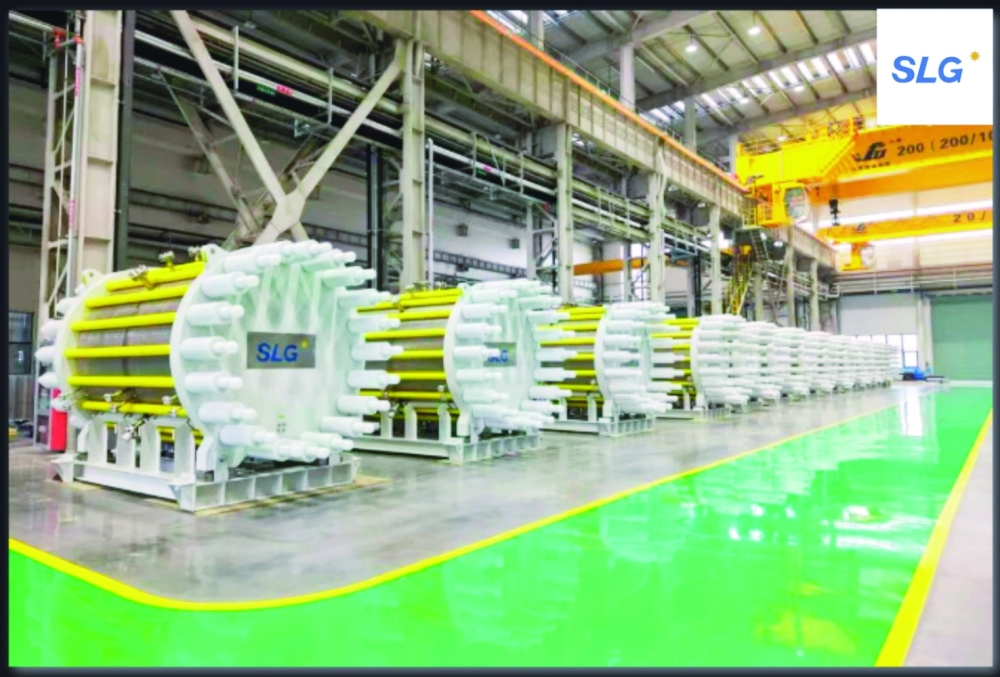
When utility-scale solar PV is integrated with water electrolysis, renewable electricity can be transformed into green hydrogen and used to support industries that are difficult to decarbonise. These include green ammonia production, low-carbon steel manufacturing, sustainable fuels and other energy-intensive sectors.
This is where Oman’s geography becomes a strategic advantage.
Industrial centres such as SOHAR Port and Freezone, Duqm Special Economic Zone and Salalah Free Zone have the potential to evolve from traditional logistics and industrial locations into future low-carbon hubs.
By connecting renewable generation, hydrogen production, manufacturing and export infrastructure, the Sultanate of Oman can move beyond exporting energy resources and begin exporting higher-value industrial products.
This shift represents one of the most important opportunities for economic diversification under Oman Vision 2040.
THE GLOBAL COMPETITION HAS ALREADY BEGUN
The opportunity is significant, but it exists within an increasingly competitive global environment. Countries including Saudi Arabia, the United Arab Emirates and Australia are investing heavily in integrated hydrogen and renewable industrial ecosystems, competing to secure future markets for clean fuels and low-carbon products.
Through Hydrom, Oman has established a structured platform to coordinate land allocation, investment opportunities and the development of integrated hydrogen projects. This approach provides an important foundation for building connected value chains rather than isolated facilities.
The global competition will not be won simply by producing hydrogen. The leading countries will be those capable of creating complete systems — from renewable electricity generation and hydrogen production to manufacturing, logistics and international trade.
For the Sultanate of Oman, the challenge is not whether it possesses the resources. The challenge is how effectively it can integrate them.
INTEGRATION: THE REAL ENGINEERING CHALLENGE
Producing green hydrogen at a competitive cost requires much more than installing solar panels and electrolysers. Renewable energy systems must be carefully designed to balance electricity generation, storage, grid interaction and industrial demand.
Solar power naturally changes throughout the day and across seasons, while electrolysers require efficient operation to maintain economic competitiveness. Producing one kilogramme of green hydrogen typically requires around 50-55 kilowatt-hours of electricity, making optimisation a critical factor in project success.
This is where advanced modelling, artificial intelligence, energy forecasting and digital optimisation tools become essential. Before investing billions of dollars, developers and policymakers must evaluate different scenarios and identify the most efficient combination of renewable generation, storage and hydrogen production capacity.
The future of the energy transition will depend not only on building projects, but on designing intelligent systems.
THE HUMAN FOUNDATION OF THE ENERGY TRANSITION
Infrastructure alone cannot deliver this transformation.
The long-term success of Oman’s renewable energy economy will depend on developing a generation of engineers, researchers and professionals capable of managing complex energy systems. Expertise in renewable power systems, automation, hydrogen technologies, digitalisation and industrial integration will become as important as physical assets.
Universities, industry and government institutions must therefore work together to create continuous learning pathways and applied research programmes that prepare the workforce for this emerging economy.
Countries may compete through resources, but they lead through knowledge.
THE NEXT CHAPTER
Oman has already achieved a significant milestone: it has built a clear vision for renewable energy and green hydrogen. The next decade will determine whether this vision becomes a collection of individual projects or a fully integrated industrial transformation.
The opportunity before the Sultanate of Oman is much greater than producing green hydrogen for export. It is about creating a new economic model where clean energy strengthens industry, attracts investment, develops national expertise and supports sustainable growth.
As Oman advances towards its 2050 Net Zero commitment, the priority must be building the connections that will define the future: connecting solar power with hydrogen, hydrogen with industry, technology with education and national ambition with global markets.
History does not remember only the countries that produced the most energy. It remembers those that transformed energy into prosperity.
Oman has already built the strategy. The next chapter is building the system.
Oman Observer is now on the WhatsApp channel. Click here