




The recent war on Gaza has produced a body of art that extends far beyond visual documentation. Rather than simply responding to catastrophe, these works seek to preserve what remains when cities collapse—human dignity, memory and the fragile relationship between people and place. While photographs freeze a moment in time, art lingers on what conflict leaves behind grief, displacement, resilience and the quiet struggle to remain human.
The paintings and drawings created by Gaza's artists have become visual testimonies shaped by different experiences of war. Some were produced amid the ruins, others in displacement, and still others from exile by artists who continue to carry the city in their memory. Together, they offer a deeply personal narrative of conflict, one that records not only physical destruction but also its lasting emotional impact.
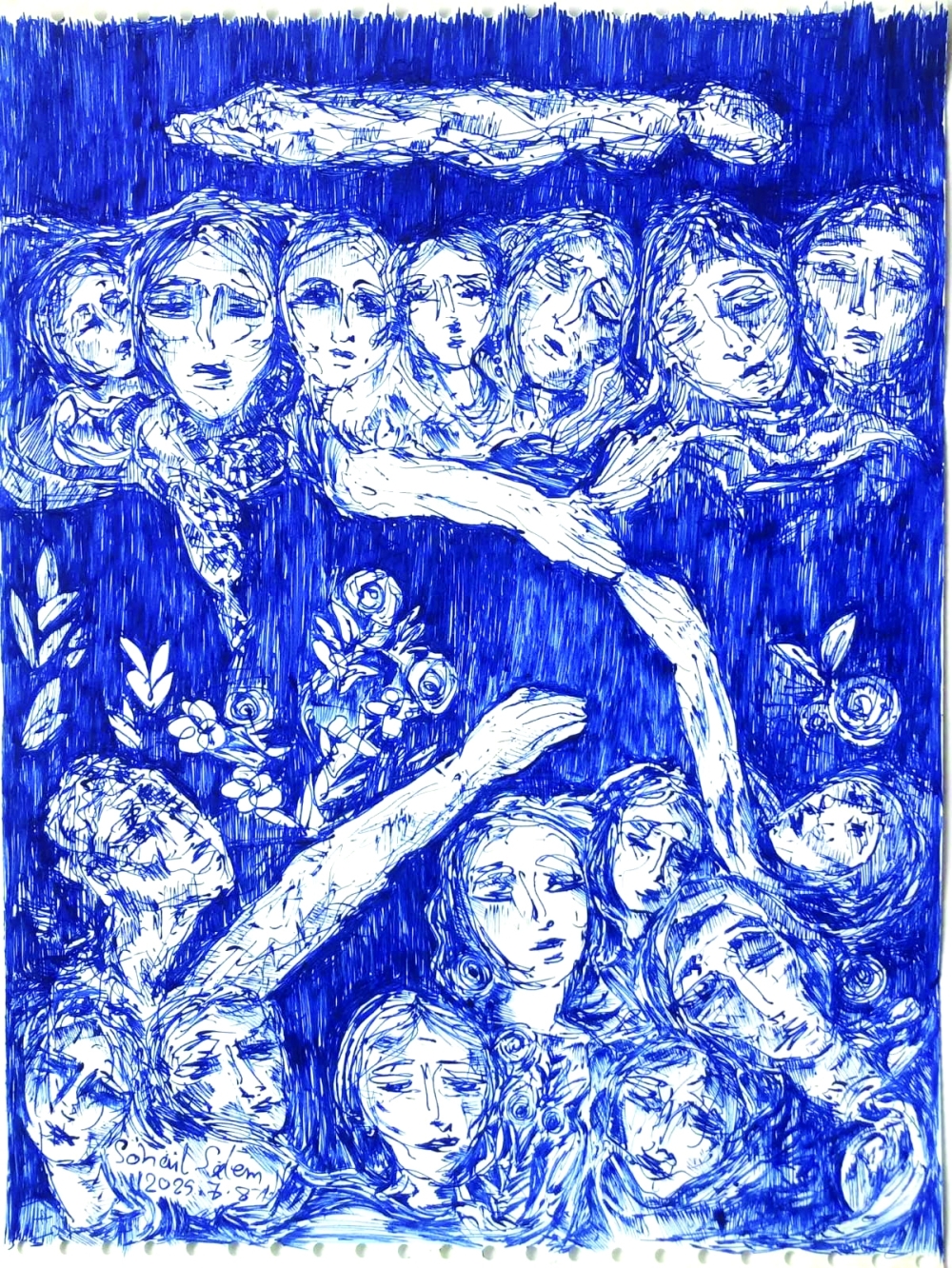
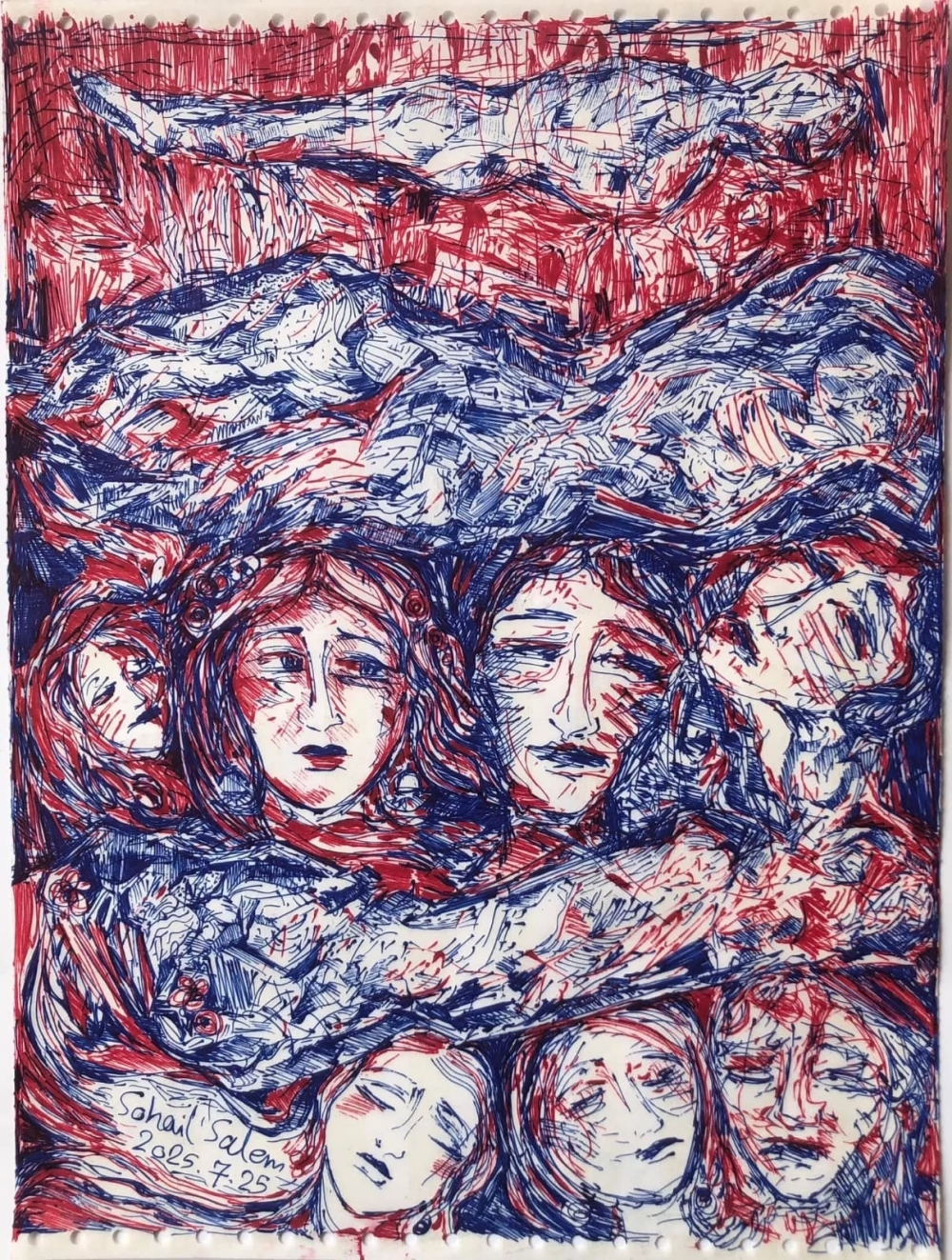
For Palestinian artist Sohail Salem, the war transformed both his practice and the conditions under which it was created. After the studio he rented was destroyed, he salvaged what remained of his work before beginning again with little more than pen and ink on UNRWA school notebooks while living in displacement. Each drawing became a visual diary created under the constant possibility of loss, prompting him to share his work almost daily because there was no certainty that either the drawings or their creator would survive.
Yet Sohail resists describing his work as documentation. Instead, he views it as an act of psychological resistance and a form of mourning. His aim is not merely to record tragedy, but to preserve the dignity of those who endure it. The people who appear in his paintings are portrayed as individuals with memory, identity and presence, rather than anonymous victims reduced to symbols of suffering.
His black ink drawings reflect this approach. Faces gather closely together, bodies lean into one another, and expressions carry the quiet weight of exhaustion and grief. Violence is rarely depicted directly. Instead, it is conveyed through the emotional traces left on human faces, inviting viewers to contemplate the unseen burden of survival.
In another work, a woman cradles the body of a martyr resting upon cactus and ruins. Rather than illustrating a single event, the composition evokes themes of motherhood, endurance and sacrifice, suggesting that when homes disappear, the human body itself becomes the final refuge.
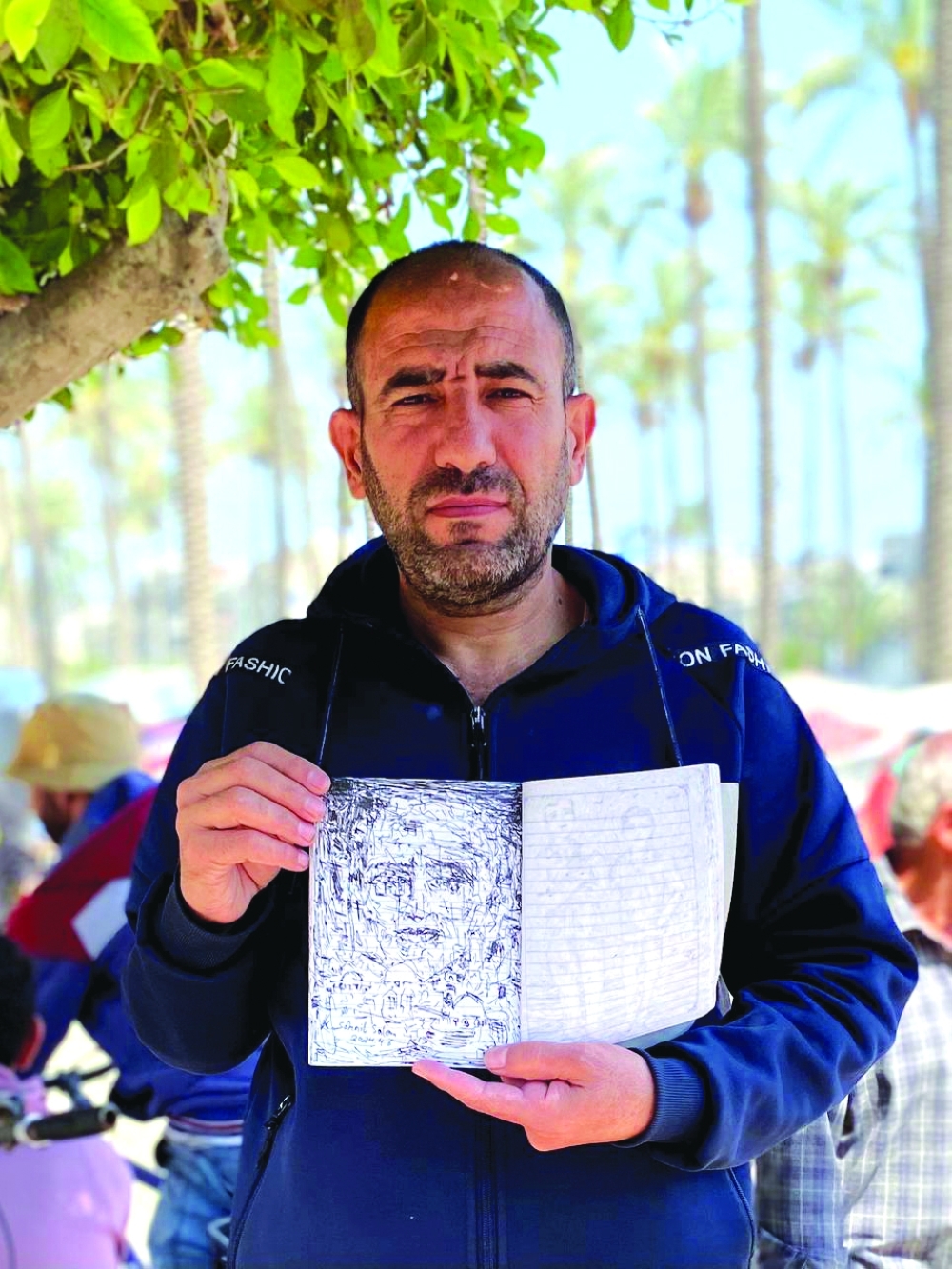
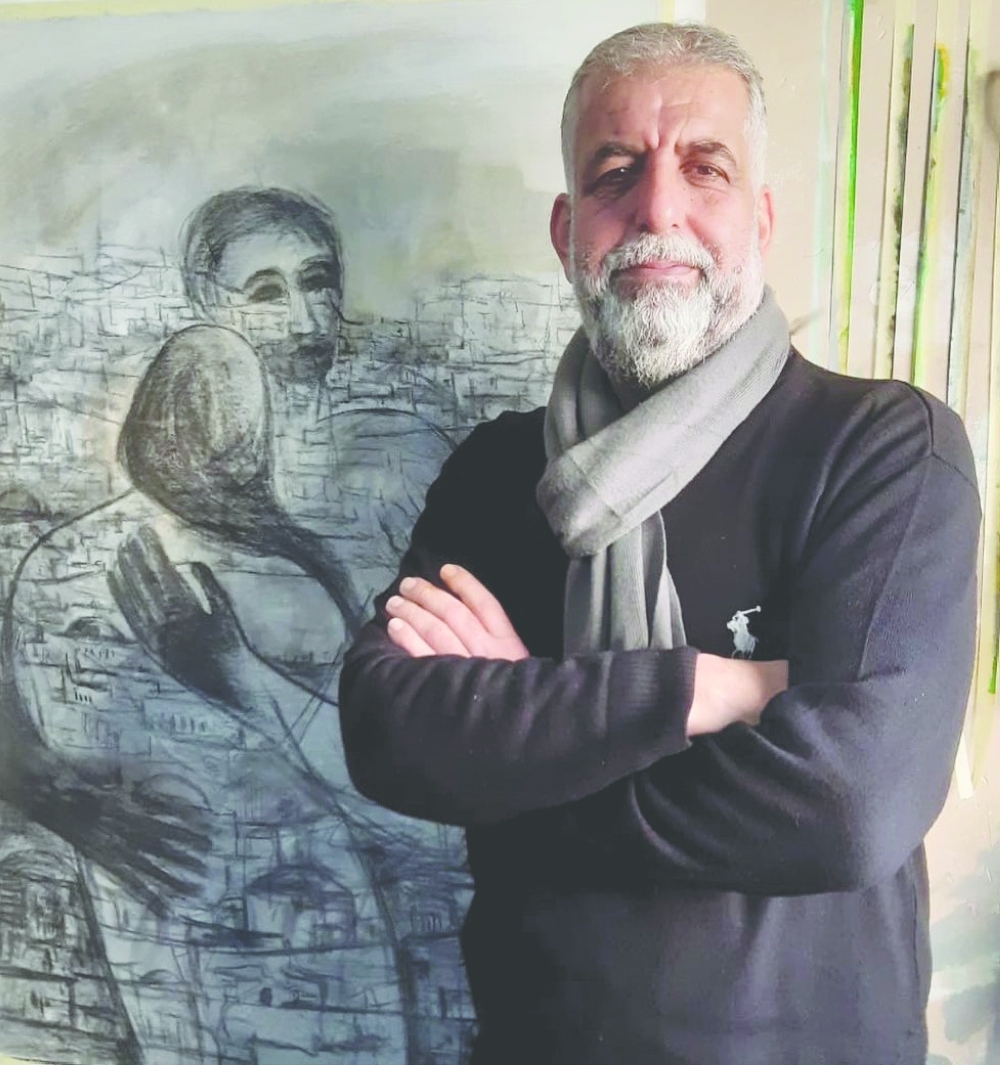
A different yet equally intimate perspective emerges in the work of Majed Shala. After his studio was destroyed, he moved between displacement camps carrying only paper and black pens. Like Salem, Shala rejects the label of documentary artist, explaining that his drawings were an attempt to comprehend a reality in which, as he describes it, "my life was turned completely upside down."
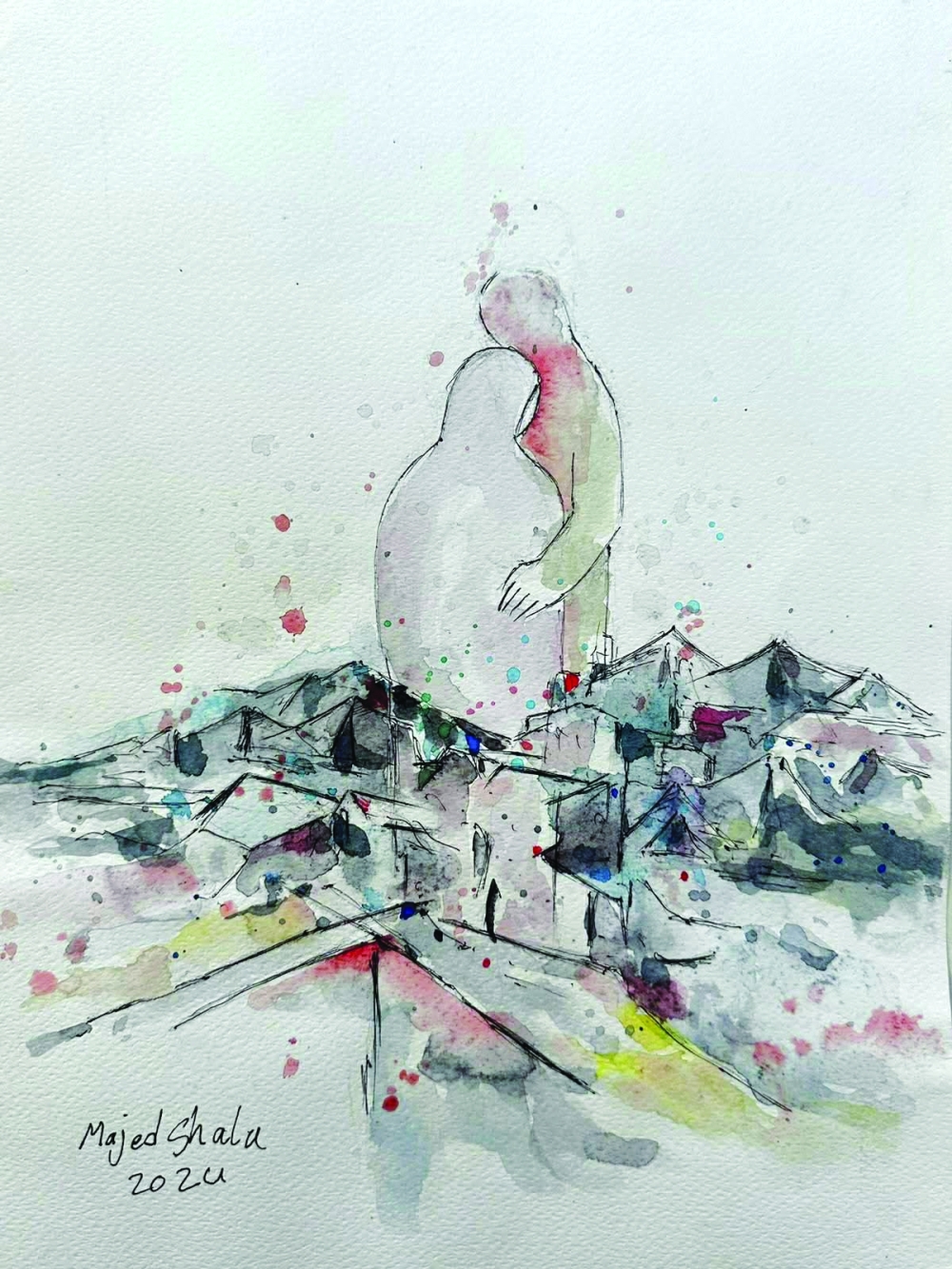
One of his paintings portrays two figures embracing above a landscape of shattered homes and fading tents. The image shifts the focus from destroyed buildings to the deeper meaning of home itself—as a place of belonging, protection and emotional security. In this composition, the embrace becomes a substitute home, the last remaining shelter in a city stripped of its physical foundations.
Executed with restrained colour, delicate washes and an economy of visual language, the work does not seek dramatic effect. Instead, its quiet simplicity amplifies the emotional weight of loss, making the tragedy feel intimate rather than distant.
Together, the works of Sohail Salem and Majed Shala demonstrate how art can preserve experiences that often lie beyond the reach of conventional reporting. Their paintings are not simply records of war; they are reflections on memory, displacement and survival. In doing so, they remind viewers that while conflict may erase buildings and alter landscapes, it cannot extinguish the human impulse to create, remember and bear witness.
Oman Observer is now on the WhatsApp channel. Click here