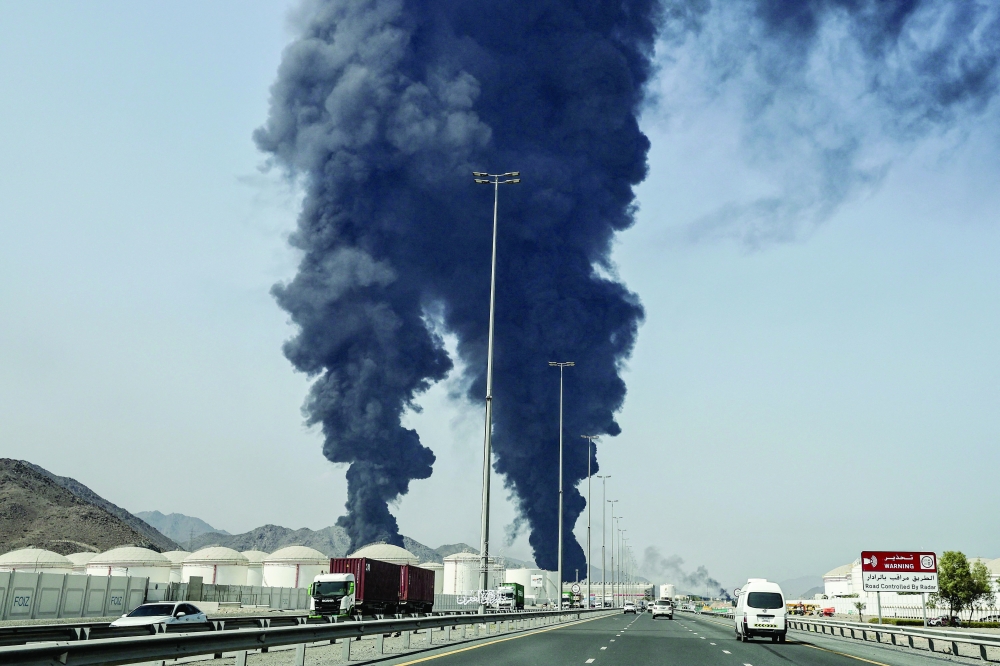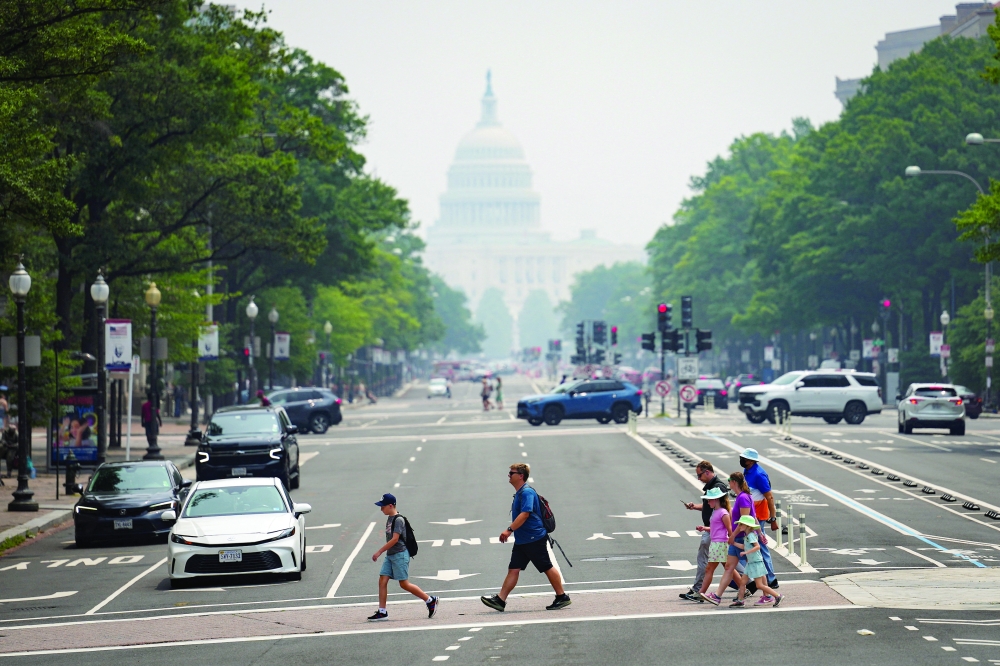





NEW YORK: US President Donald Trump threatened a tariff increase on Canada to cover the cost of smoke pollution from wildfires that have choked large parts of the United States. Dense wildfire smoke billowing down from Canada and northern Minnesota has set off unhealthy air quality alerts across the US. As of Saturday, there were 937 active fires in Canada, most of which were burning out of control, according to the Canadian Wildland Fire Information System. "This is Willful Negligence, and becoming a yearly occurrence, costing the United States Billions of Dollars," Trump said on Truth Social, adding that the "cost of this pollution must of necessity be added to the TARIFFS Canada is currently paying."
Trump accused Canada of "not properly maintaining" their forests, failing to carry out "basic Forest Management and Debris Removal." He said he would call Prime Minister Mark Carney "to find out what they are going to do about" the smoke. Canada's emergency management minister Eleanor Olszewski said Canada and the United States were in "constant contact," pointing toward their "long history of working together to fight wildfires." She added that Canada has invested $12 billion in forests sustainability and fire prevention since 2020.
Detroit, in the US Midwest, remained the most polluted city in the world on Friday, according to tracker IQAir. Washington and Chicago weren't far behind, and officials warned against spending unnecessary time outside. The pollution triggered concern over the World Cup final on Sunday in an open stadium in New Jersey. In New Jersey and New York, the metro area was experiencing air that could be unhealthy for sensitive groups, an improvement after smog on Thursday made the Manhattan skyline barely visible.
But the National Weather Service (NWS) warned the smoke may thicken overnight into Saturday morning. Tournament organisers are "monitoring closely," White House World Cup task force executive director Andrew Giuliani told a briefing. Peter Mullinax, a meteorologist for NWS, said that winds over the Great Lakes could push more smoke into the Northeast, which could keep skies hazy. He said forecasts for that region do expect some improvement. "I don't believe that this should be as impactful as if you might be playing a game today," Mullinax said.
The issue for Sunday's game, said Joel Dreessen, an air quality forecaster for the state of Maryland, is whether more smoke spills south after weekend storm systems. "Some of the models are starting to indicate that we'll start to pull down some smoke," he said.
In cities across the Midwest and Northeast, people wore masks outdoors to filter out the dangerous air. In New York, libraries and train stations were handing them out for free. Chris Carlsten, who studies the health impacts of fire smoke at the University of British Columbia, said that the fine pollution particles from wildfires are particularly impactful on the lungs, whereas vehicle pollution skews slightly towards heart impacts. He said plumes can be filled with wood and vegetation debris but also paint, plastic or metal.
The blazes were worsening on Friday in Canada, especially in Ontario, according to authorities there. Fires in Ontario have not caused any casualties, and several remote communities have been evacuated, as dozens of aircraft battle the blazes. Meanwhile 16 active fires were burning in the Superior National Forest, on Minnesota's border with Canada. "The forecast for erratic weather, shifting winds and the potential for isolated damaging wind gusts and thunderstorms will be a challenge for firefighting efforts," the US forest service said. — AFP
Oman Observer is now on the WhatsApp channel. Click here