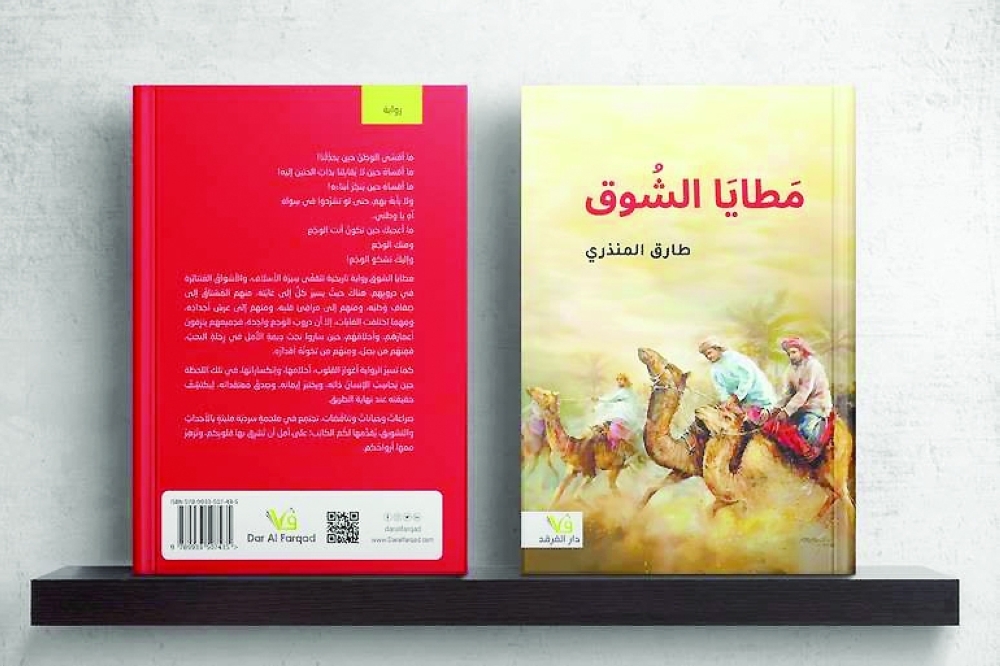





In Mataya Al Shawq, Omani novelist Tariq al Mandhari invites readers on a journey shaped by yearning, memory and the enduring human search for belonging. The title itself serves as a key to understanding the novel’s spirit. In Arabic, mataya refers to the means by which travellers journey across long distances, while shawq conveys longing, yearning and deep emotional desire. Together, the two words suggest a journey driven not merely by movement, but by the hopes and aspirations that propel people forward.
Set within a historical framework, the novel follows a range of characters whose paths differ but whose motivations often intersect. Some are drawn toward home, others towards family, love, or power. Despite their different destinations, they share a common struggle marked by uncertainty, sacrifice and the desire to attain what seems just beyond reach. Their journeys are united by a sense of longing that shapes their choices and influences their fate.
One of the novel’s strengths lies in its exploration of human emotions and inner conflict. Rather than focusing solely on historical events, Al Mandhari pays close attention to the personal experiences of his characters. Their hopes, disappointments, moments of weakness and acts of determination become central to the narrative. As the story unfolds, readers witness individuals confronting difficult decisions, testing their convictions and discovering unexpected truths about themselves.
The novel is also distinguished by its dramatic momentum. Conflicts, betrayals and contradictions drive the narrative forward, creating a story rich in tension and suspense. These elements are not presented merely for excitement; they contribute to a deeper examination of the challenges faced by individuals navigating a world shaped by competing loyalties and ambitions.
Another notable aspect of Mataya Al Shawq is its treatment of hope. While pain and hardship are recurring themes, the novel consistently highlights the resilience of the human spirit. The characters continue their journeys despite setbacks, believing that perseverance may ultimately lead them toward fulfilment. In this sense, longing becomes more than an emotional state—it becomes a source of strength that enables people to endure adversity and continue moving forward.
Al Mandhari’s storytelling benefits from a balance between historical atmosphere and human drama. The historical setting provides depth and context, while the emotional journeys of the characters give the narrative its heart. This combination allows the novel to appeal not only to readers interested in history, but also to those drawn to stories about identity, ambition, love and personal transformation.
Ultimately, Mataya Al Shawq is a novel about the many roads people travel in pursuit of what matters most to them. Whether seeking home, love, purpose, or power, its characters are carried by the same invisible force: longing. Through a narrative filled with conflict, reflection and hope, Tariq al Mandhari presents a story that speaks to universal human experiences while remaining deeply rooted in its cultural and historical setting.
The novel stands as a thoughtful contribution to contemporary Omani literature, reminding readers that the journeys that define us are often guided not by certainty, but by the enduring power of longing.
Oman Observer is now on the WhatsApp channel. Click here